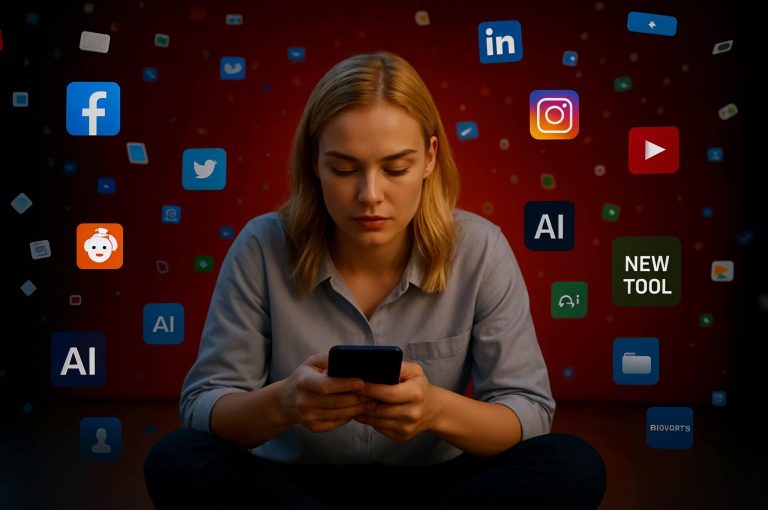
Is It ADHD or Just Social Media Overload? My Experience with Digital Focus Issues

Important note: I am not a doctor or healthcare professional. This article shares my personal experience and is not intended to provide medical advice. ADHD is a serious neurological condition that requires proper diagnosis by qualified healthcare providers. If you suspect you may have ADHD, please consult with a medical professional.
Scrolling through my social feeds recently, I couldn’t help but notice a trend: ADHD content is everywhere. Quizzes promising to tell you if you have attention deficit hyperactivity disorder, lists of “signs you might have undiagnosed ADHD,” and countless videos of people sharing their ADHD journeys.
As I watched these videos describe symptoms like difficulty focusing, being easily distracted, struggling to complete tasks, and feeling overwhelmed by information, I had a moment of self-doubt. Wait, do I have ADHD? Many of these descriptions felt uncomfortably familiar.
But then I asked myself a different question: Is it possible that my social media habits themselves are causing these exact symptoms?

The Digital Attention Crisis
There’s no denying that ADHD is a real neurological condition that affects millions of people worldwide. It has specific diagnostic criteria and requires professional assessment. People with ADHD face genuine challenges that often require medical intervention and support.
That said, I’ve noticed something concerning: many of the attention and focus difficulties described in these viral posts are also natural consequences of our current digital environment – especially for those of us who spend hours daily on social platforms designed to fragment our attention.
Here’s what I realized about my own experience:
When I’m constantly switching between apps, responding to notifications, and consuming bite-sized content, my brain adapts to expect constant novelty. After just 30 minutes of social media scrolling, I find it noticeably harder to focus on longer, deeper tasks.
These platforms aren’t designed by accident. They’re engineered to capture and repeatedly redirect our attention. The average person checks their phone 96 times a day – that’s once every 10 minutes of waking life. We’re training our brains to expect – and even crave – constant interruption.
My Personal Wake-Up Call
A few months ago, I found myself struggling with many classic “attention deficit” symptoms:
- I couldn’t focus on work tasks for more than 10-15 minutes
- I’d start projects with enthusiasm but abandon them halfway
- Reading longer articles felt nearly impossible
- I was constantly forgetting details in conversations
- My mind would race with unrelated thoughts during important tasks
Like many people, I wondered if I might have undiagnosed ADHD. The social media algorithm, noticing my interest in focus-related content, helpfully served me more and more ADHD videos, reinforcing my suspicions.
But before seeking a diagnosis, I decided to try an experiment: I drastically reduced my social media use and implemented structured work patterns. I wasn’t dismissing the possibility of ADHD – I was simply testing a hypothesis about one potential cause of my symptoms.

What Changed When I Cut Back on Social Media
The results were revealing. Within just two weeks of limiting social media to 30 minutes per day and implementing focus blocks in my schedule, I noticed:
- My ability to concentrate on single tasks improved significantly
- I could read longer materials without feeling the urge to check my phone
- My work completion rate increased
- I felt less mentally scattered and more present
- The constant background anxiety diminished
This doesn’t mean I suddenly “cured” myself of anything. What it suggests is that at least in my case, many of my attention difficulties were environmentally induced rather than neurological in nature.
The Science Behind Digital Attention Fragmentation
Research increasingly supports the idea that heavy social media use can produce symptoms that mimic attention disorders:
- Attention switching penalty: Each time we switch attention between tasks, we pay a cognitive cost. Studies show that people who frequently switch between digital tasks can experience a temporary IQ drop of up to 10 points.
- Dopamine habituation: Social media platforms trigger dopamine releases through likes, comments, and new content. Over time, our brains can become desensitized, requiring more stimulation to feel satisfied – leading us to check more frequently.
- Working memory overload: Our working memory has limited capacity. Constant information intake without processing time can lead to cognitive overload, making it difficult to retain information or focus on complex tasks.
The result? A digitally-induced state that can look remarkably similar to attention deficit symptoms.
Creating Systems for Digital Focus
Based on my experience, here are the systems that helped me rebuild my focus capacity:
1. Structured social media limits
I moved all social apps to a folder on the second page of my phone and set a 30-minute daily timer. When the time is up, it’s up. This wasn’t about punishing myself – it was about setting boundaries for tools that I still find valuable when used intentionally.
2. Focus blocks with clear boundaries
I implemented 30-minute focus sessions (gradually increasing to 45 minutes) where I work on exactly one task with all notifications paused. Between blocks, I take a 5-minute break to move, stretch, or briefly check messages – but not social media.
3. Physical environment changes
I created separate spaces for different types of work when possible. Even just shifting positions or clearing my desk before deep work helps signal to my brain that it’s time to focus.
4. Information input management
I consolidated information sources and created specific times for consuming content, rather than allowing it to interrupt me throughout the day. This includes newsletters, industry updates, and yes, social media.
Finding Balance
Whether you’re experiencing digitally-induced attention fragmentation or have other reasons for focus difficulties, finding systems that work for you is what matters most.
What concerns me about the social media ADHD trend isn’t the awareness it raises – that part is valuable. It’s the potential for self-diagnosis based on symptoms that could have multiple causes, potentially leading people down paths that may not address their specific situation.
My experience isn’t universal. It’s simply one data point suggesting that before we pathologize our struggles with focus in the digital age, it might be worth examining how our technology use is shaping our cognitive patterns.
Have you noticed changes in your attention span or focus abilities since increasing your social media use? I’d love to hear about your experiences in the comments.
Remember: This article reflects my personal experience only. If you’re concerned about ADHD symptoms, please consult with a qualified healthcare provider.