Travel Diary: El Camino Portuguese Coastal Route by Bike

A Solo E-Bike Journey from Porto to Santiago
I’ve been dreaming about doing the Camino de Santiago for years. Not for religious or spiritual reasons, but because I wanted a real adventure — something just for me.
As a digital worker, I spend most of my time in front of a laptop. Working from home has its perks, but after years of juggling deadlines, video calls, and parenting, I needed to break free. I wanted to be somewhere completely different. Outdoors. Moving. Unreachable.
I’ve been a mother for 10 years. I love my children and my family deeply, and I take pride in being there for them. But if I’m honest, the past decade has been about everything and everyone else. There hasn’t been much space that was just for me.
Before having kids, I was often alone — and I liked it. I’ve missed that quiet independence, even if only for a few days.
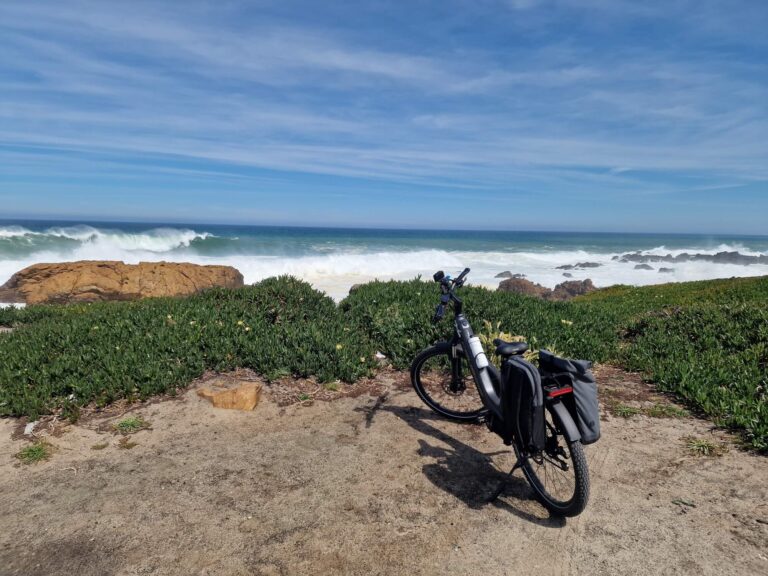
That’s why I chose the Portuguese Coastal Route of the Camino de Santiago. It’s a well-documented, safe path through beautiful towns, seaside villages, and forest trails. I read blogs, watched videos, and planned carefully. I didn’t want to walk it — I love cycling, and with an e-bike, I could cover more ground while still soaking in the experience.
I picked late September for a few reasons:
- The kids would be settled into the school year.
- The weather would be cooler — no extreme heat or wildfire risks.
- And maybe… just maybe… I’d avoid the rain.
It turned out to be perfect. I had sunshine every single day, with temperatures between 20–24°C. No rain, barely a cloud. The Atlantic coast was breezy, and I wore a light jacket most of the time, but it was fresh and energizing. The low autumn sun cast long shadows over the trail, giving everything a soft, cinematic glow. And the scent of fall — leaves, soil, salt air — felt grounding. Familiar. Peaceful.
This travel diary shares my full Camino route: from Porto to Santiago de Compostela on two wheels. If you’re curious about doing it yourself — or just looking for a few moments of escape — I hope this helps you slow down and reconnect, wherever you are.
Table of Contents
Want to see the video about the trip? It is here.
Day 1 – Porto to Esposende
A rocky start, a too-big bike, and my first solo panic on the Camino
My Camino adventure officially started in Porto — but not exactly the way I had imagined it.
That morning, I left my hotel early and crossed the city to pick up the e-bike I had reserved in advance. Unfortunately, it was a pretty big disappointment right from the start: even though I had ordered the smallest size available, the bike turned out to be way too big for me. I couldn’t raise the seat high enough, and the top tube was so tall I had trouble getting on and off. To make things worse, they didn’t provide a kickstand, so I had to find creative ways to lean the bike against walls, benches, poles — whatever I could find.
And then came the luggage. I had already cut my packing list in half twice before leaving, but it still felt like way too much. My gear was heavy and bulky, and I knew immediately: next time, I’m bringing even less.
Eventually, I set off — much later than planned. I hadn’t expected so much traffic on a Sunday, and getting out of Porto took ages. It was already late afternoon by the time I reached the coastline and truly started the route. But when I did, it was absolutely stunning: sandy beaches, wooden walkways, waves crashing under the autumn sun.

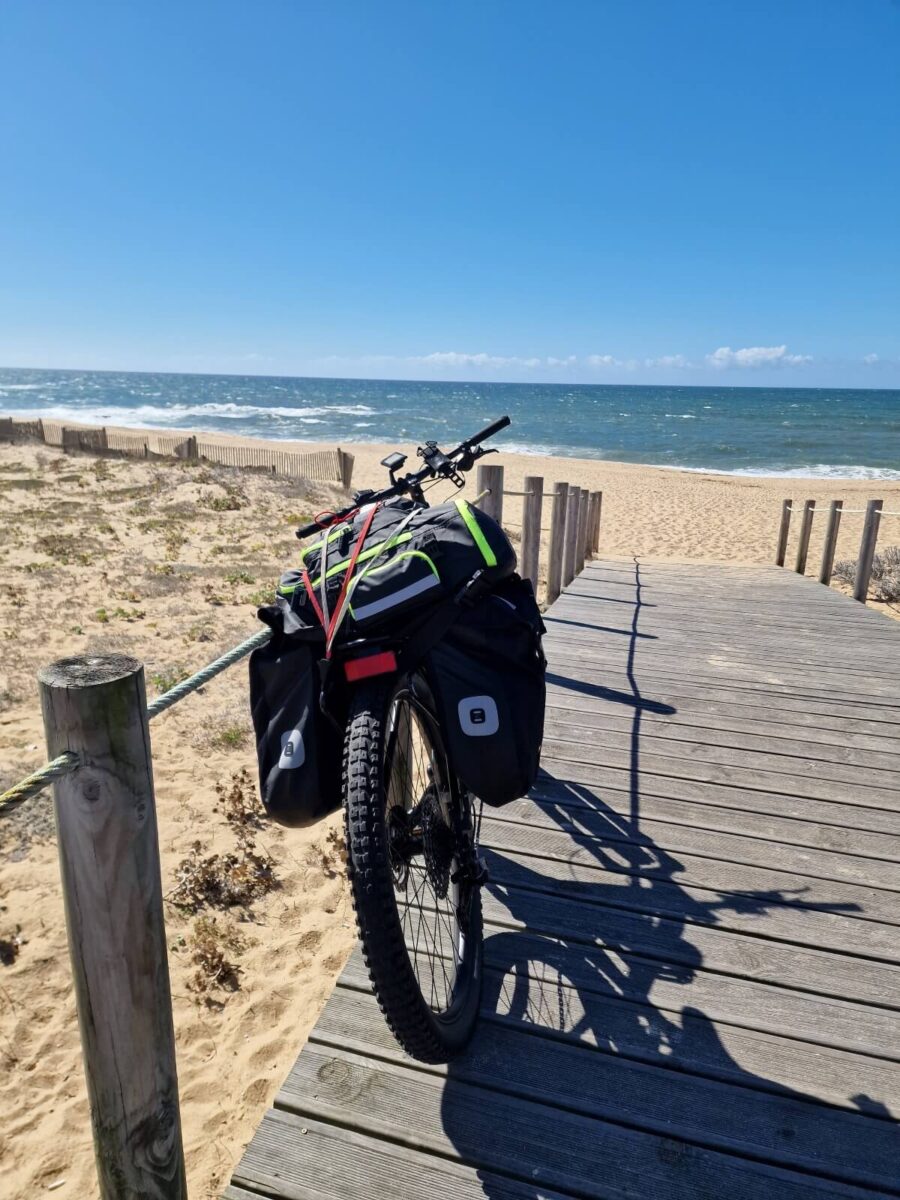
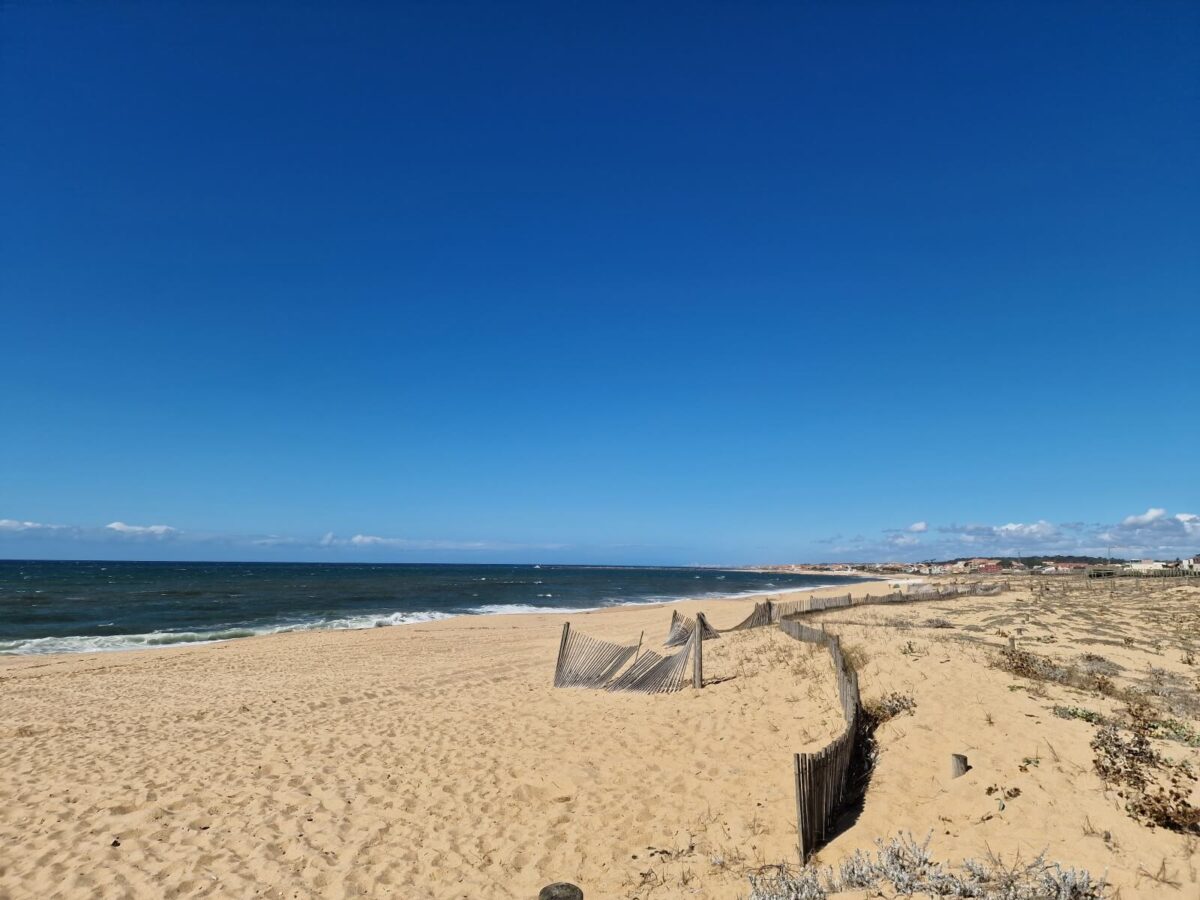

Still, it wasn’t smooth. Several sections of the official Camino trail were marked as pedestrian-only — signs clearly indicated that bikes weren’t allowed. Even though my GPS tried to send me through them, I had to constantly improvise. Without local knowledge, I found myself guessing which detour might work, often relying only on Google Maps and intuition. I had planned the route carefully at home, but the reality on the ground didn’t follow the script. At all.
As the sun began to set, Google led me onto a long, straight bike path that ended in… nothing. Just empty agricultural land. No signs. No people. No signal.
And that’s exactly when my phone died.
And my power bank too.
Both. Completely dead. In the middle of nowhere.
I panicked. Really panicked. I tried to calm myself down by remembering that the sun should be to my left — which meant I was still heading north. I had lost sight of the ocean. I was completely disoriented. Luckily, after a tense half hour, I rolled into a small village and spotted a restaurant. I dashed in and asked to charge my phone — bless them, they let me. I finally caught my breath and continued the last stretch to Esposende with my nerves absolutely fried.
That night, I decided I would book luggage transfer for the rest of the trip. Unfortunately, I missed the 8PM deadline for scheduling it, so I’d have to survive one more day with my overloaded bike.
Dinner was a quiet meal at a small local café near the albergue. Then I spent hours hunched over the map, trying to plan the next day and figure out how not to get lost again. The albergue itself was cozy and simple, with a shared kitchen and a Camino vibe — but I didn’t meet any other pilgrims. I fell asleep still stressed, already worried about how I would manage navigation the next day.
It was a hard start. But I made it. And that was already more than I had been sure of that morning.
Day 2 – Esposende to Caminha
I was still struggling with GPS navigation when something magical happened: a big group of cyclists zoomed past me just as I was leaving Esposende. I figured they must know the way better than I did, so I sped up and joined them.
And they were lovely.
They told me to stay with them for the day, and I did.
Most of them were in their 60s and 70s, but honestly, I could barely keep up. The pace was strong, the climbs were real, and the team spirit was contagious. If I can ride up 300-meter hills with that kind of energy at 70, I’ll consider life a success.
One of the most impressive moments of the day was crossing the Mouth of the River Lima (Rio Lima) — over a very narrow bridge near Viana do Castelo. After crossing, we climbed up to the Sanctuary of Santa Luzia – officially called Santuário do Sagrado Coração de Jesus. It was a tough ride, but totally worth it. The view from the top was breathtaking: the Atlantic Ocean, the city below, and the wide river.


The incredible view from the top of the Santa Luzia hill in Viana do Castelo.
I arrived at the albergue in Caminha later than expected (again). After a quick dash to the store to grab something for dinner, I ended up back at the kitchen — where magic happened again.
One pilgrim offered me fresh salad to go with my sandwich. I’m not a big veggie person, but she was so kind I couldn’t say no. Then another man offered to wash my plate. There’s something about Camino albergues — total strangers share food, clean up after each other, and make you feel completely welcome without even knowing your name.
I had booked a private room for the night. The idea of a mixed-gender 6-bed dorm didn’t sound very appealing to me, though I genuinely admire the people who embrace that part of the journey. Maybe one day.
Day 3 – Caminha to Baiona
From pirate rumors to real help: crossing borders (and fixing flat tires)
I was nervous from the moment I woke up. Today, I’d be leaving Portugal and crossing into Spain — not by bridge, but by water. The ferry across the Minho River hasn’t been operating for years, and I had arranged to cross with one of the “taxi boats” that now replace it.
Before the trip, I had read all sorts of warnings: that fake boat operators (so-called “pirates”) might show up and mislead travelers, offering rides from the wrong spots. So when a woman approached me at the harbor to say the taxi wasn’t leaving from where I was waiting — and that I needed to go to the other side of the pier — I wasn’t sure whether to trust her.
But she was right.
Soon I found myself boarding a small speedboat with a few other pilgrims. Not exactly the slow, romantic river crossing I had imagined — but it was fast, thrilling, and unforgettable. The wind hit hard, and we flew across the wide river mouth in seconds. I had never gone that fast on water in my life.
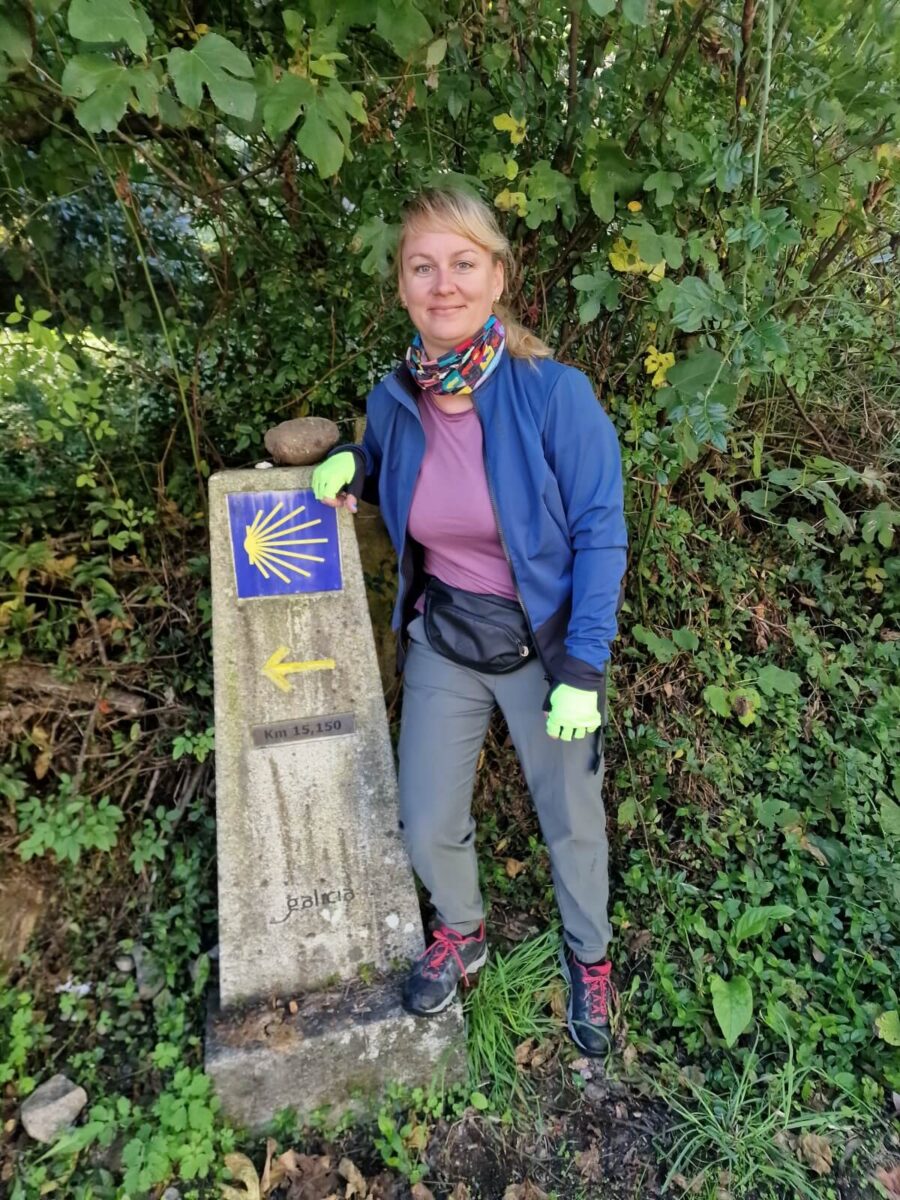
Crossing into Galicia felt like entering a different world. Unlike Portugal, where road signs were scarce and navigation often guesswork, here the Camino was clearly marked at every turn. Yellow arrows, town names, well-paved bike lanes, rest stops, cafés — it was a cyclist’s dream.
Everything felt easier. Until it didn’t.
Somewhere on a gravel stretch, my bike started to feel… slow. I looked down, and my heart sank: the front tire was completely flat. This was my biggest fear going into the trip. My bike was heavy, a mountain-style e-bike with fat tires — not the kind of thing you fix with a mini-pump and a smile. I started to panic.
What now? Could this be the end?
And then: Camino magic again. An American woman rolled up beside me and casually asked if I needed help. She said she’d fixed plenty of flats before and would be happy to do it. I honestly couldn’t believe it. We needed two more people — two strong German men — to get it done, but together they fixed the tire like pros.
Later that day I visited a bike shop to get a replacement inner tube. They checked everything and told me the repair was solid. Crisis averted.

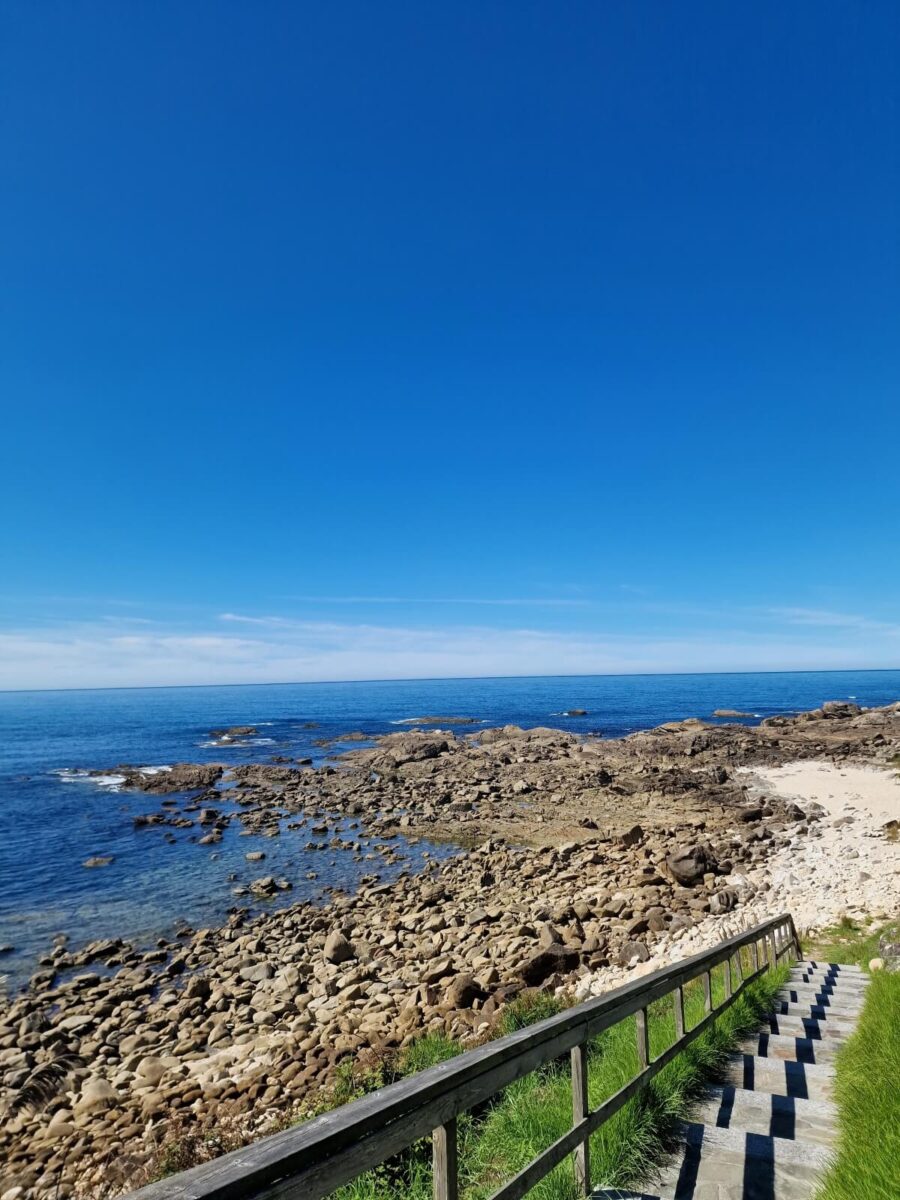


I arrived in Baiona earlier than usual, which gave me time to walk around the old town, enjoy a bit of sun, and treat myself to a proper seafood dinner.
But my knees were starting to ache — badly. I decided I might need to take it slower tomorrow or reroute slightly to avoid tougher climbs.
The real game-changer, though, was trying out the luggage transfer service. I sent my main bag ahead to the next hotel — and it felt amazing. Suddenly the bike was lighter, easier to manage. I still carried my tools, charger, and essentials (about 3 kg), but it made a huge difference.
Day 4 – Baiona to Pontevedra
This morning, I finally managed to leave on time — almost. Most pilgrims were already on the road by 8AM, but I rolled out closer to 9. Still, I felt like I was finally settling into a rhythm: packing, stretching, breakfast, bike.
The path from Baiona was smooth and straightforward, with long stretches of dedicated bike lanes and clear signs. My favorite part of the day came near a village called Navia, where I spotted a wide, sandy beach promenade. People were walking barefoot in the shallow water, so I stopped, kicked off my shoes, and joined them. The Atlantic was cold, but refreshing. Even better: there was a warm water foot wash station right on the beach. Pure luxury.
But under the surface, trouble was brewing. My knee pain — which had started subtly the day before — was getting worse. And the upcoming section after Vigo was full of steep climbs. So I made a decision: no heroics today.
When I planned this trip, I chose towns with train access, just in case I needed to adjust the route. This was that moment. I cycled as far as Vigo, then boarded a train to Pontevedra.

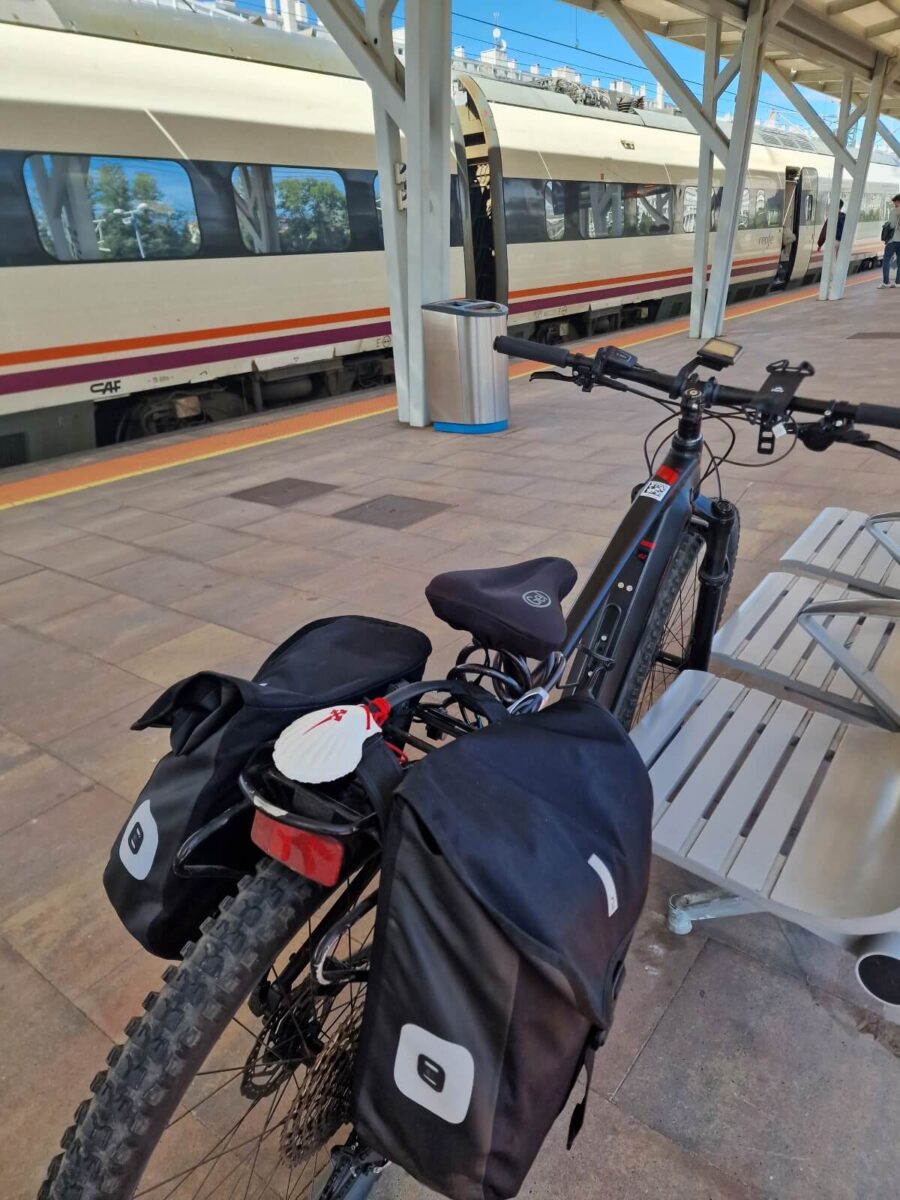


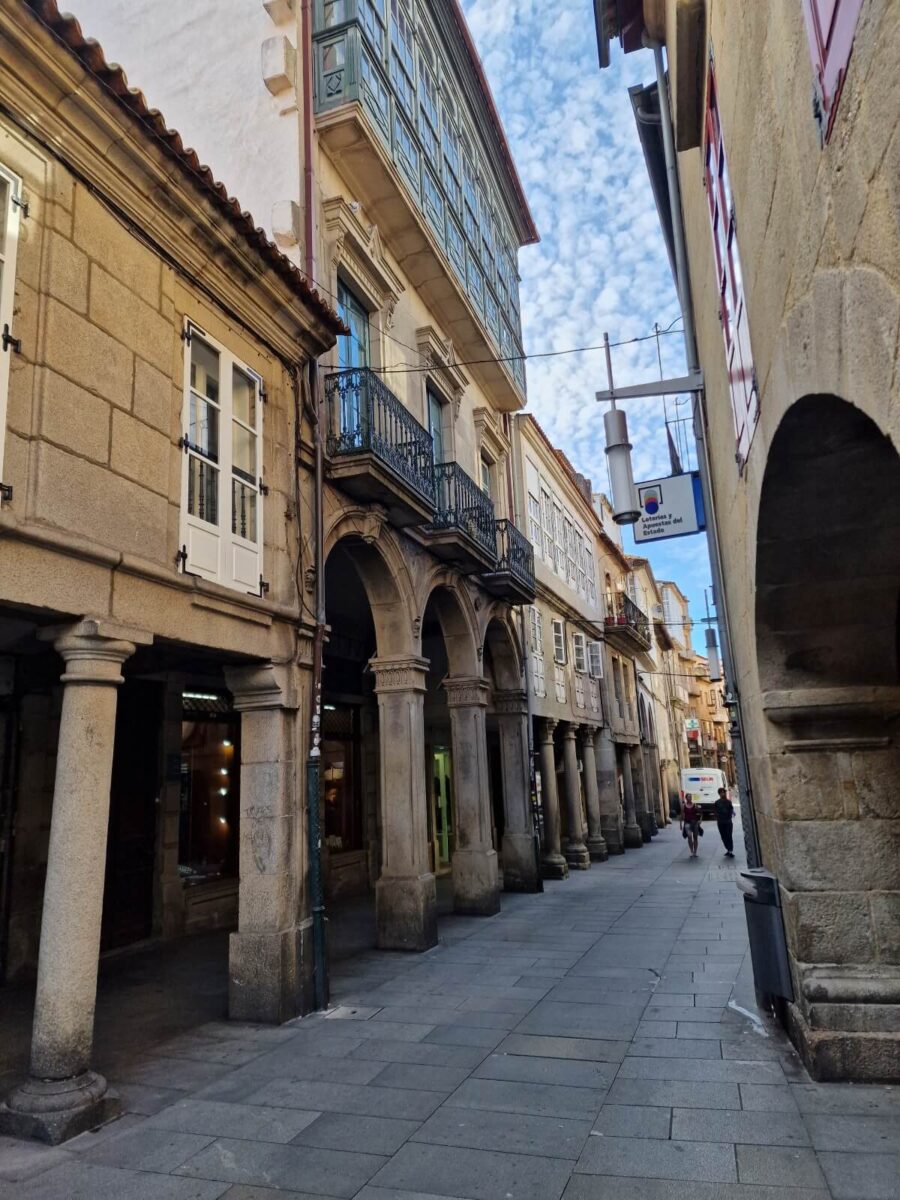


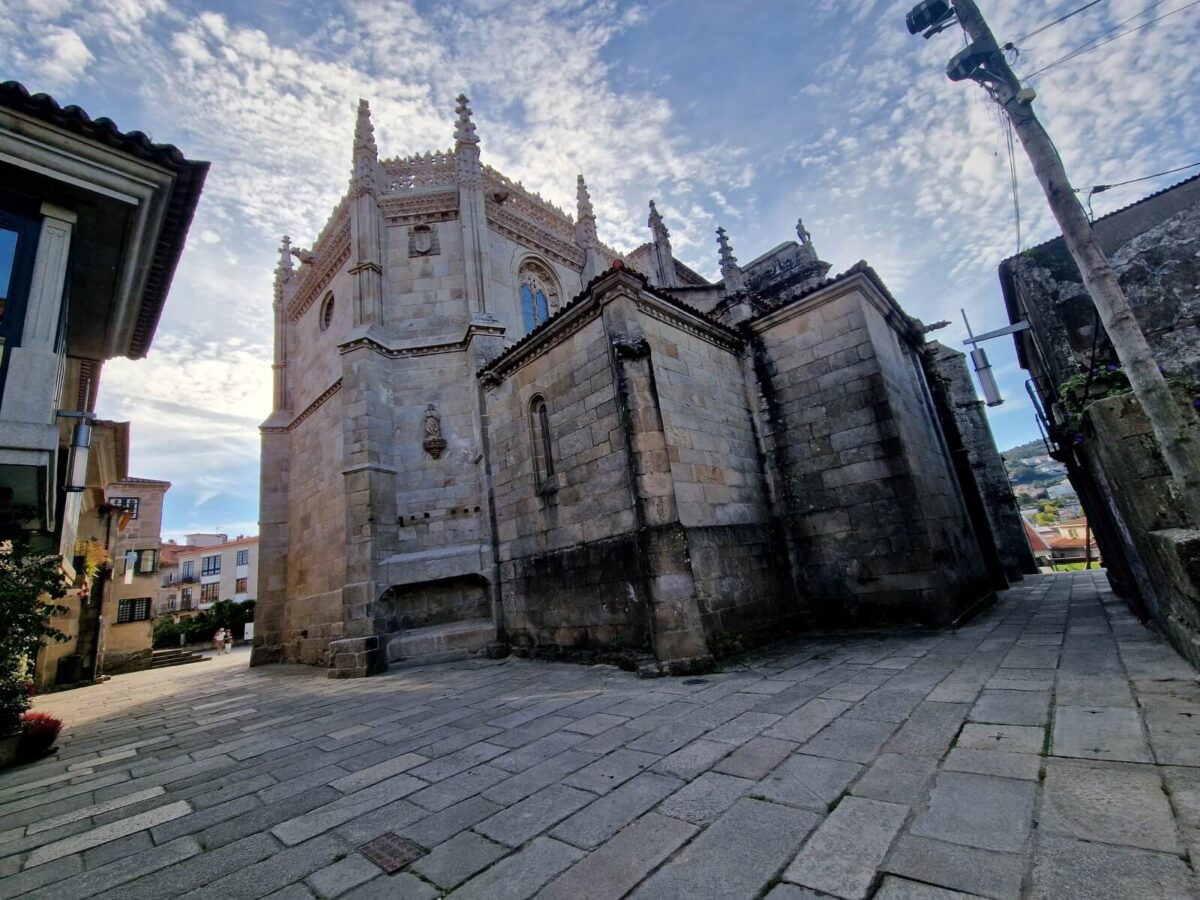
Getting Monsterbike (yes, she now has a name) onto the train was a challenge — but once I was on board, it was smooth sailing. Spanish trains are clean, fast, and on time. The conductor even came over to help me unload the bike at my stop.
And honestly? It was the right decision. I shaved off about 20 kilometers, saved my knee, and had more time to enjoy the city.
After checking into the hotel and resting my legs, I walked into Pontevedra’s old town for dinner. The whole place was filled with pilgrims. People were sitting on the curb, resting against walls, limping quietly through the streets. Everyone looked exhausted — but in a kind of good, shared way. You could feel that Santiago was getting closer.
I exchanged tired smiles with strangers. No words needed. We all knew what the other was feeling.
Looking back, the decision to skip part of the stage was more than just physical — it was a mindset shift. I’ve realized that you don’t always have to push through. Sometimes rest is the brave choice. Sometimes, cutting a corner is what helps you stay in the game.
Day 5 – Pontevedra to Padrón
This morning started with another argument… with Google Maps.
It wanted to send me through what looked like a restricted industrial area — complete with eight different Do Not Enter signs. After a bit of backtracking, I found the Camino again.
From here, the Coastal Route I had followed met up with the Central Route, and suddenly everything got much more crowded. Tons of pilgrims. Groups walking slowly, often with headphones in, not hearing my calls as I tried to pass with my bike. It was slow-going and frustrating at times, especially with my knee still aching.
After one of my stretch breaks, I heard people calling my name.
Wait, what?
Who would know me here?
It was the German cycling group! We hadn’t seen each other for two days, and they were genuinely happy to see me. They said they’d been wondering where I had gone, and had talked about me often. They invited me to join them again — and I did.
We rode together up a steep hill to a small forest clearing near the Santa María de Carracedo church, where they held a little ceremony. They even mentioned me by name, giving thanks that we had met and could continue together. I didn’t understand everything — my German is pretty minimal — but I understood enough to feel moved. Truly moved.


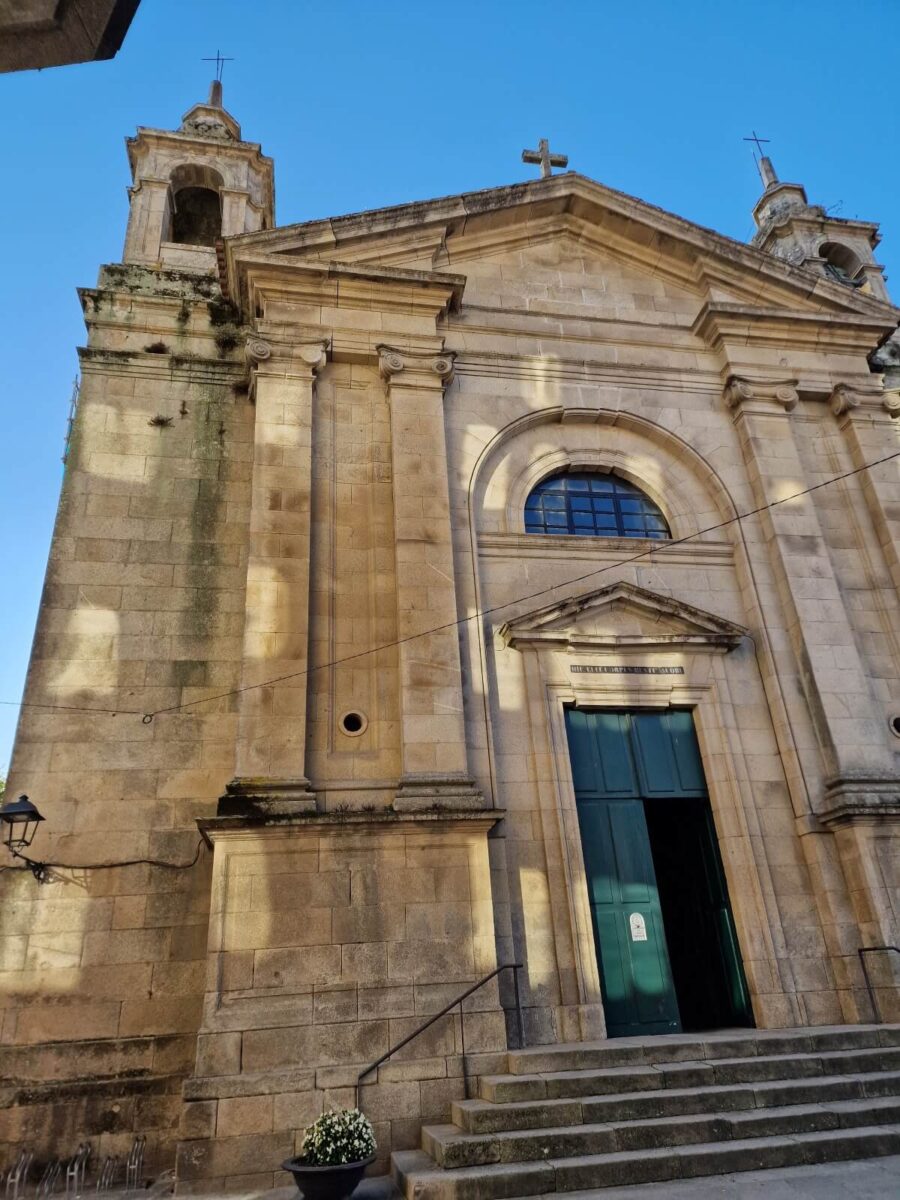
After the peaceful moment came chaos: a steep, narrow forest path — rocky, dark, uneven.
Monsterbike (as she’s now officially called) and I skidded down the trail with my brakes screaming the whole time. It felt more like a downhill sledding track in the Mecsek mountains than a Camino trail.
One of the Austrian guys in the group remarked, “We use bikes like yours to go up mountains back home.”
Fair enough.
I told them how Monsterbike got her name, and from that moment on, I became Monsterbike Edina.
Arriving in Padrón felt emotional. This was the second-to-last stop. Santiago was just one day away. I said goodbye to the German crew for the night, knowing we’d likely see each other again at the finish line.
Dinner that evening was solo — but not lonely. I felt completely at ease walking around, picking a restaurant, buying groceries, making my own snack and breakfast for the next day. I even had a lovely chat with a South African couple staying at my albergue. They were visiting their kids in the UK, then decided to “just do the Camino” while they were in Europe.
For the first time, I felt like I had truly arrived.
Not at the destination, but in the lifestyle.
I wasn’t just passing through anymore.
I was part of it.
And with that came a little sadness — because I knew it was almost over.
Seven days is short. Just as I was finally letting go of my home office brain, I was already counting down to the end.
I admire the people who walk the full Camino — 30, 40 days on the road. That’s a complete mental reset. I get it now.
I wish I had more time.
Day 6 – Padrón to Santiago de Compostela
I had breakfast with a lovely couple from Colombia at the albergue, then packed up my things like a pro. My morning routine was fully dialed in by now — except for one last round of arguing with Google Maps. After some unnecessary detours, I found the familiar yellow arrows again.
Within minutes, I ran into the German cycling group — again! I offered to film them as they arrived at the cathedral, and they were genuinely touched. It felt good to finally give something back after all the kindness they’d shown me on the road.
Thanks to my birthday gift — a full action cam setup from my husband — I had been getting better at capturing the journey. Once I’m home, I’ll edit everything into a little film.
The last leg was short — around 25 km — but at this point, who’s counting? I technically cycled about 300 km… but if you count the detours, it was probably closer to 400. I stopped caring about the numbers a long time ago.
Autumn was in the air. Some days I smelled fermented grapes, others: cows. By now, none of it bothered me. I passed forests covered in giant chestnut pods — later I learned this area is one of Galicia’s main chestnut-growing regions. In one forest clearing, someone was playing piano.
Yes. A full piano. In the woods. I have no idea how it got there. But it was magical.
As we approached the city, the traffic picked up. The final kilometers were crowded, noisy, chaotic. But then, finally: the plaza in front of the Cathedral of Santiago de Compostela. Pilgrims were hugging, crying, singing.
The Germans parked their bikes, hugged each other, and sang a song together.
And then they hugged me.
It felt incredible to be there. And it hurt, too — because it was over.
I collected my official Compostela certificate, given to those who complete the pilgrimage. Throughout the week, I had been collecting stamps in my pilgrim passport — from hostels, cafés, and even forest rangers. On busy days, up to 3,000 pilgrims arrive in Santiago. Today, I was number 1031.


Back at the hotel, I gave Monsterbike a little pat. No hard feelings. She didn’t choose her size — and after all, she got me here.
In the evening, I joined a GetYourGuide tapas tour. Our little group included two Irish travelers, one Scottish guy, and a French guide who’d been living in Santiago for 10 years.
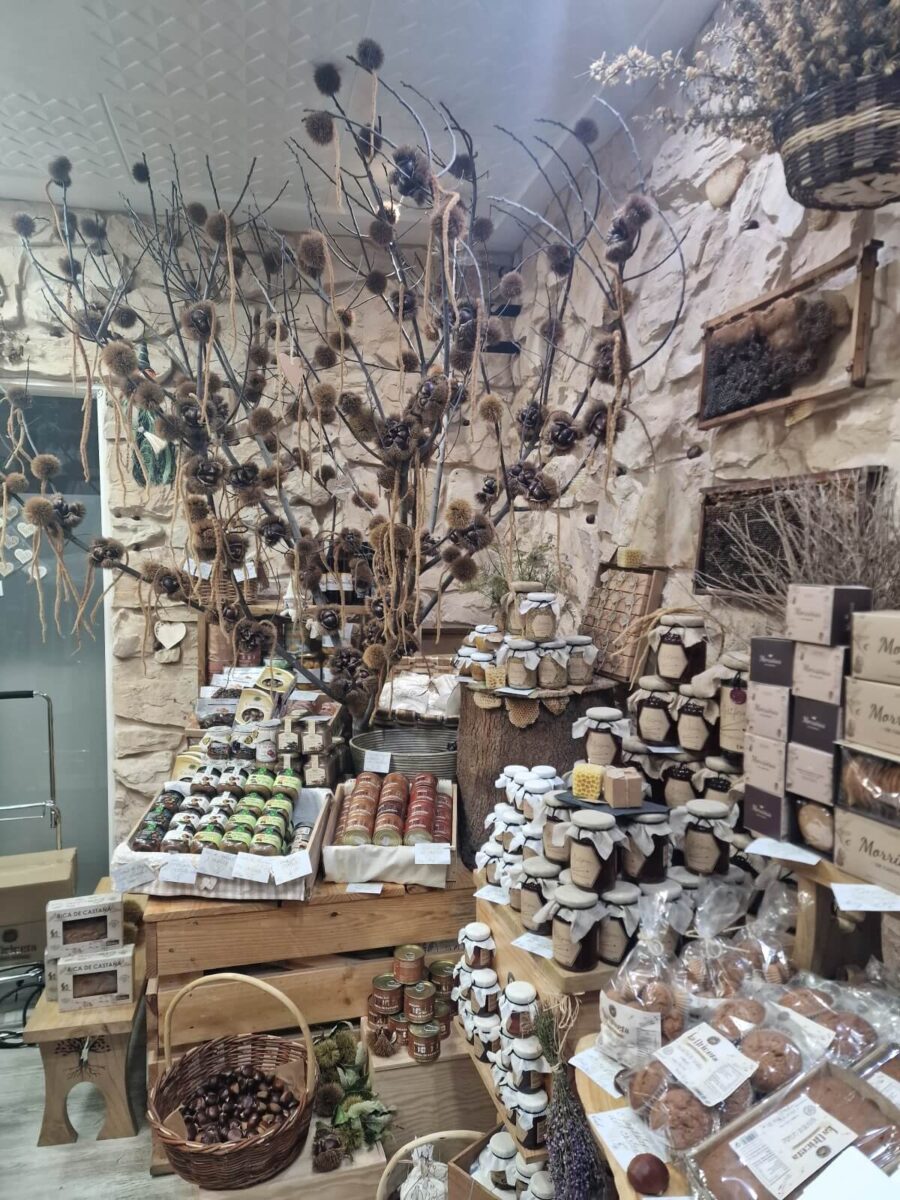
Our first stop? A shop entirely dedicated to chestnuts — chestnut honey, liqueur, creams, roasted snacks… absolute heaven. Later we learned all about Galician cuisine, and the evening ended with something I never thought I’d try: chickpea tripe stew. Surprisingly delicious.
The journey home — and the promise to return
The next morning, I caught a fast train to Madrid and flew back to Vienna. That part was quick, uneventful, and honestly — a bit of a blur.
But one thing is clear:
I will be back.
I don’t know when, or which route next. Maybe the Camino del Norte. Maybe the full French Way one day — if I ever get the time (and childcare) for a full month off. Until then, I’ll keep going one section at a time.
This trip showed me that solo travel suits me — the rhythm, the space, the simplicity. But I’m still not sure whether I prefer traveling alone or with a group. Both had their magic.
What I do know is this:
These trips refill something in me that everyday life quietly drains.
And I intend to keep refilling.