
Travel Diary: Portugal’s Fishermen’s Trail by E-Bike: 5 days trip
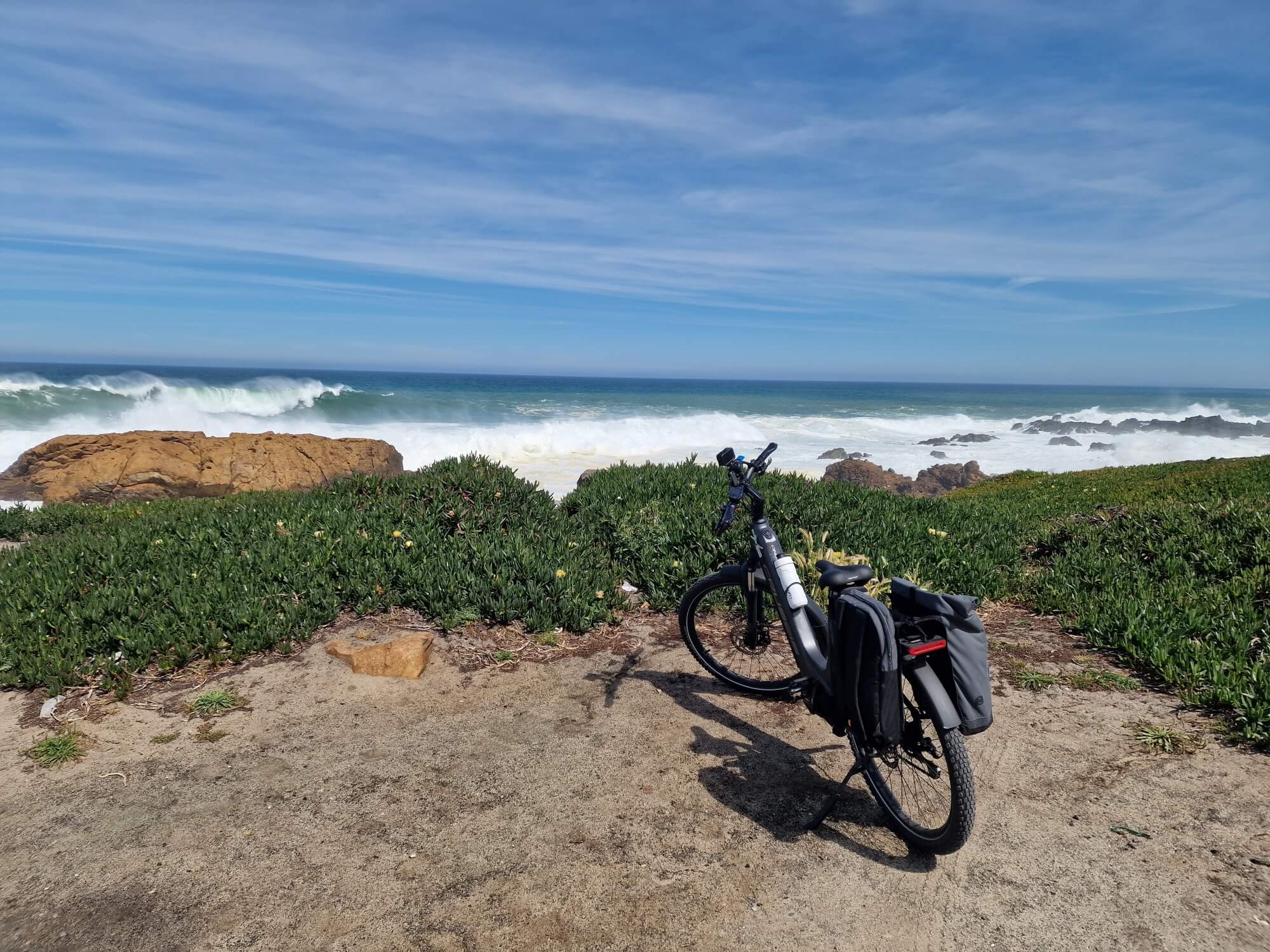
Last year I cycled the Camino Português Coastal Route alone, from Porto to Santiago de Compostela. That trip was entirely self-organized – uncertain, often lost, occasionally terrifying, and one of the best things I’ve done for myself in years.
So when I signed up for a guided e-bike tour along Portugal’s Fishermen’s Trail a few months later, I expected something different. I got something different. Not better or worse – different in ways I’m still thinking about.
What the Fishermen’s Trail is
The Rota Vicentina is a network of walking and cycling routes along Portugal’s southwestern Atlantic coast. The Fishermen’s Trail (Trilho dos Pescadores) is the coastal section – wilder, more remote, and considerably harder on a bicycle than the name might suggest. It runs roughly from Setúbal down through the Alentejo coast to Sagres, passing through fishing villages, cork oak forests, surf beaches, and some of the most dramatic clifftop scenery in Europe.
The route we followed covered around 280 kilometres over five cycling days, with daily distances between 44 and 65 kilometres and elevation gains that often reached 400–550 metres. On an e-bike, this is rated as moderately challenging. The terrain earns that description.
Daily stages at a glance
| Day | Stage | Key points | Distance / Elevation |
|---|---|---|---|
| Day 1 | Lisbon → Setúbal | Arrival, bike fitting, short warm-up ride | Flexible |
| Day 2 | Setúbal / Tróia → Santo André | Ferry across the Sado, Tróia peninsula, Comporta, Melides, Santo André lagoon | ~60 km / 426 m ↑ |
| Day 3 | Santo André → Vila Nova de Milfontes | Cork oak landscape, São Torpes, Porto Covo, Vila Nova de Milfontes | ~54 km / 365 m ↑ |
| Day 4 | Vila Nova de Milfontes → Odeceixe | Rota Vicentina, Almograve, Cabo Sardão, Carvalhal, Odeceixe | ~56 km / 530 m ↑ |
| Day 5 | Odeceixe → Alfambras | Amoreira beach, Aljezur, Arrifana, cork and olive groves | ~44 km / 490 m ↑ |
| Day 6 | Alfambras → Sagres | Bordeira, Carrapateira, Vila do Bispo, Ponte d’Aspa, Cape St. Vincent, Sagres | ~65 km / 550 m ↑ |
| Day 7 | Return to Lisbon | Transfer, optional city time | Travel day |
| Day 8 | Fly home | Departure | Travel day |
Day 1 – Arriving alone in Setúbal


I flew from Vienna, arriving in Lisbon independently rather than with the group. From the airport I took the metro, then a bus south toward Setúbal. The system wasn’t polished – some stations felt worn and the signage required attention – but it worked. I bought a ticket, found the right direction, and arrived without drama.
A Bolt ride from the bus station to the accommodation was cheap and easy. Setúbal in the late afternoon was quiet in that particular way Portuguese cities go quiet in the early evening. Most restaurants hadn’t opened yet – a useful lesson in local timing for anyone arriving hungry and tired. I walked the old town, found somewhere to eat eventually, and treated the evening as an acclimatisation rather than an experience.
Day 2 – Setúbal to Santo André: sand, cork, ocean
~60 km / 426 m elevation gain


This was the first real cycling day, and approximately 72 kilometres on the odometer by the end. We crossed the Sado estuary by ferry – a gentle, slow start before the terrain became its own thing – and then the coast began in earnest. Tróia peninsula, Comporta, Melides, and eventually the lagoon at Santo André.
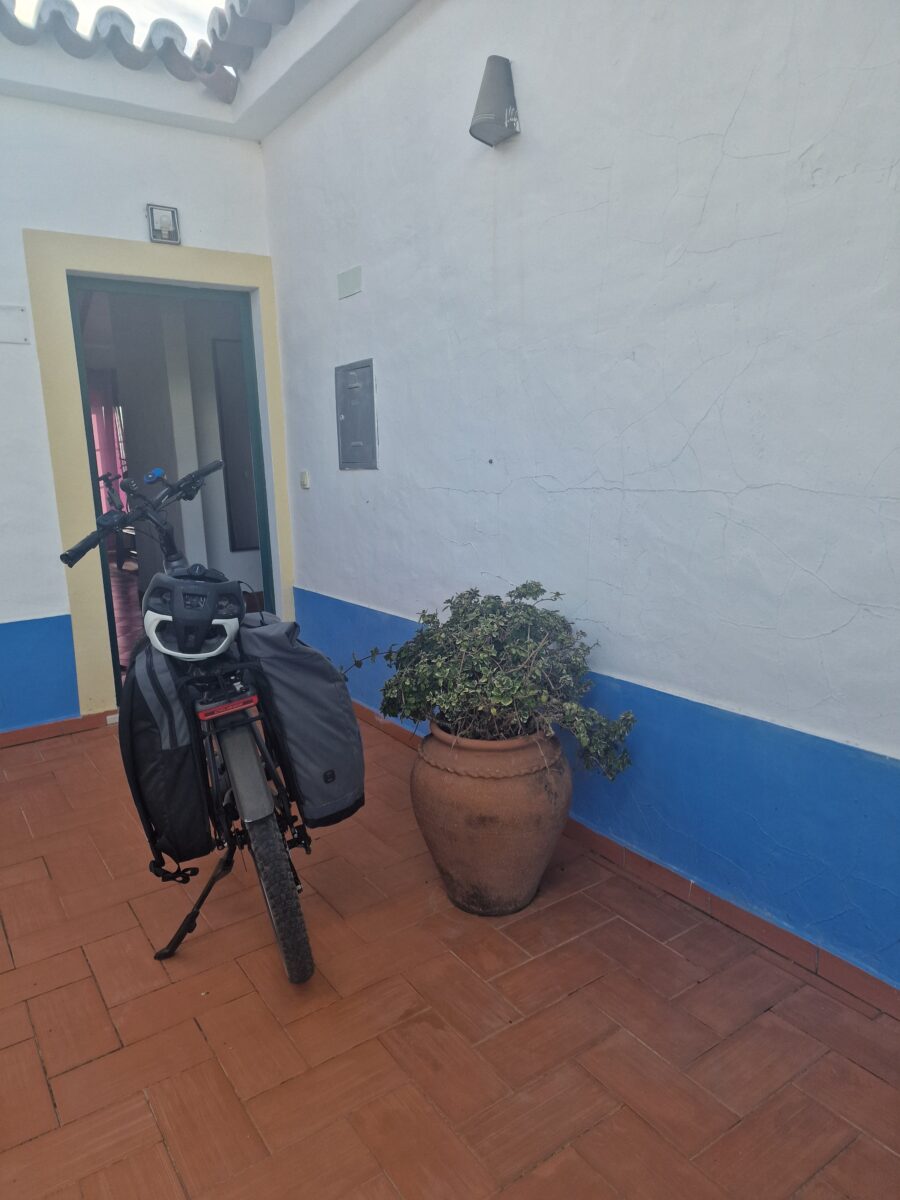
The low-step e-bike was easy to mount and dismount, though the handlebar position sat higher than I’d normally prefer on technical terrain. On the first deep sand section I found out why that mattered. The wheels sank. The bike wanted to go sideways. I tensed up, which made it worse.
By the second sandy stretch I’d worked out the mechanics: carry enough speed, hold the handlebar firmly without gripping, and don’t fight the movement. Let the bike find its line. This took most of the day to internalise, and it turned out to be the most useful thing I learned on the entire trip – a physical lesson that was also something else.
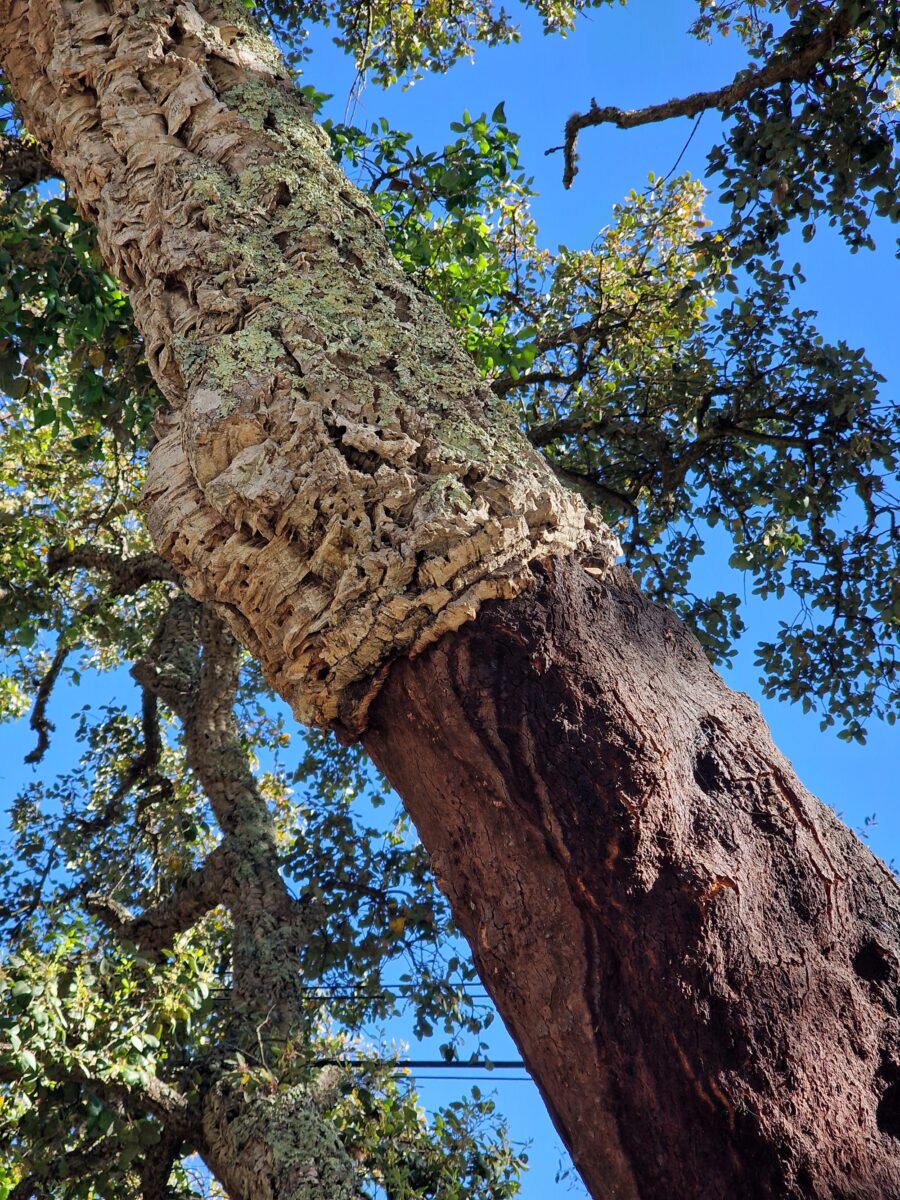
The cork oaks were extraordinary. Many had their lower bark already stripped, the exposed wood dark and almost architectural. It’s a managed landscape – the bark harvest happens on a cycle of about nine years – but visually it stopped me more than once. Something about the contrast between the raw, dark trunk and the grey-green canopy above.
At the end of the day I walked down to the beach at Costa de Santo André. The waves were enormous. Not the kind you wade into – the kind you stand in front of and feel the force of. The Atlantic on this coast isn’t decorative. It’s a presence.
Day 3 – Santo André to Vila Nova de Milfontes: the landscape shifts
~54 km / 365 m elevation gain
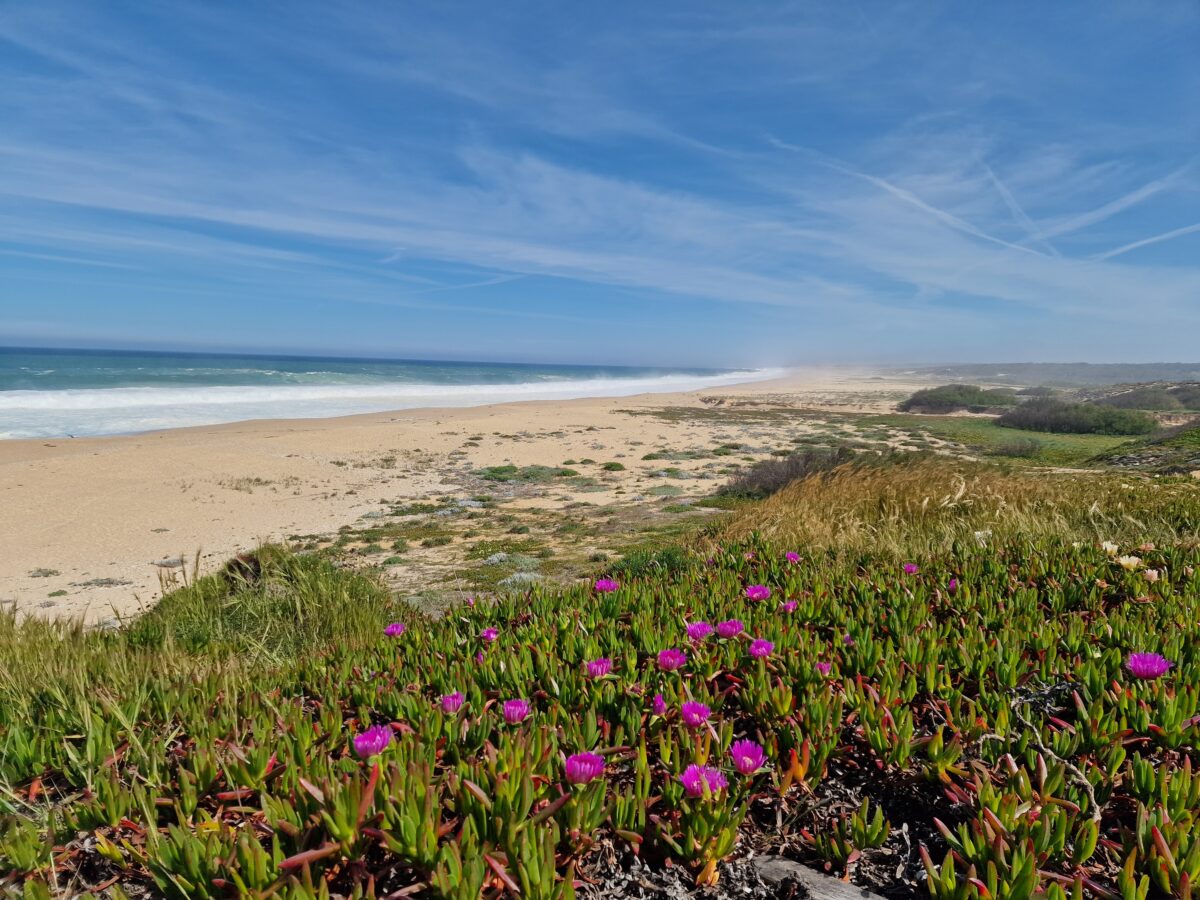
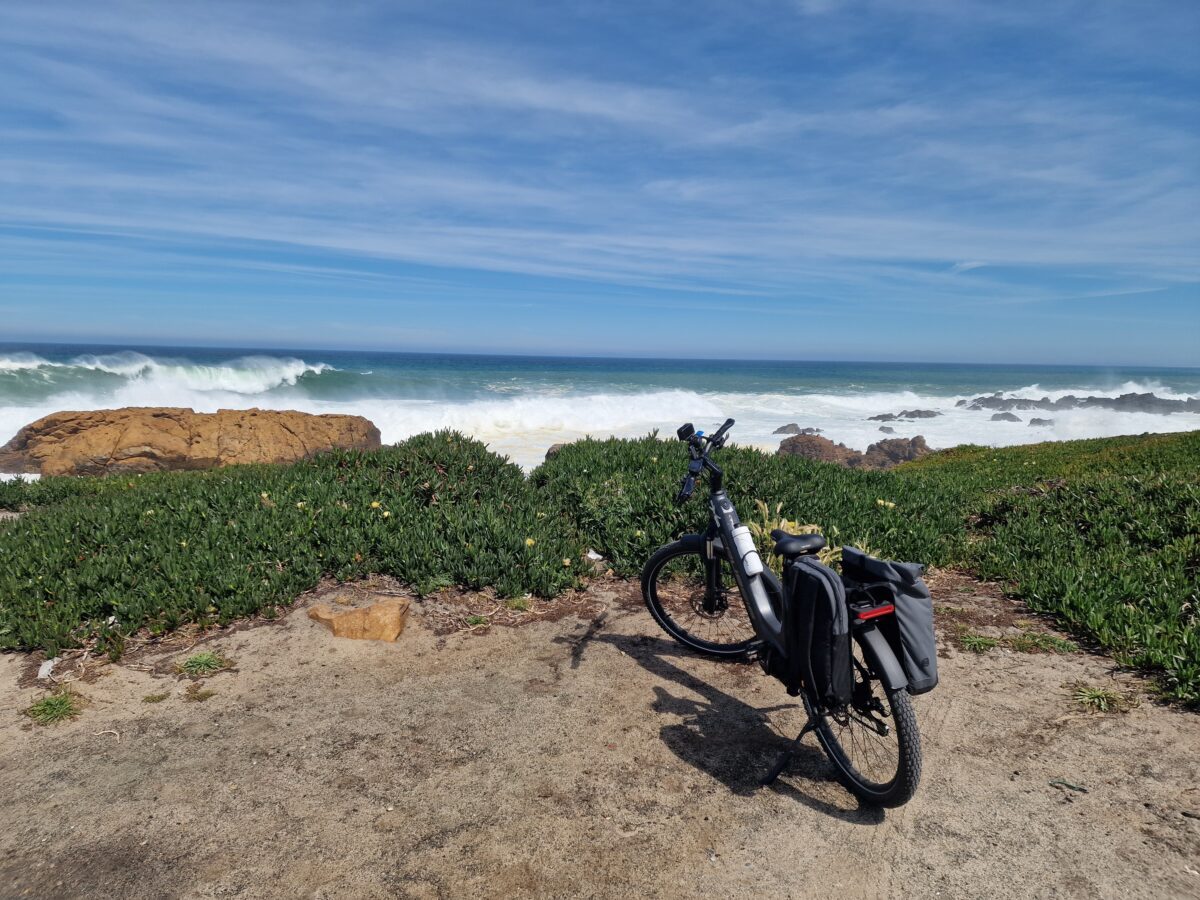

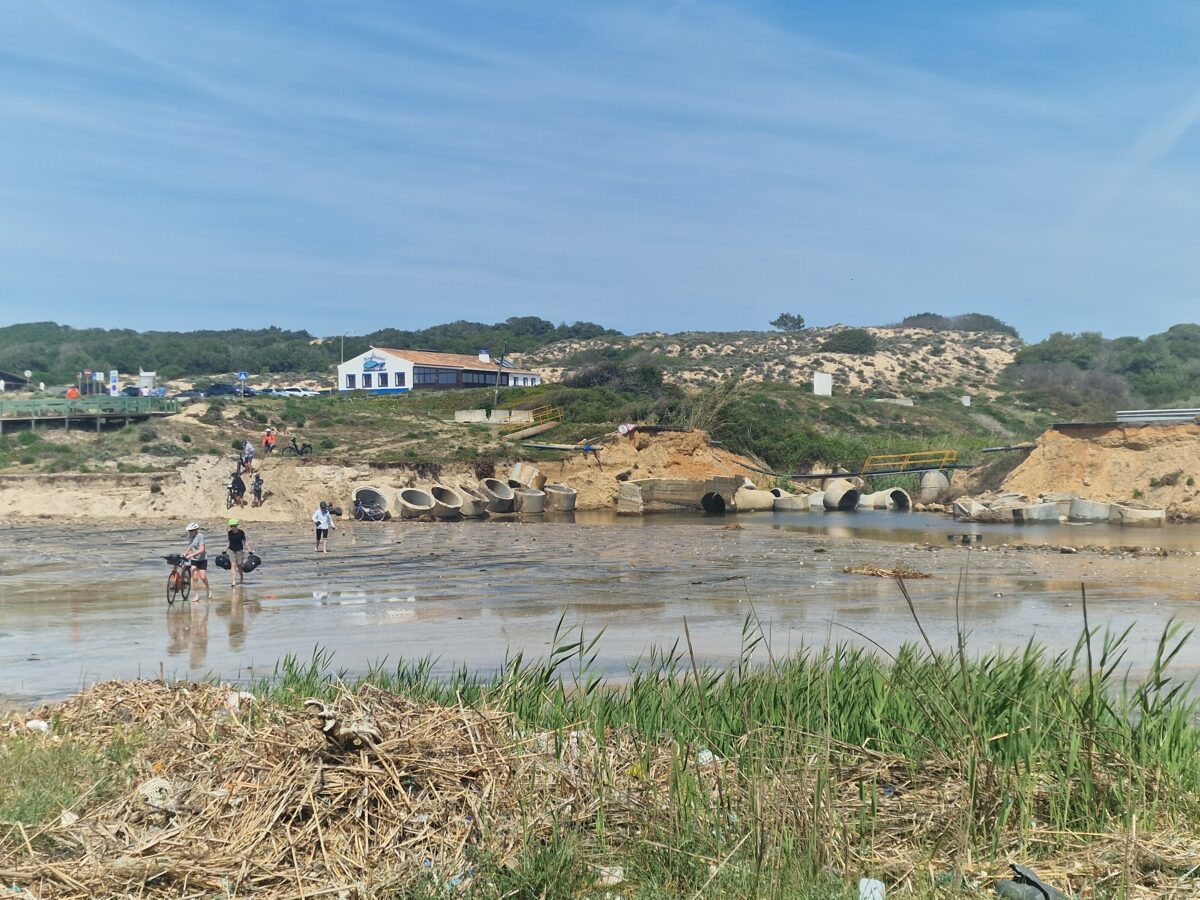
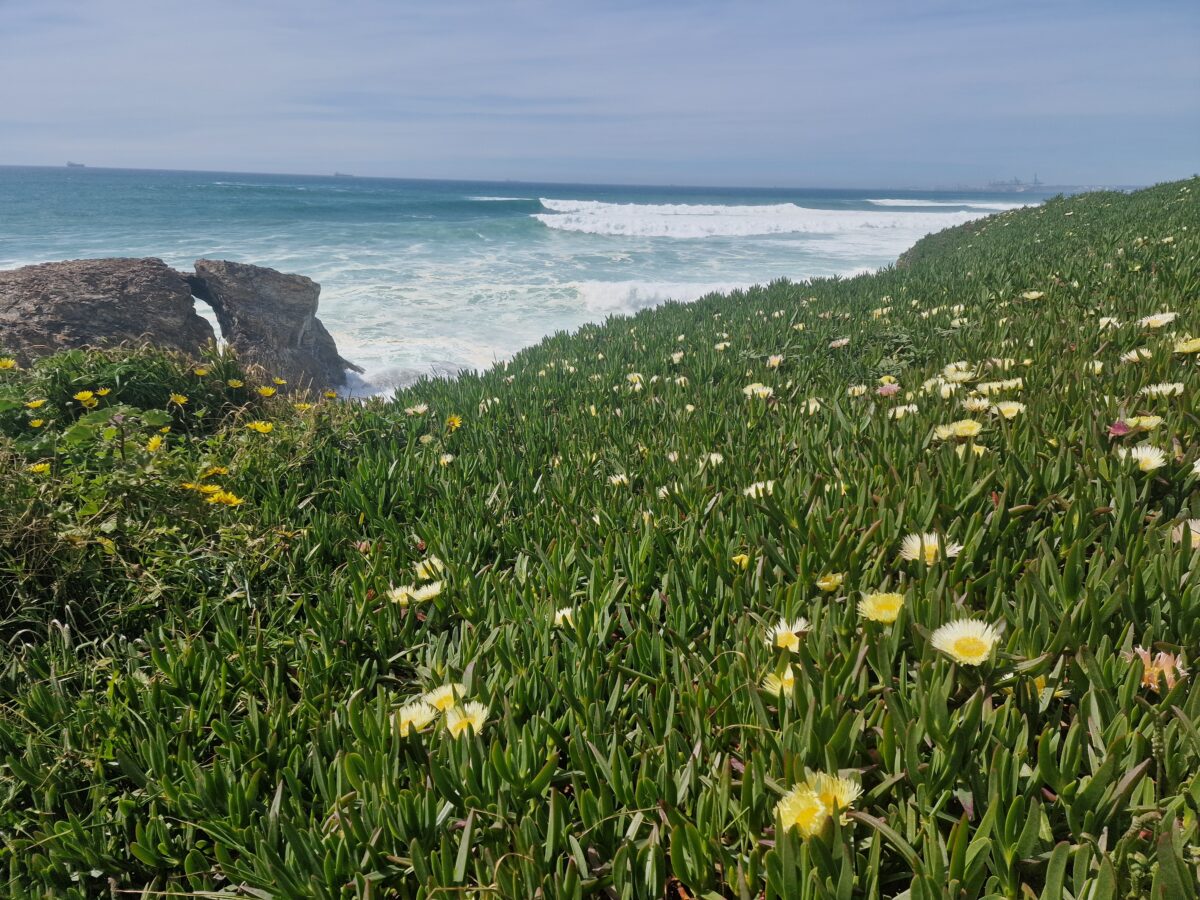
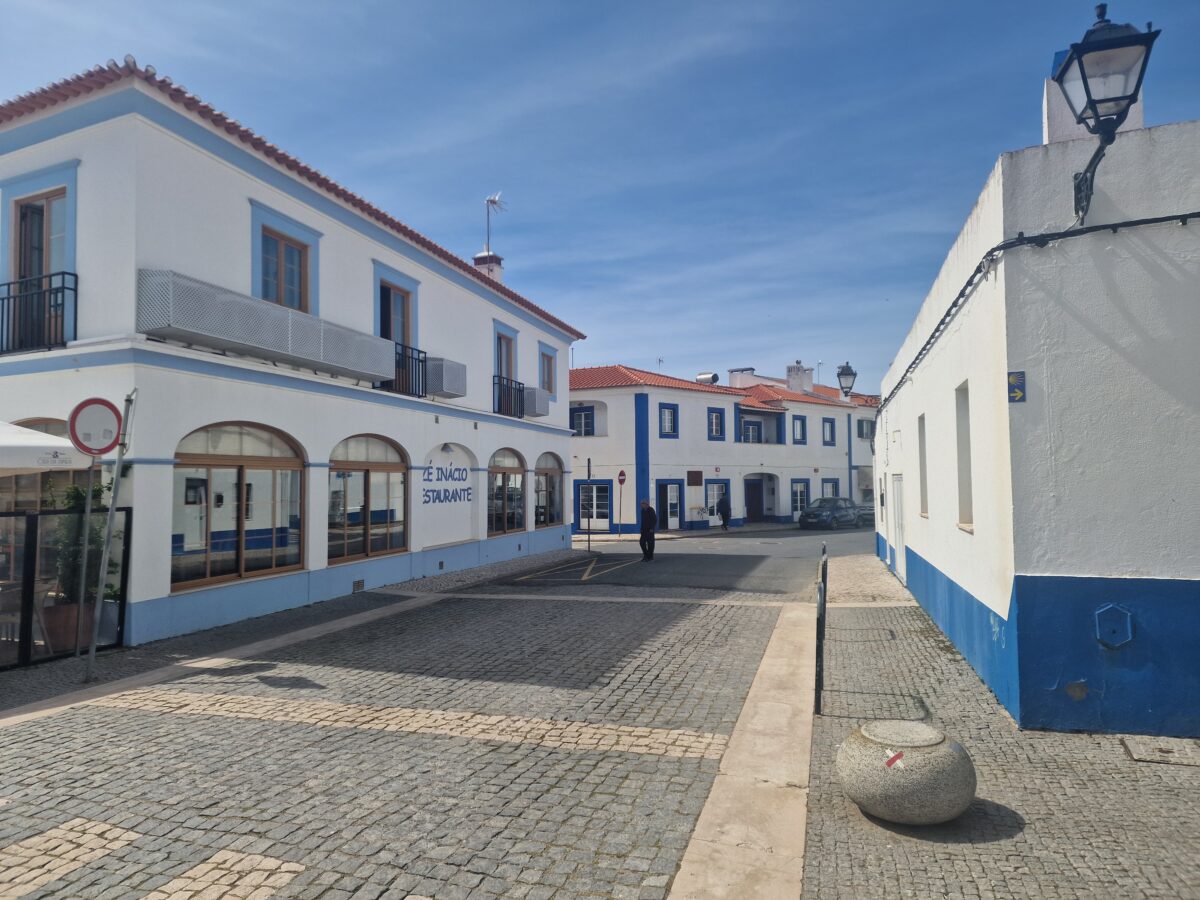
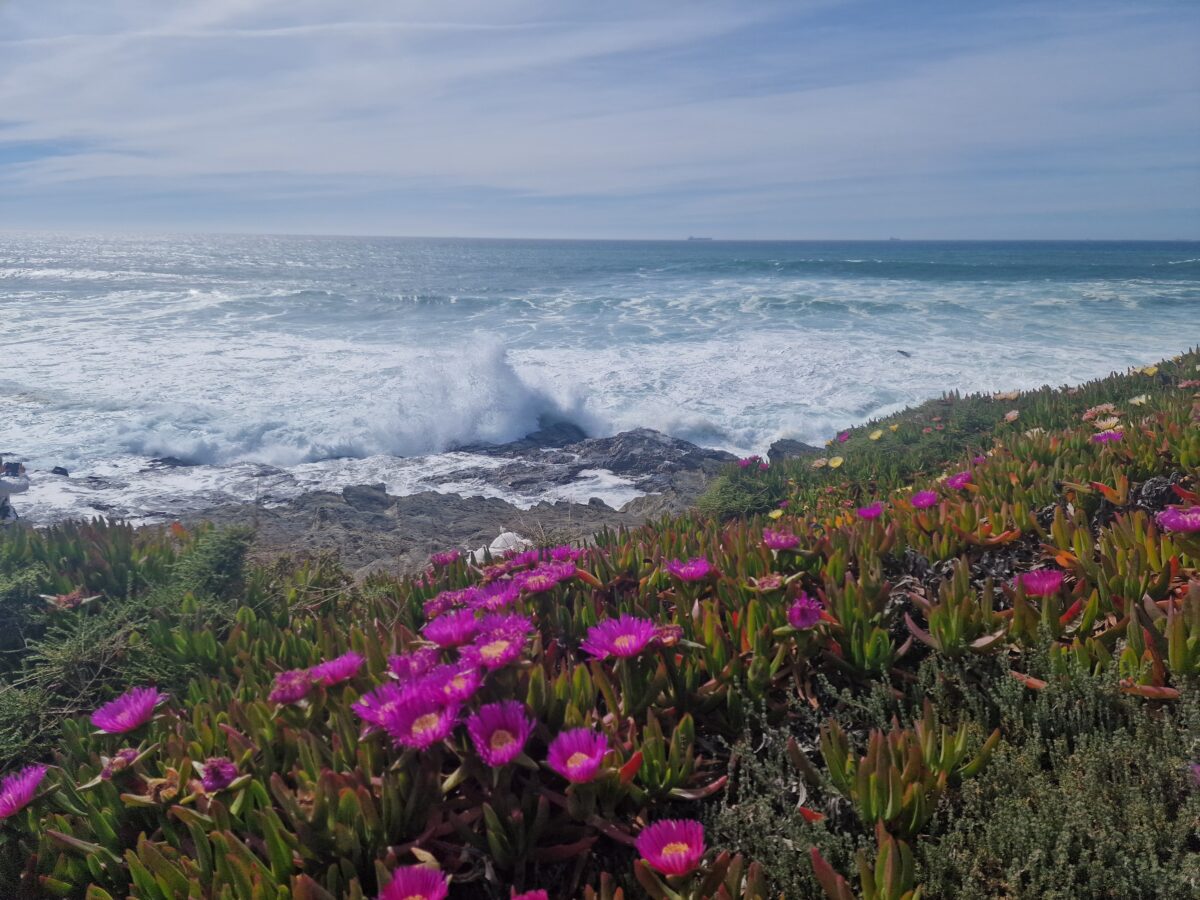

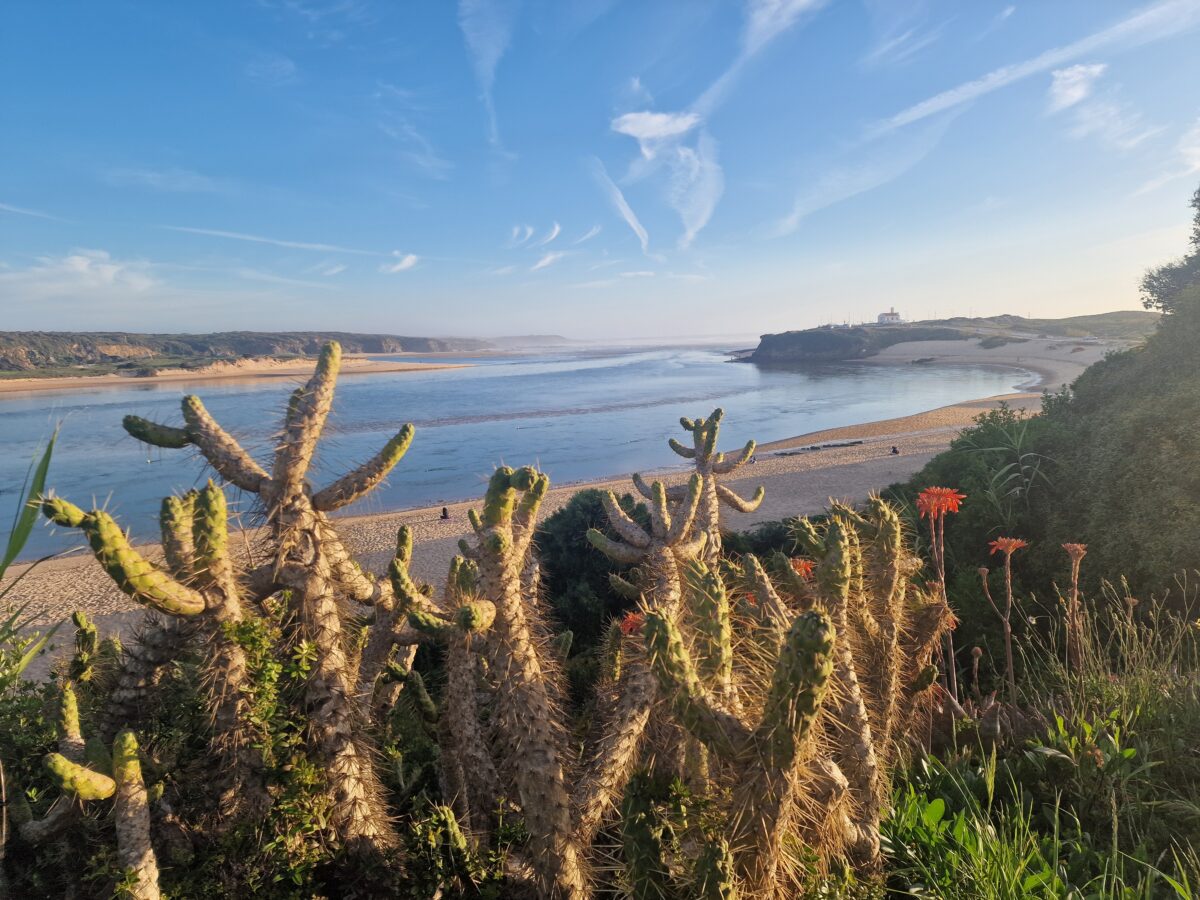
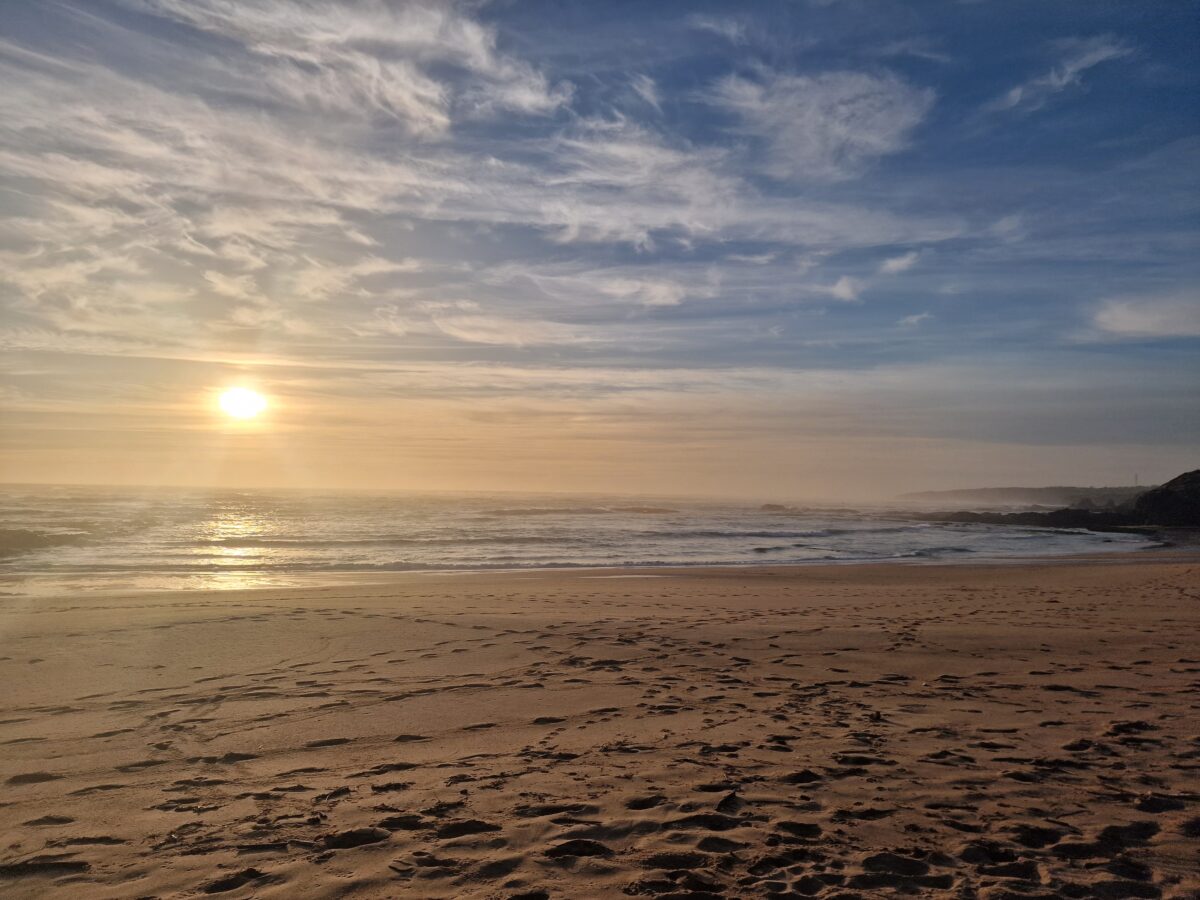
This was a day of cliffs and surf and that particular Atlantic light that makes everything look sharper than it should.
The route ran through montado – the cork oak forest landscape that runs down to the sea in this part of Portugal. The trees are old and wide-canopied, and where the forest opens up, the path drops toward cliff edges with views straight out to open ocean. It’s an unexpected combination: ancient woodland and sudden vertigo.
São Torpes was the first surf stop – a beach known for consistent Atlantic swell, with the usual gathering of boards and wetsuits laid out to dry on the dunes. Then Porto Covo for lunch, a small fishing village perched above the water with whitewashed walls and a harbour smell and a café table in the shade that was very hard to leave.
Vila Nova de Milfontes came in the late afternoon. White walls, a small castle above the Mira river estuary, boats on the water. We caught the sunset from a hidden beach in Milfontes, the kind of ending to a day that feels slightly too good to be real.
This was also the day something started to shift internally. On the first days of a longer trip there’s still the energy of departure – novelty, logistics, the mild anxiety of not knowing the rhythm yet. Around day three, that starts to settle. Fewer thoughts. More observation. The body finds its pace and the mind follows.
Day 4 – Vila Nova de Milfontes to Odeceixe: the Rota Vicentina
~56 km / 530 m elevation gain
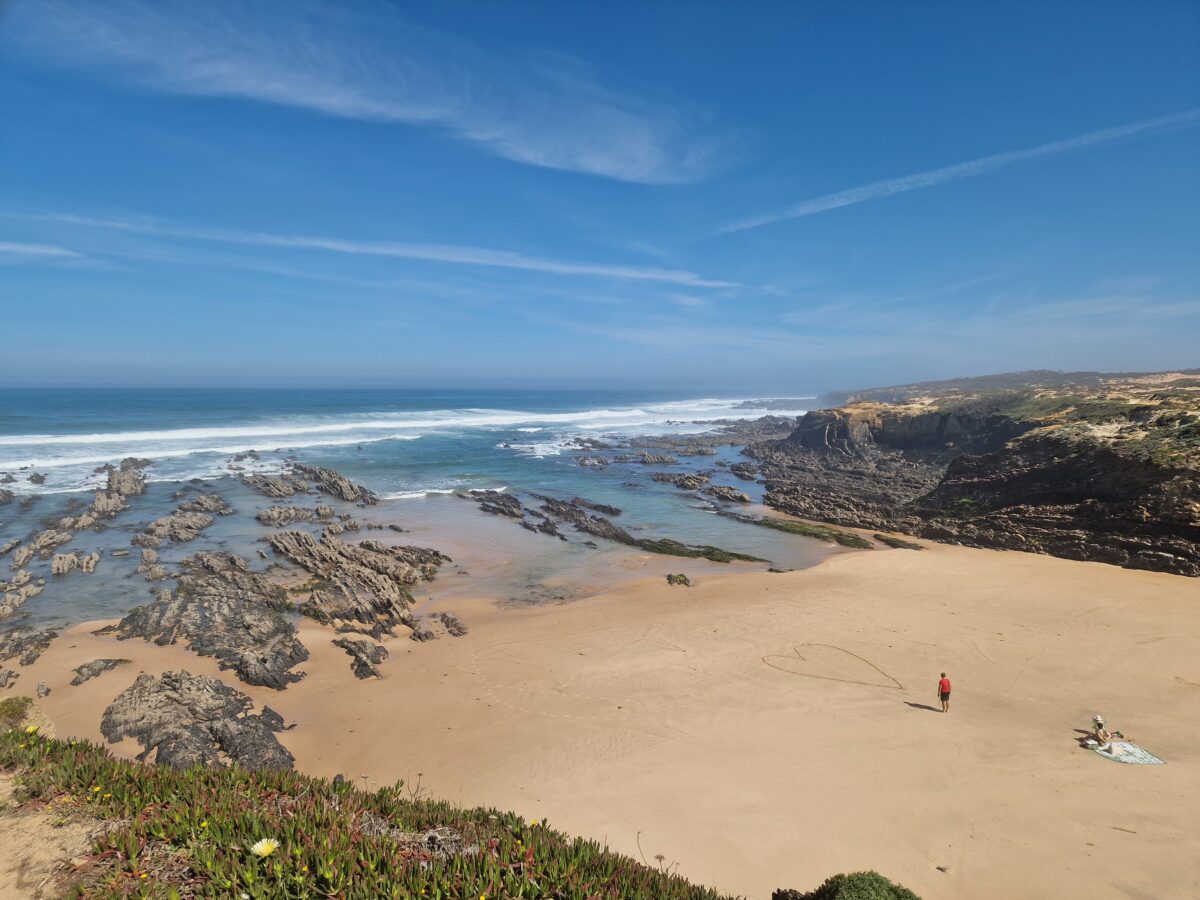
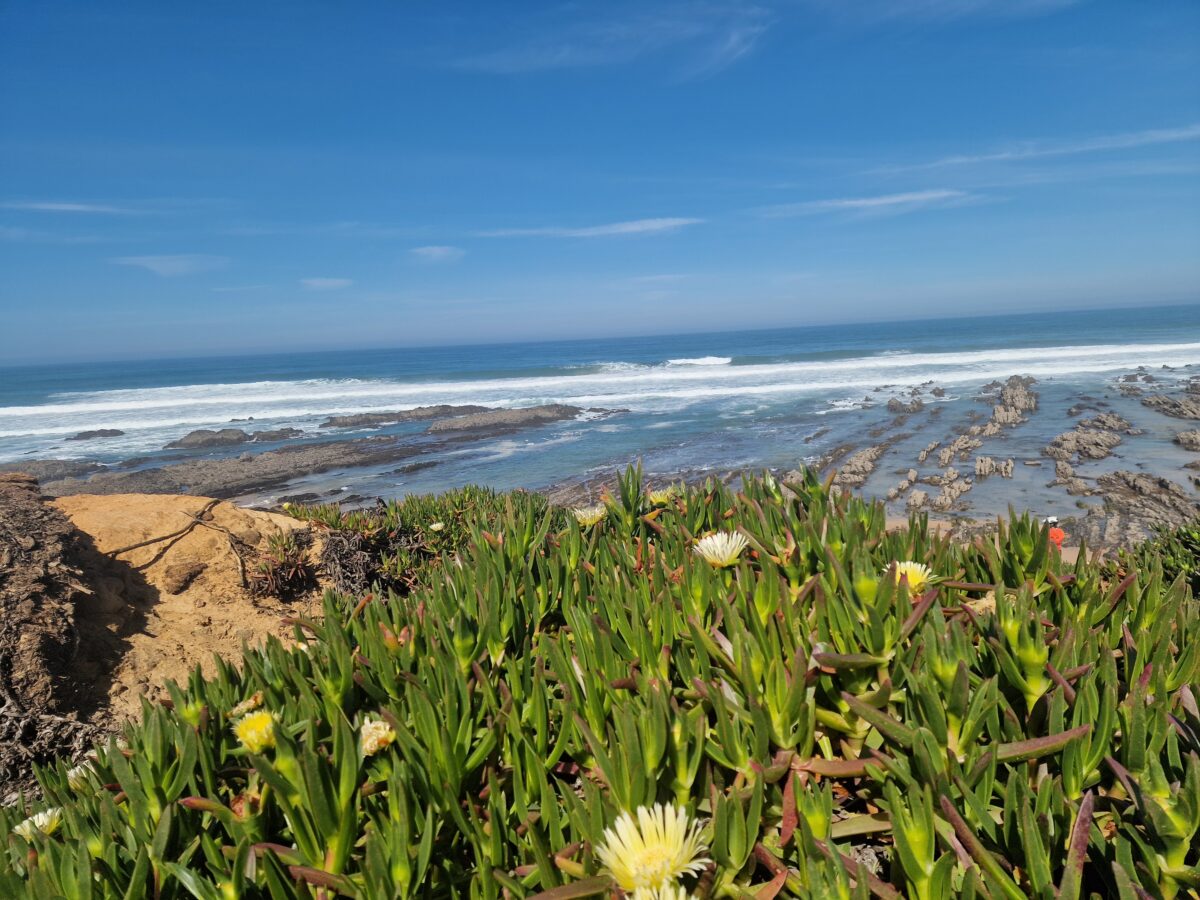
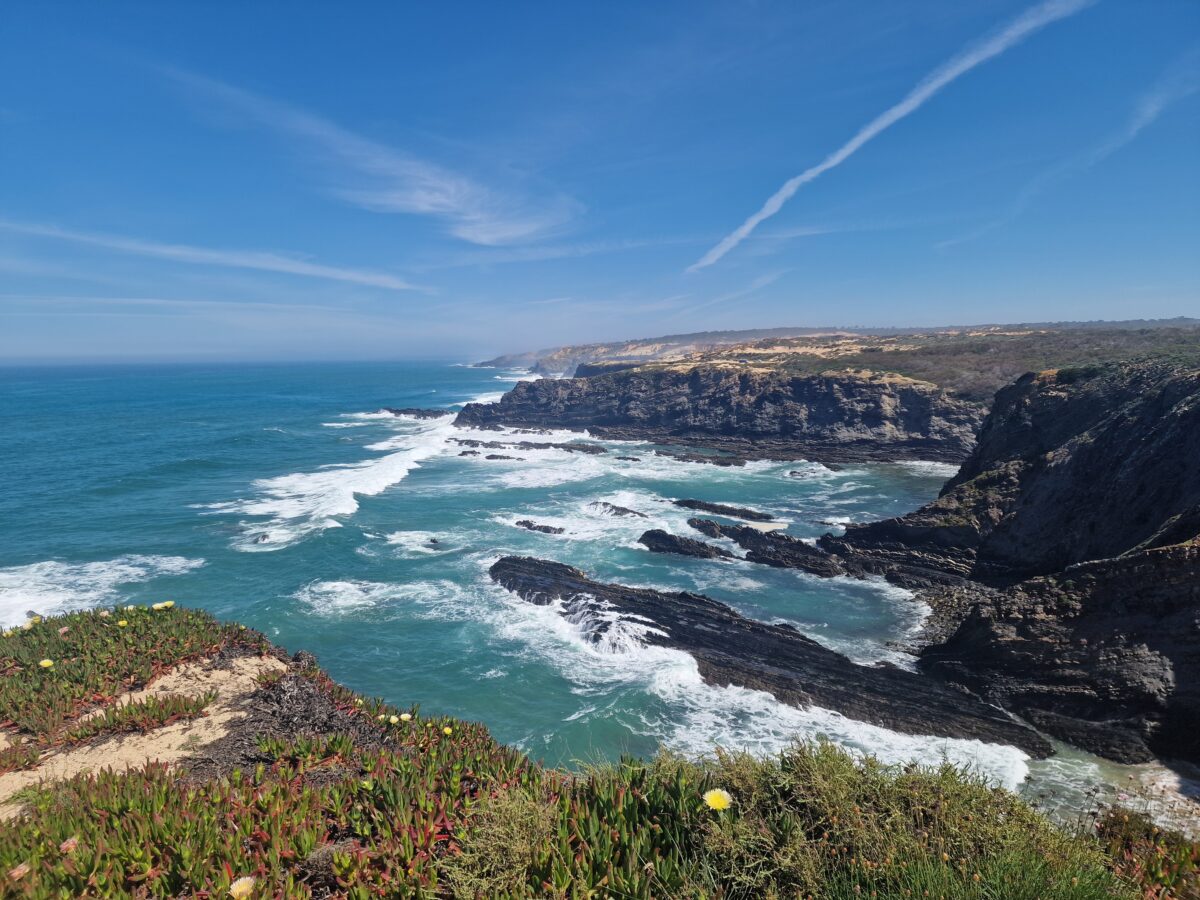

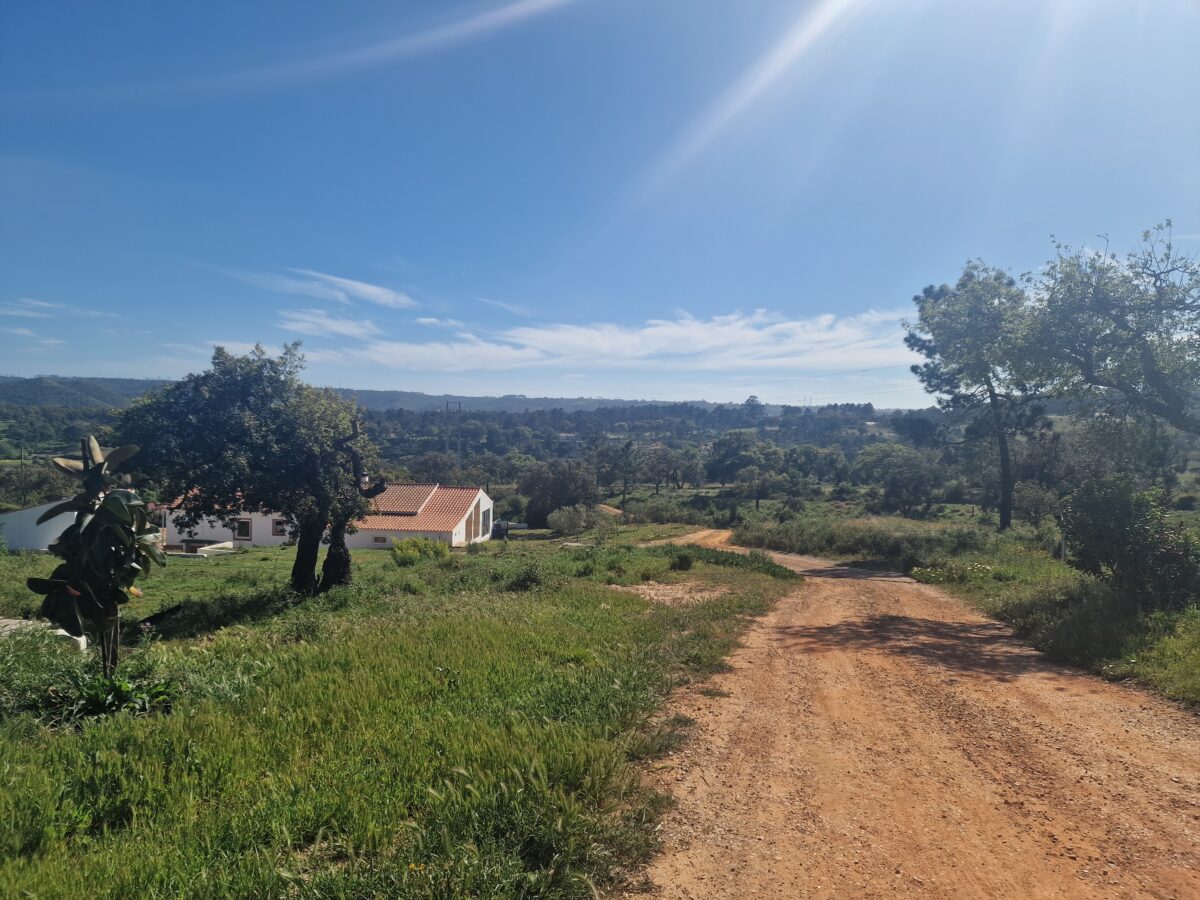
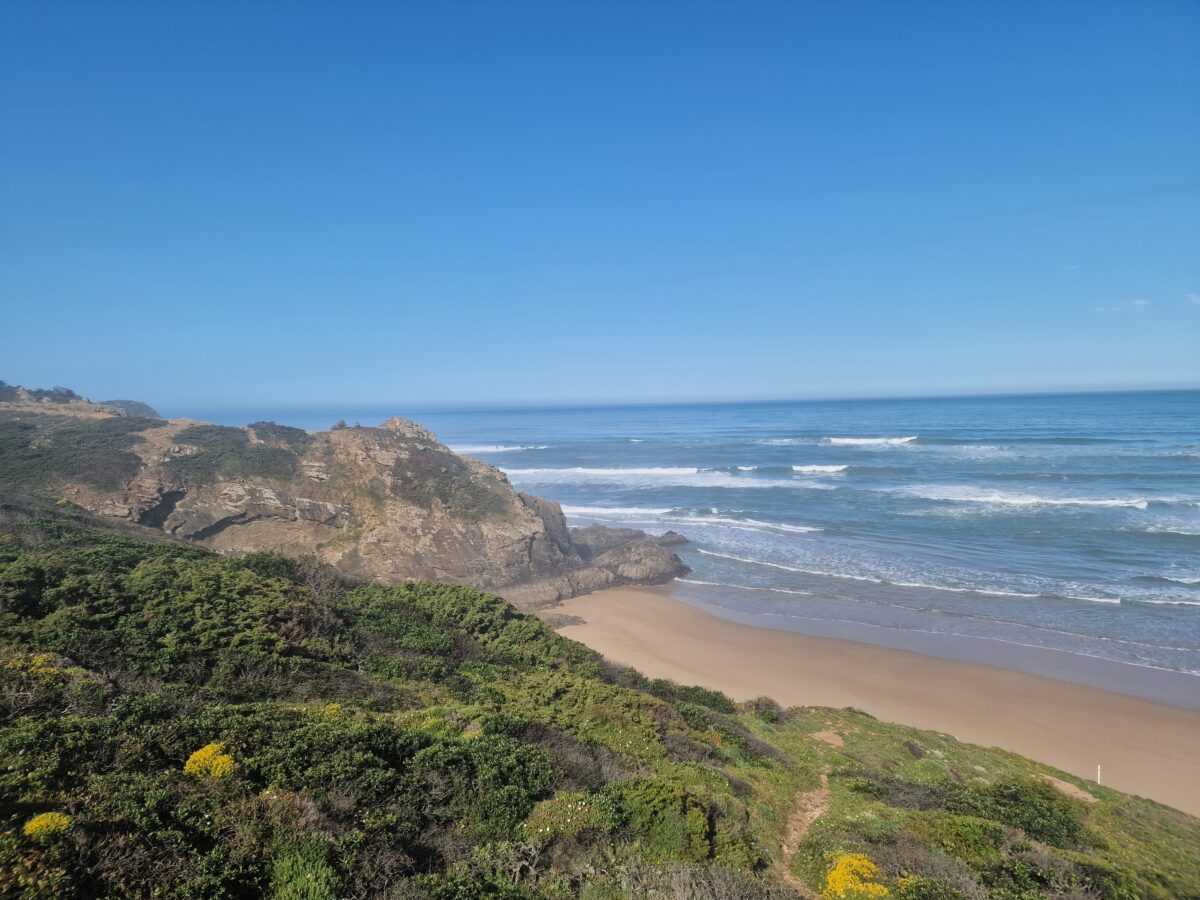
This was the stage where the route became genuinely what it promises: the Fishermen’s Trail in its coastal form. Clifftop paths above the Atlantic, rock stacks in the sea below, the small hamlets of Almograve and Carvalhal, and then Cabo Sardão.
The headland at Cabo Sardão is one of the most unusual stops on the route. It’s a dramatic rocky point above open ocean, with a small white lighthouse – and white storks nesting directly on the coastal rocks. Storks in most of Europe nest inland, on chimneys and church towers. Here they breed on cliff edges above the Atlantic, which is striking enough to make you stop cycling and just look.
The climb to reach it is part of why the day’s elevation reaches 530 metres. None of the individual climbs is long, but they accumulate, and the e-bike earns its keep on this particular stage.
I also noticed something on this day that I’ve thought about since: a group trip takes away the navigation weight, and that’s genuinely useful. You look at the landscape more. You’re not glancing at a GPS every five minutes. But it also removes a certain quality of freedom – the ability to stop when you want to stop, linger when something catches your eye, push on when you feel good. I’d traded one kind of presence for another. Both have value. It’s worth knowing, before you go, which one matters more to you right now.
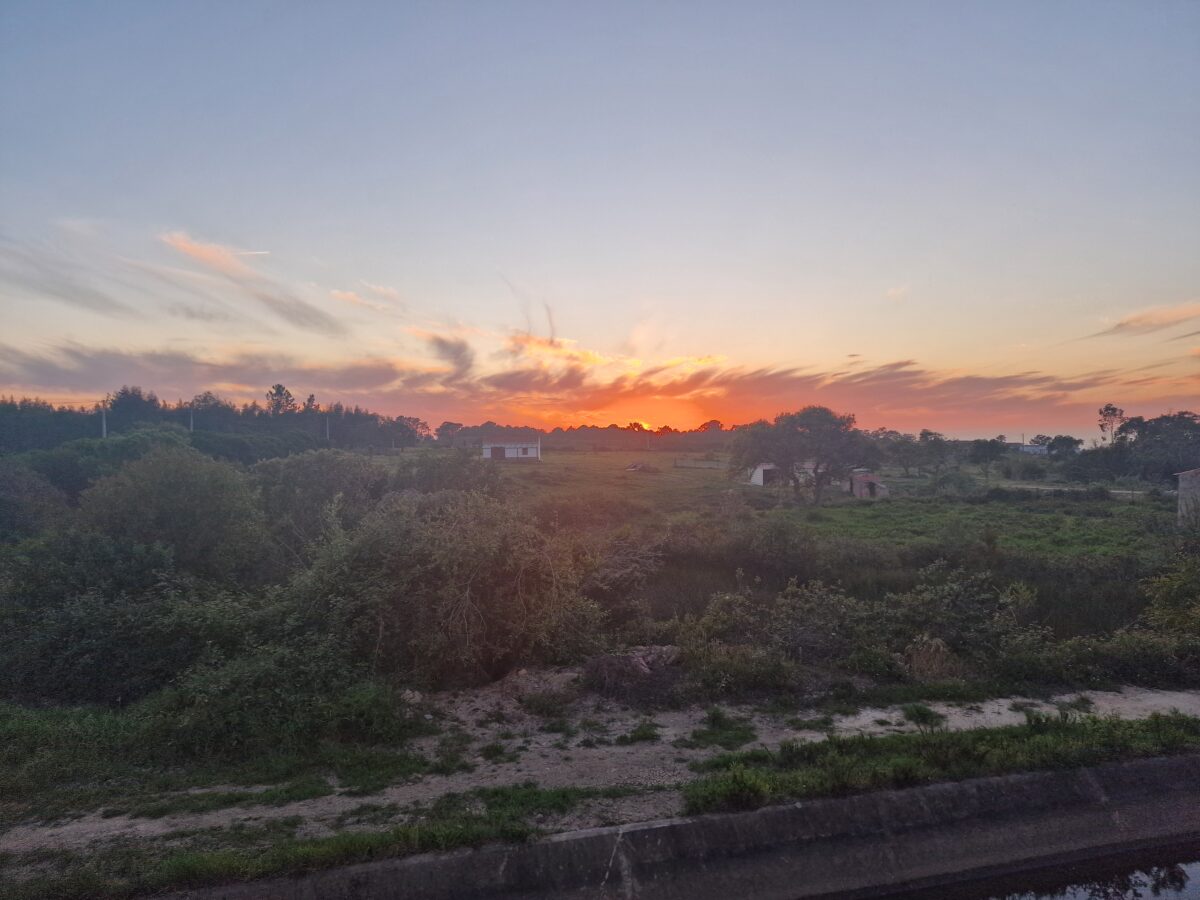
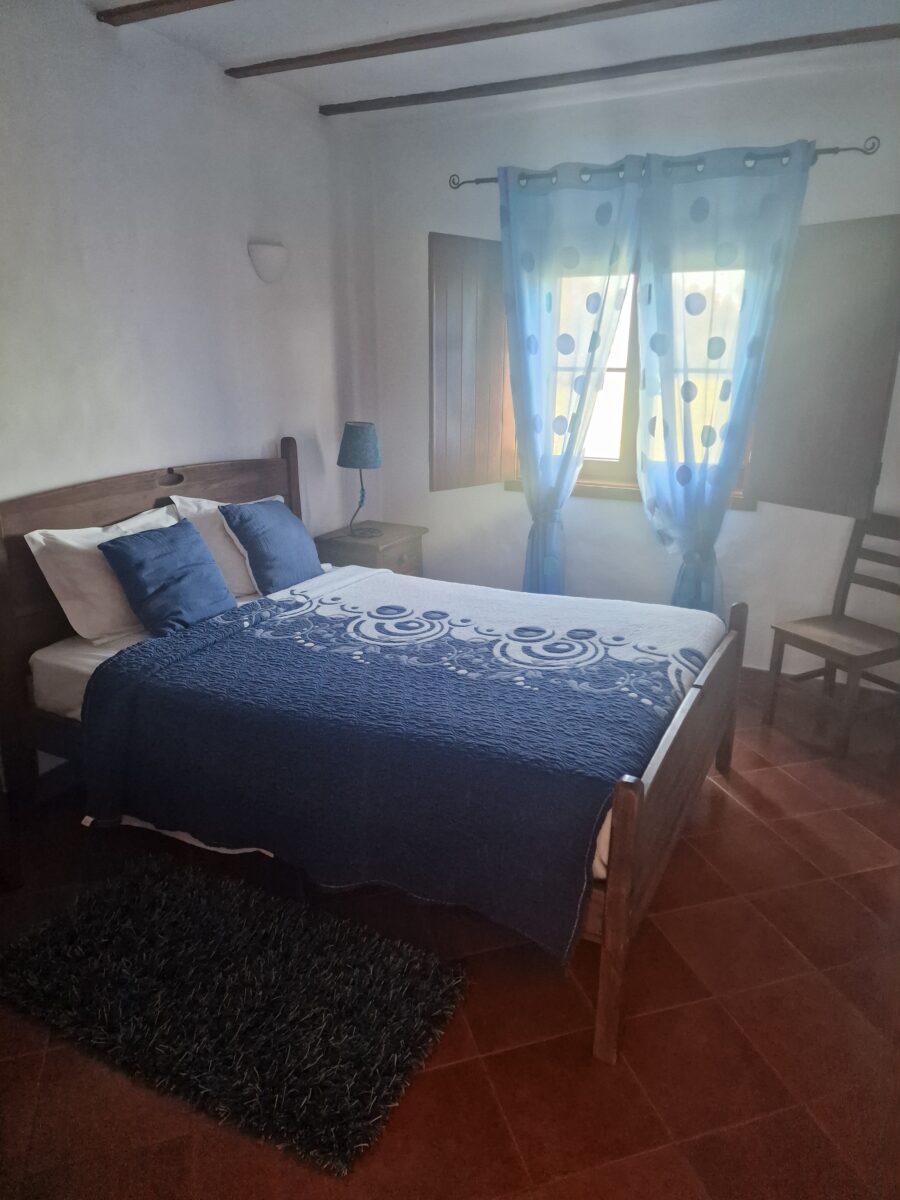
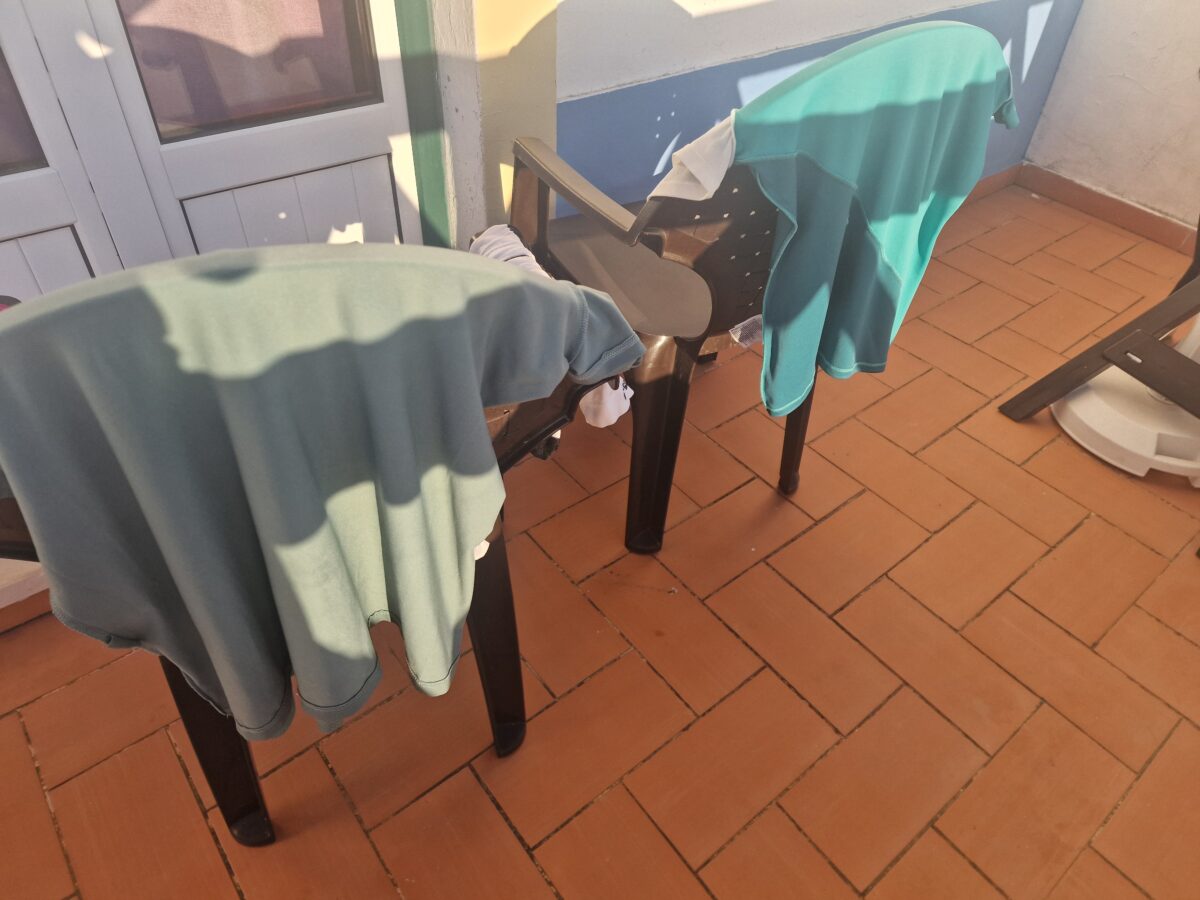
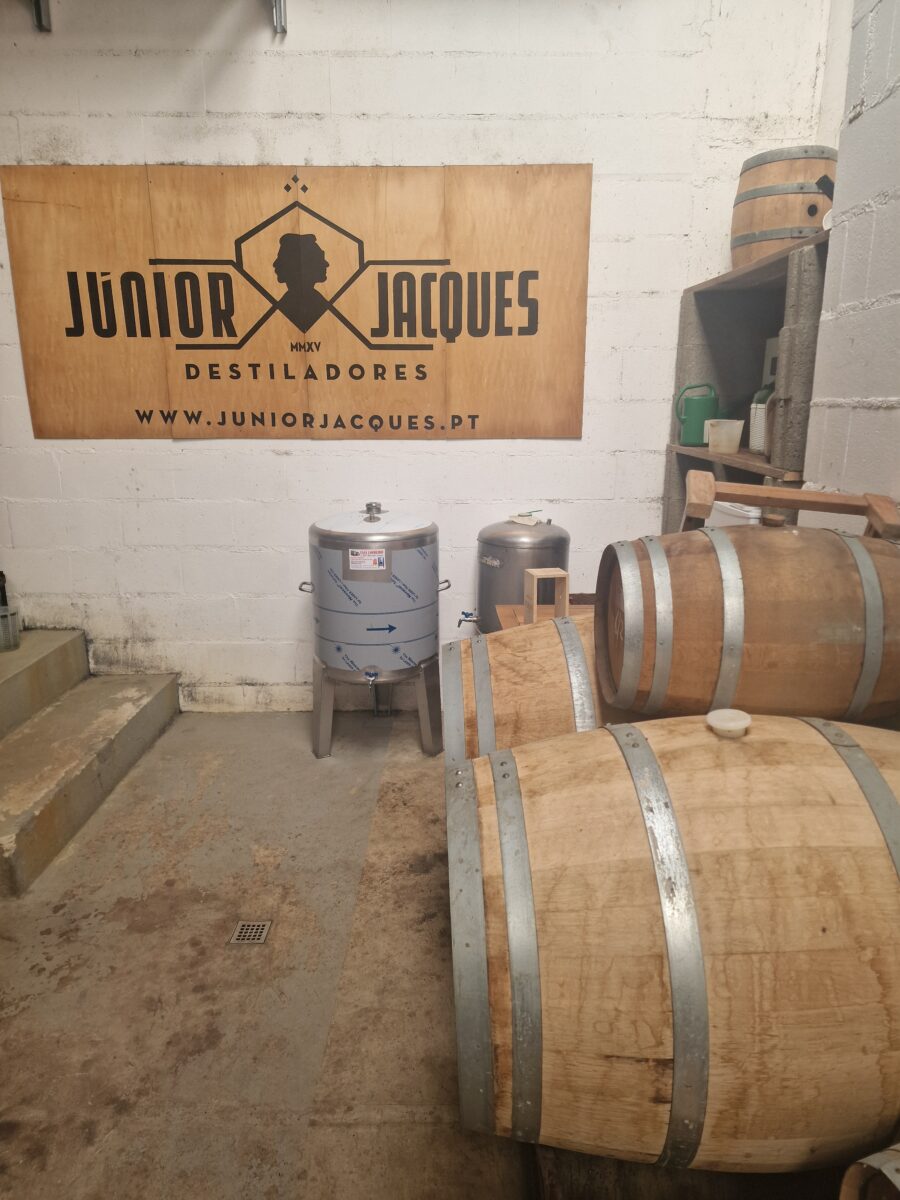
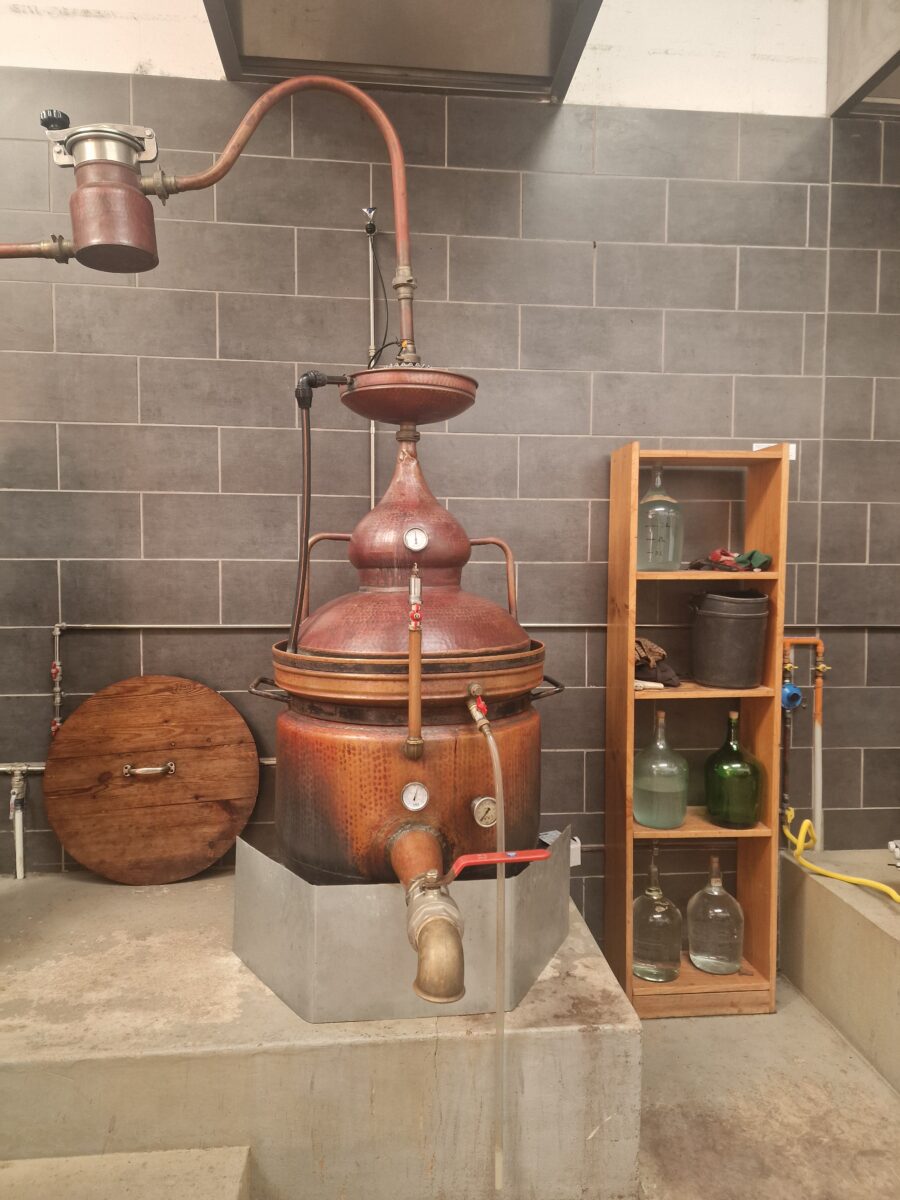
Near Odeceixe we stopped at a small aguardente distillery – the local fruit brandy, made from medronho berries, and very much not something to drink before a long afternoon in the saddle. The day ended at a family farm outside the village, the kind of accommodation that’s hard to describe without sounding like a travel brochure but genuinely felt different from a hotel. The surrounding landscape was quiet in a way that towns aren’t. Today is washing day, one of the small practical wins of technical quick-dry kit: wash it in the evening, wear it again by morning, and carry half as much as you think you need.
By this point in the trip, small Portuguese villages had stopped feeling picturesque in a tourist sense and started feeling like the actual fabric of the journey – places to eat, to sleep, to refill water, to rest before the next day.
Day 5 – Odeceixe to Alfambras: the day everything clicked
~44 km / 490 m elevation gain
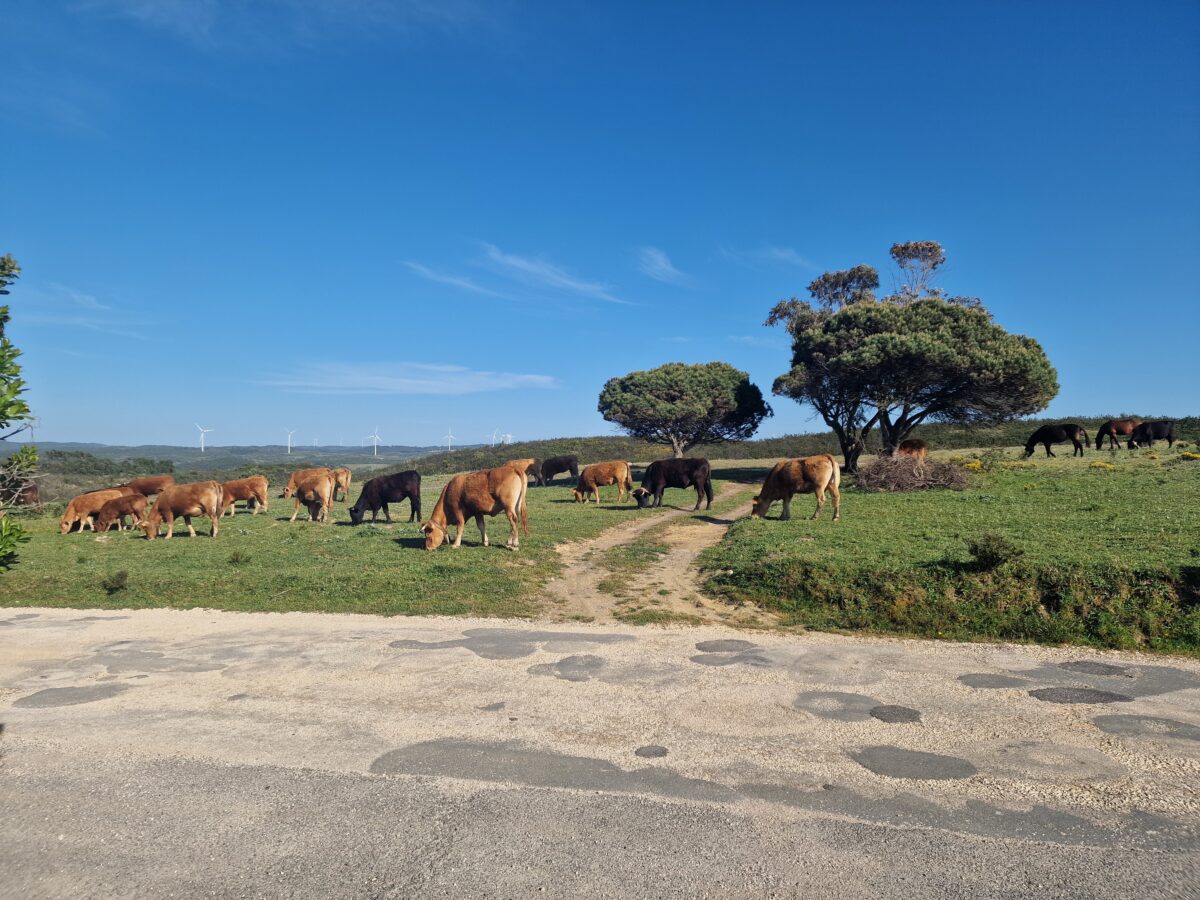
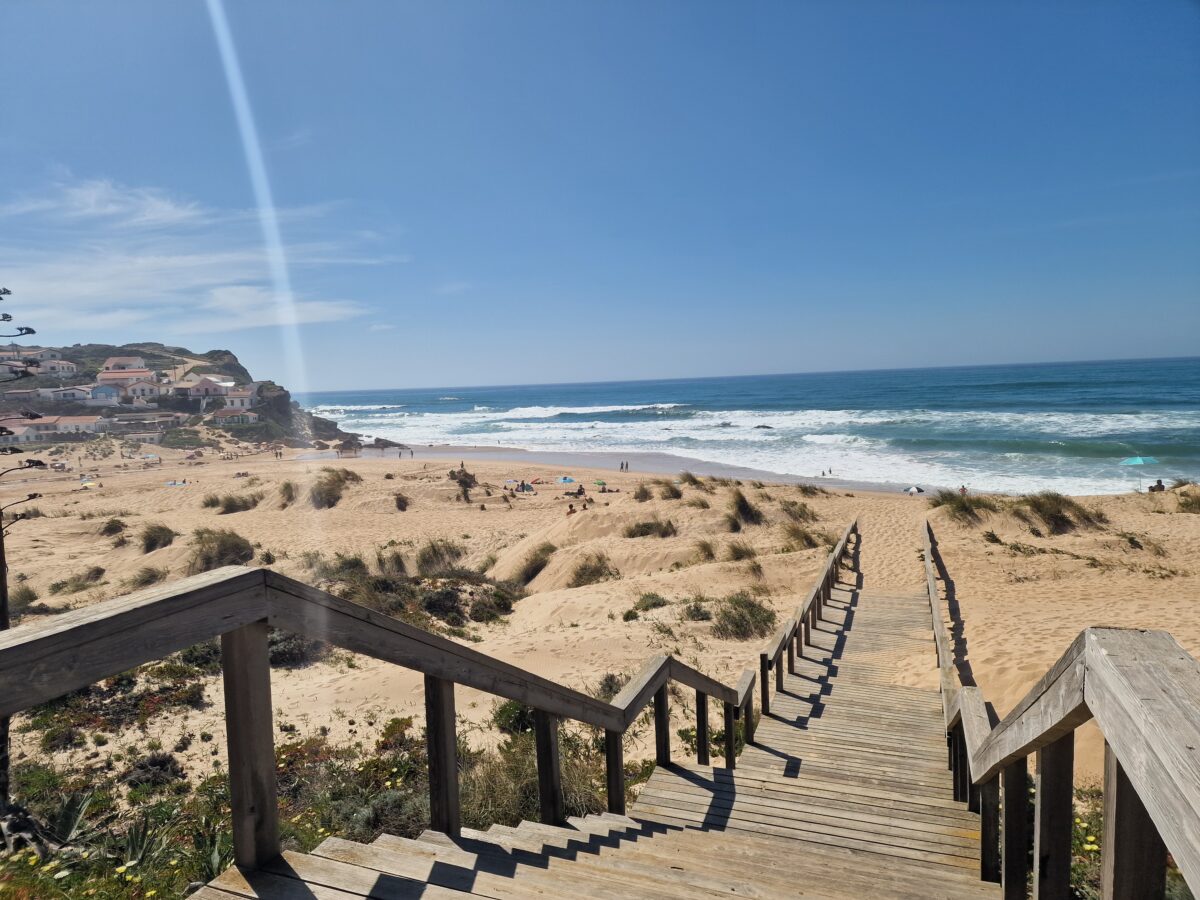
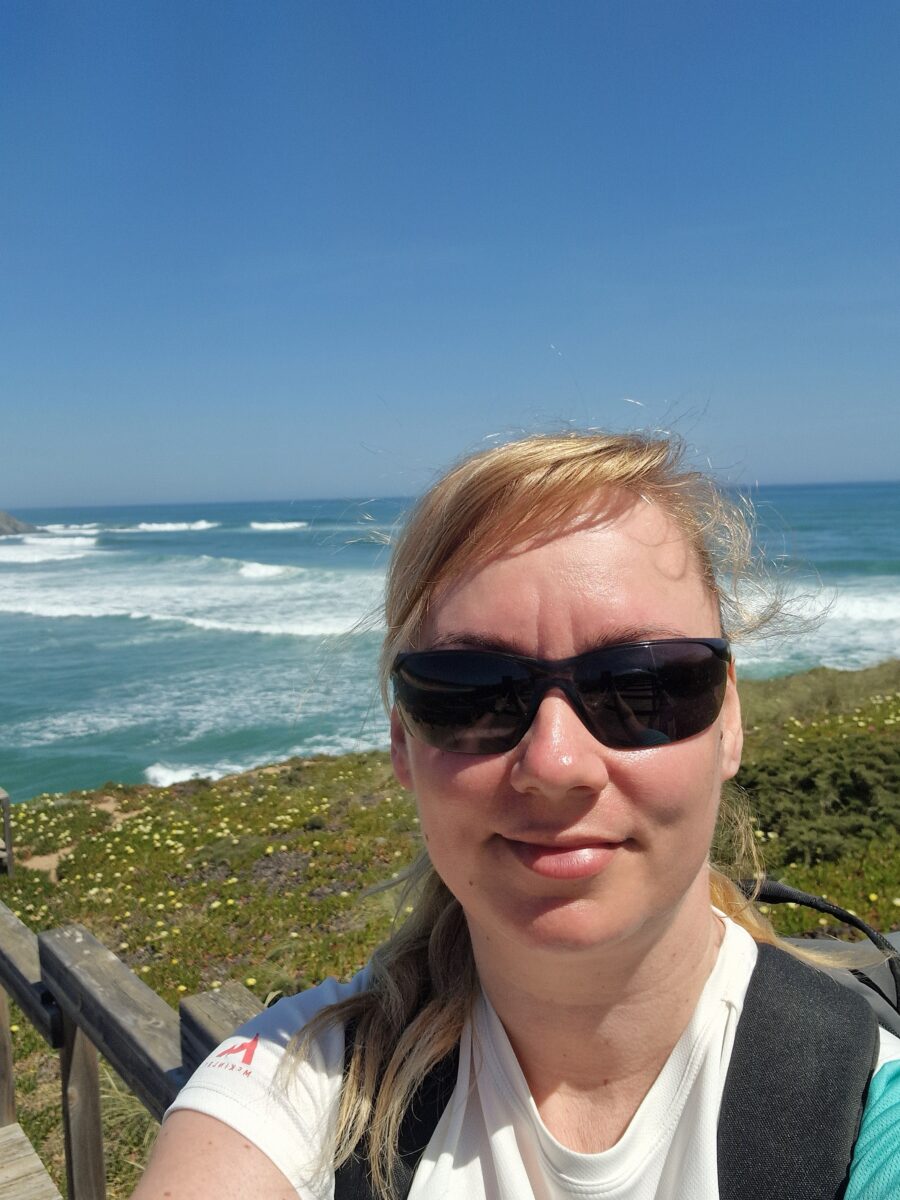
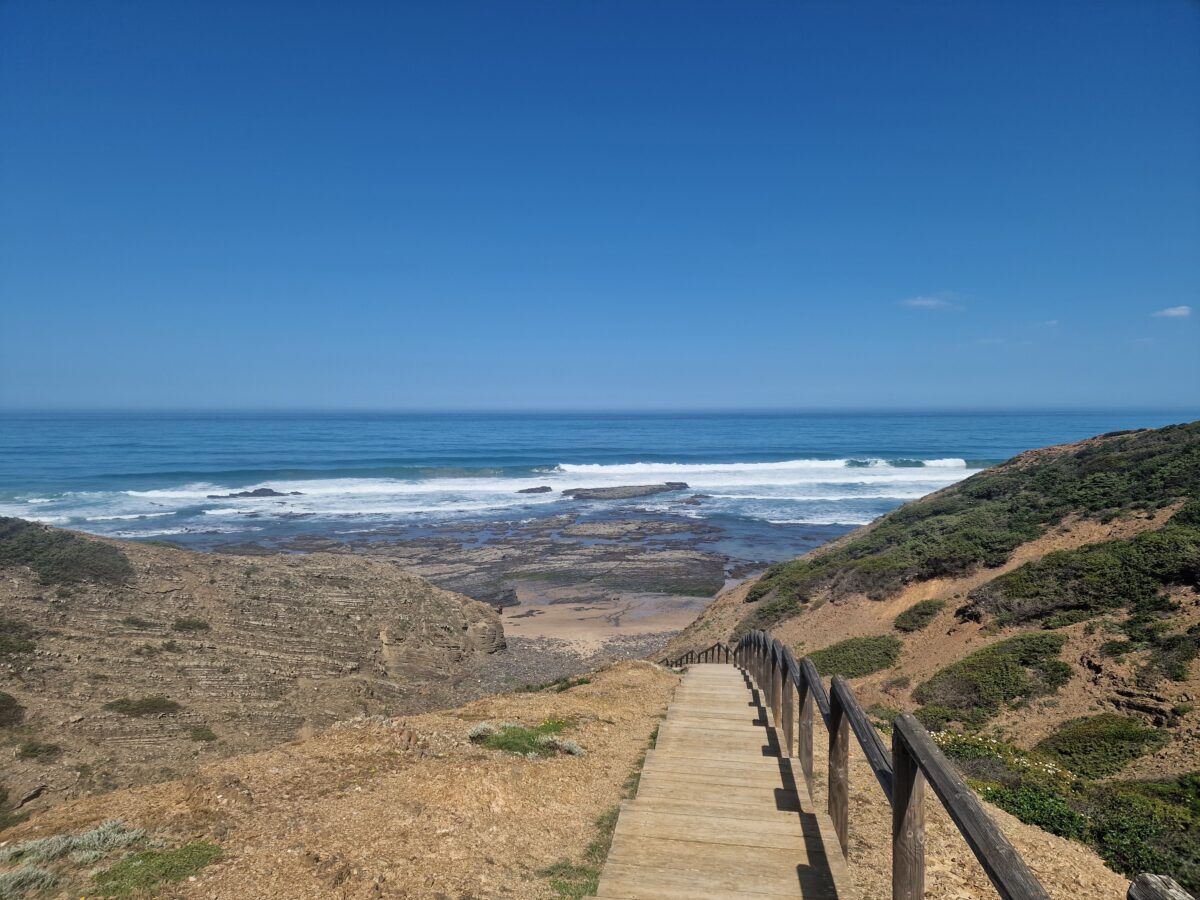
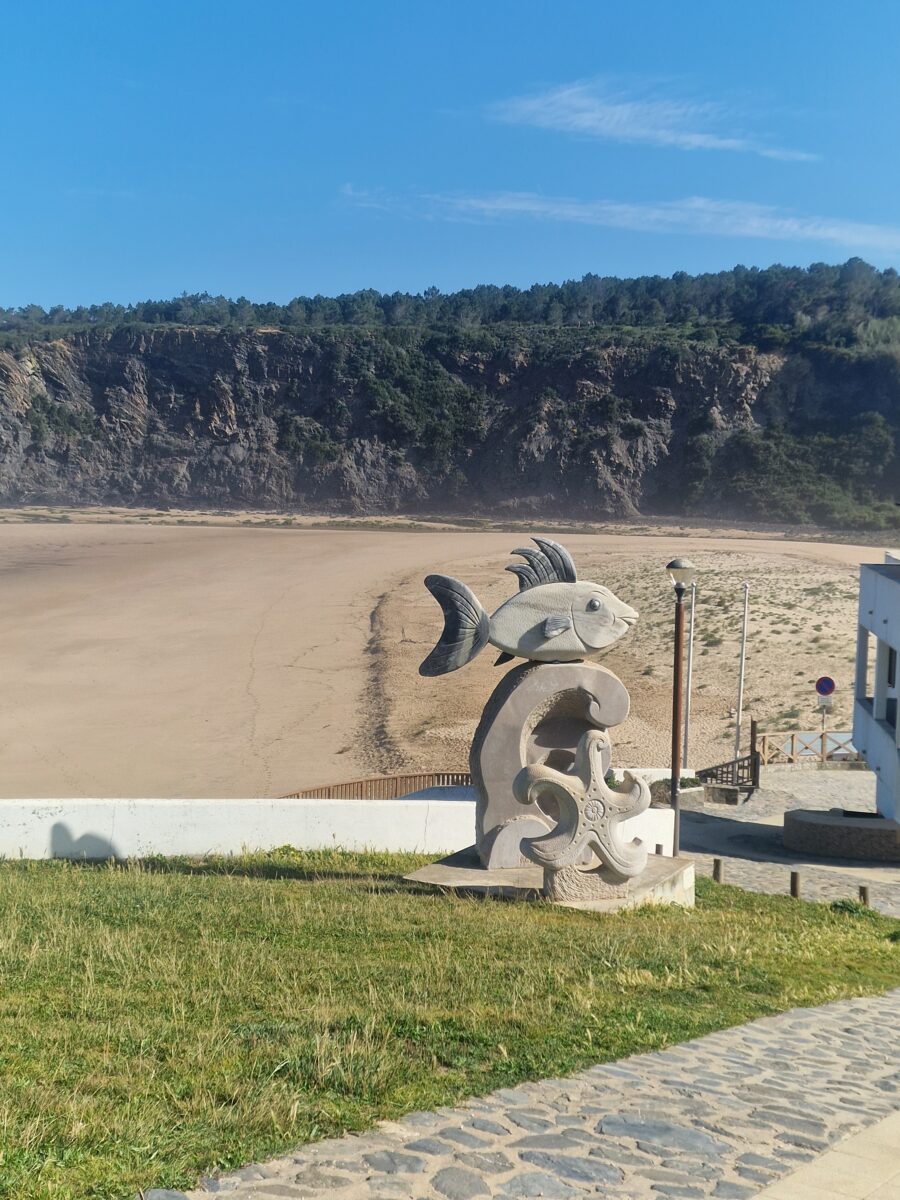
This was the shorter stage, and the one I remember most clearly.
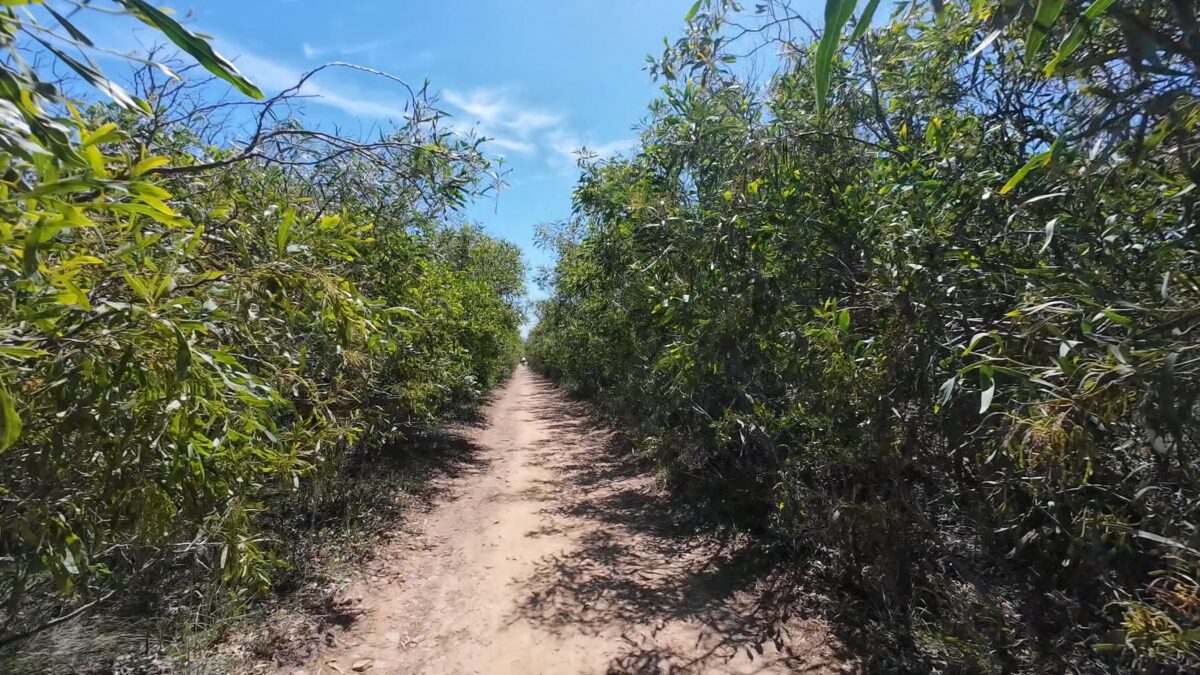
The terrain was better. Less deep sand, more dry earth track and small tarmac roads through eucalyptus forest. Amoreira beach appeared below the dunes – a wide, flat expanse with big Atlantic surf – and then the route climbed inland through Aljezur before dropping down toward Arrifana.
Arrifana is worth arriving at slowly. The beach sits inside a natural amphitheatre of cliffs, with a ruined fort on the headland above and surf breaking across the whole bay. We stopped there long enough to actually look at it.
Day 6 – Alfambras to Sagres: the last day
~65 km / 550 m elevation gain
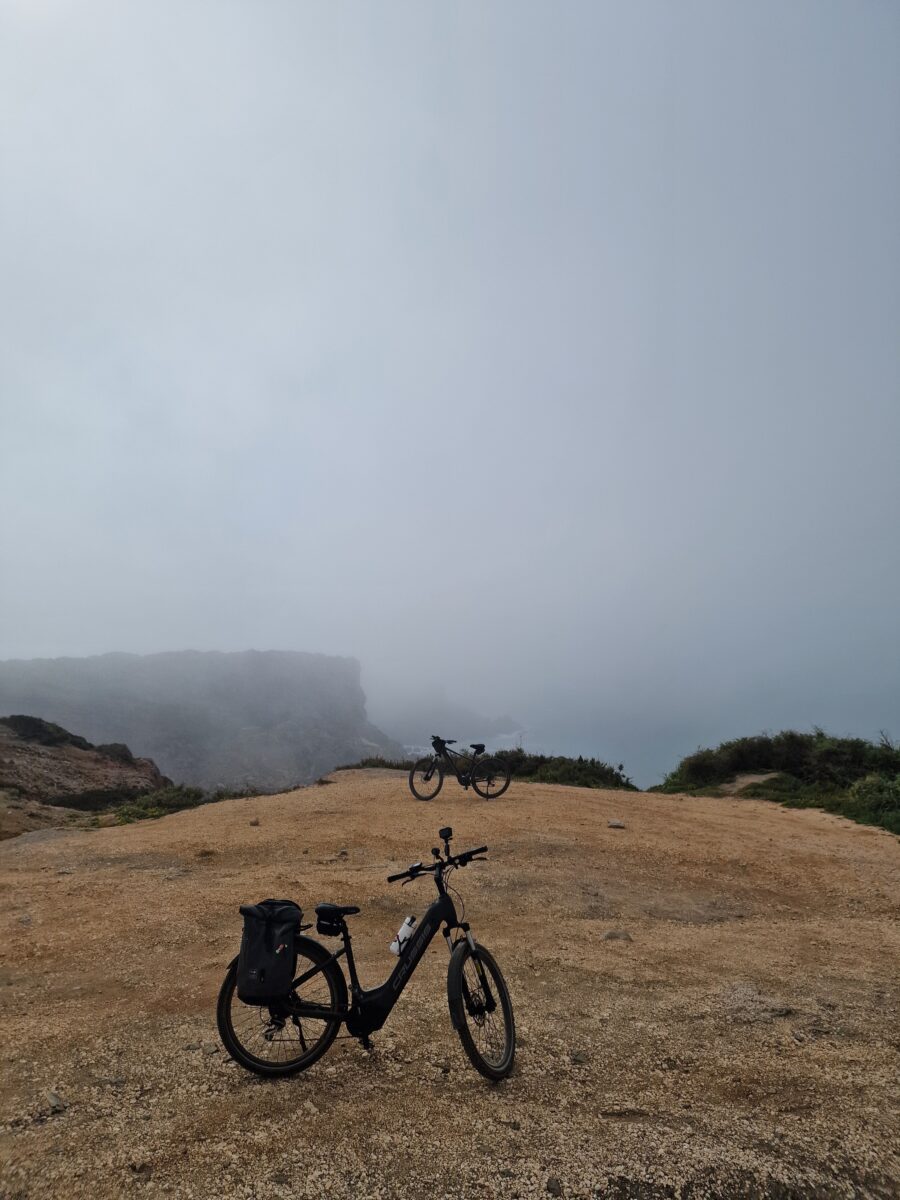
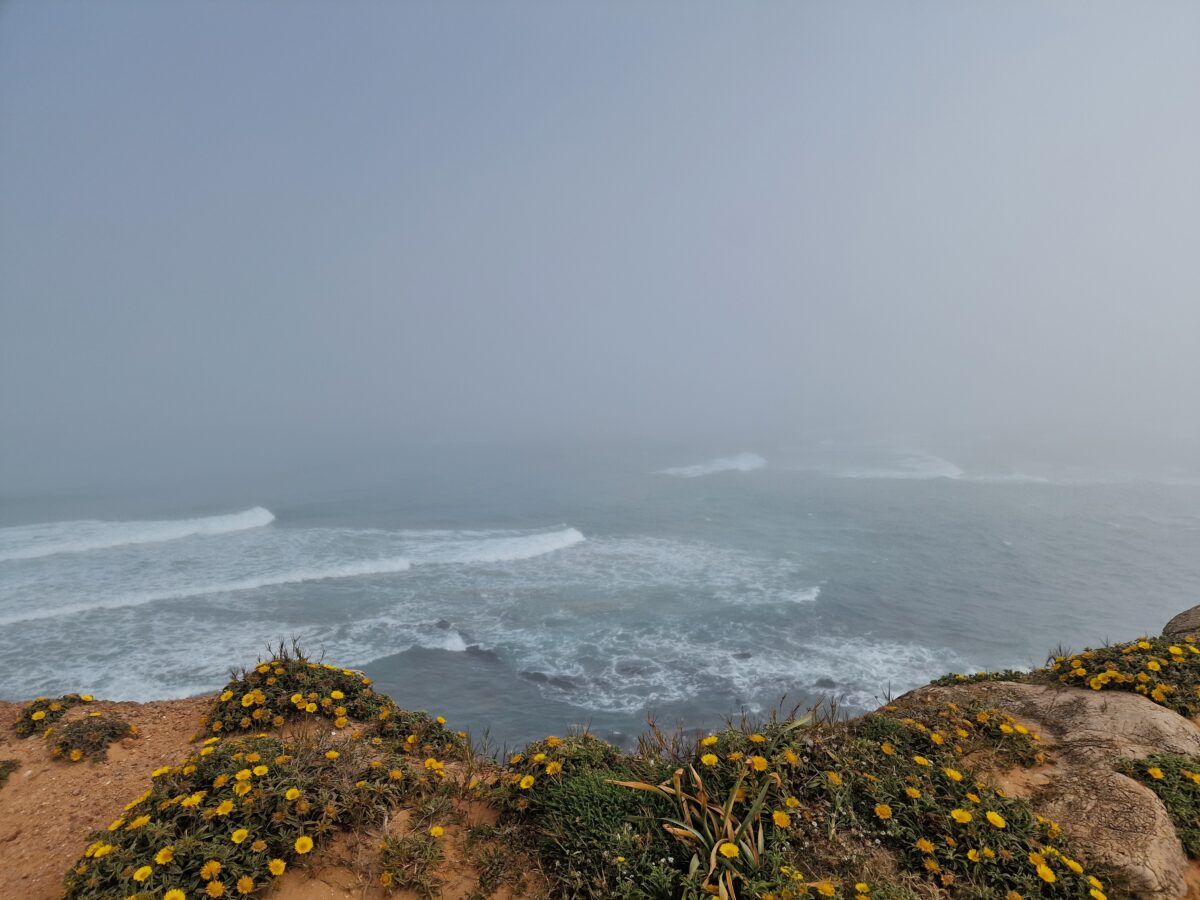
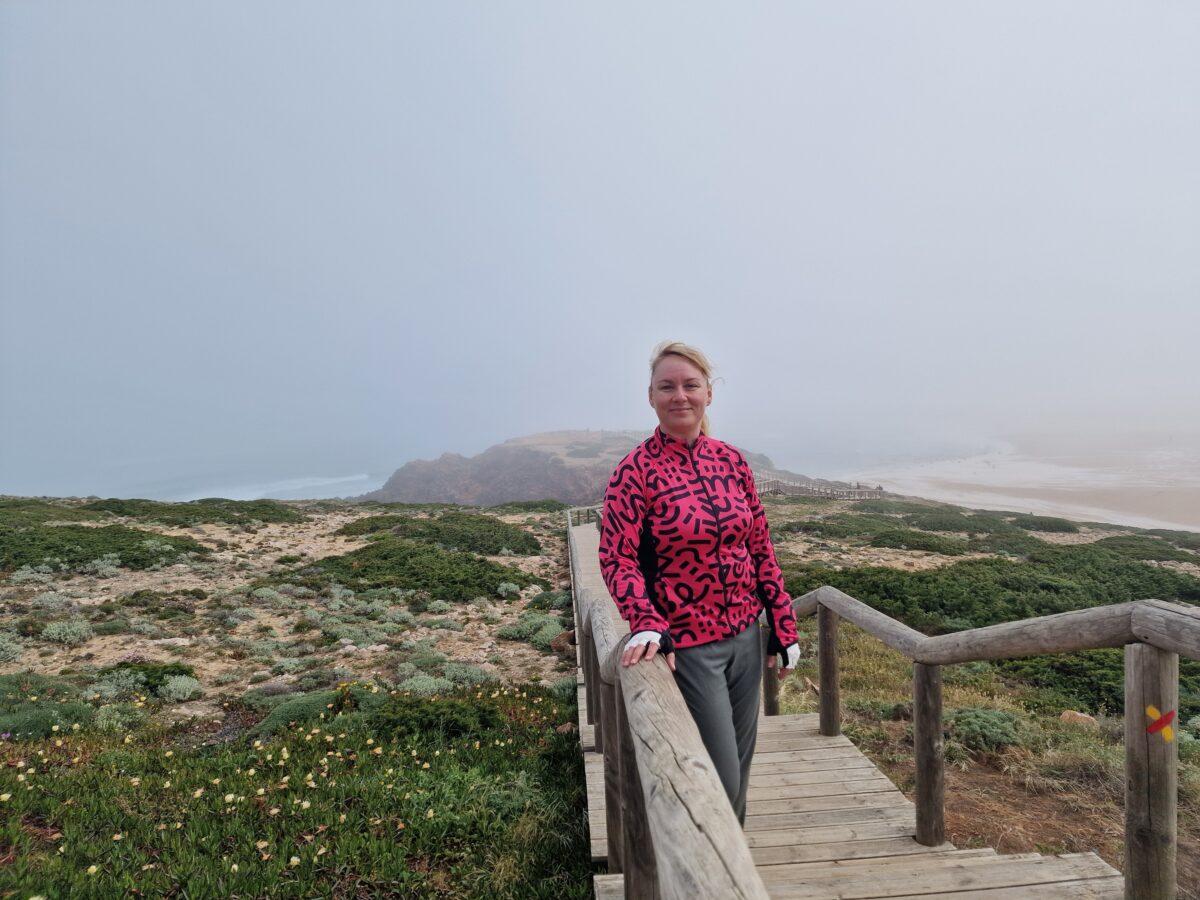
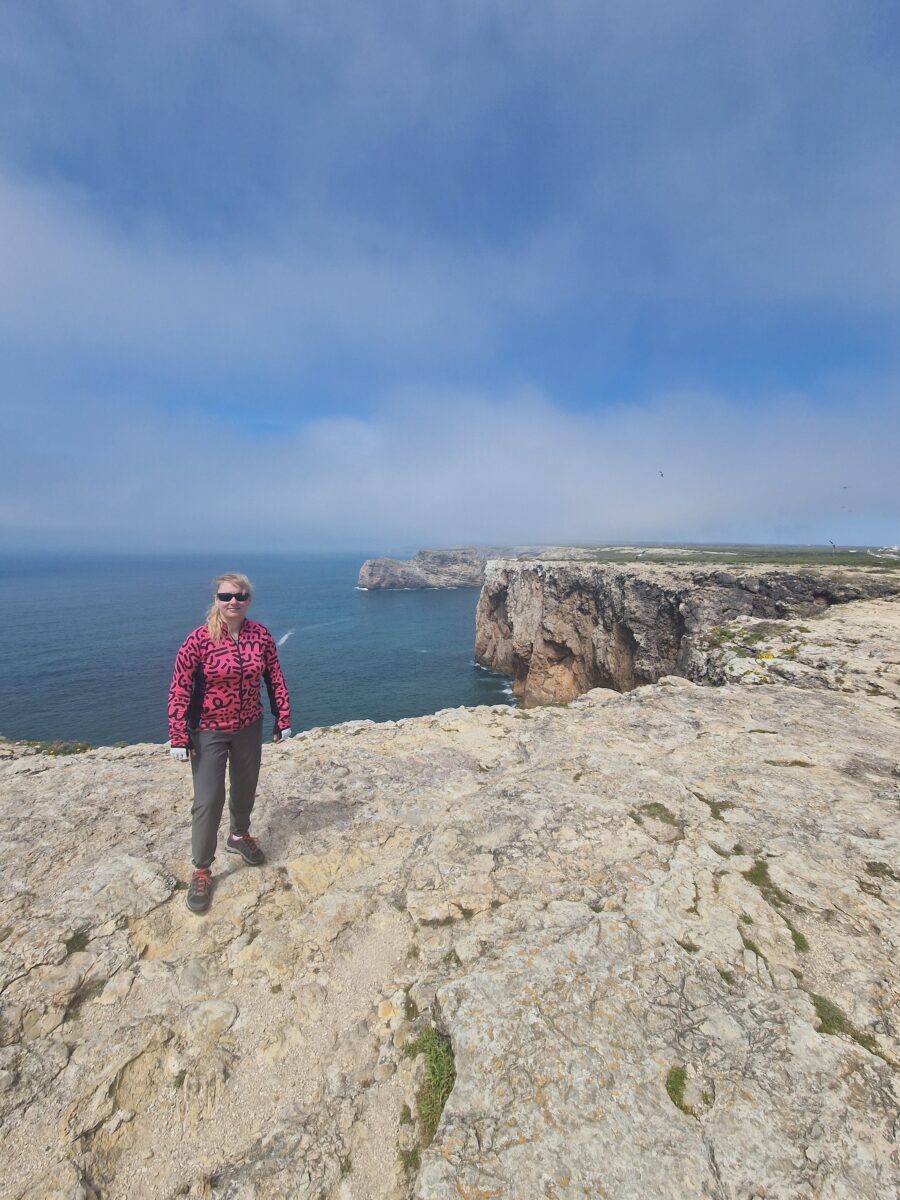
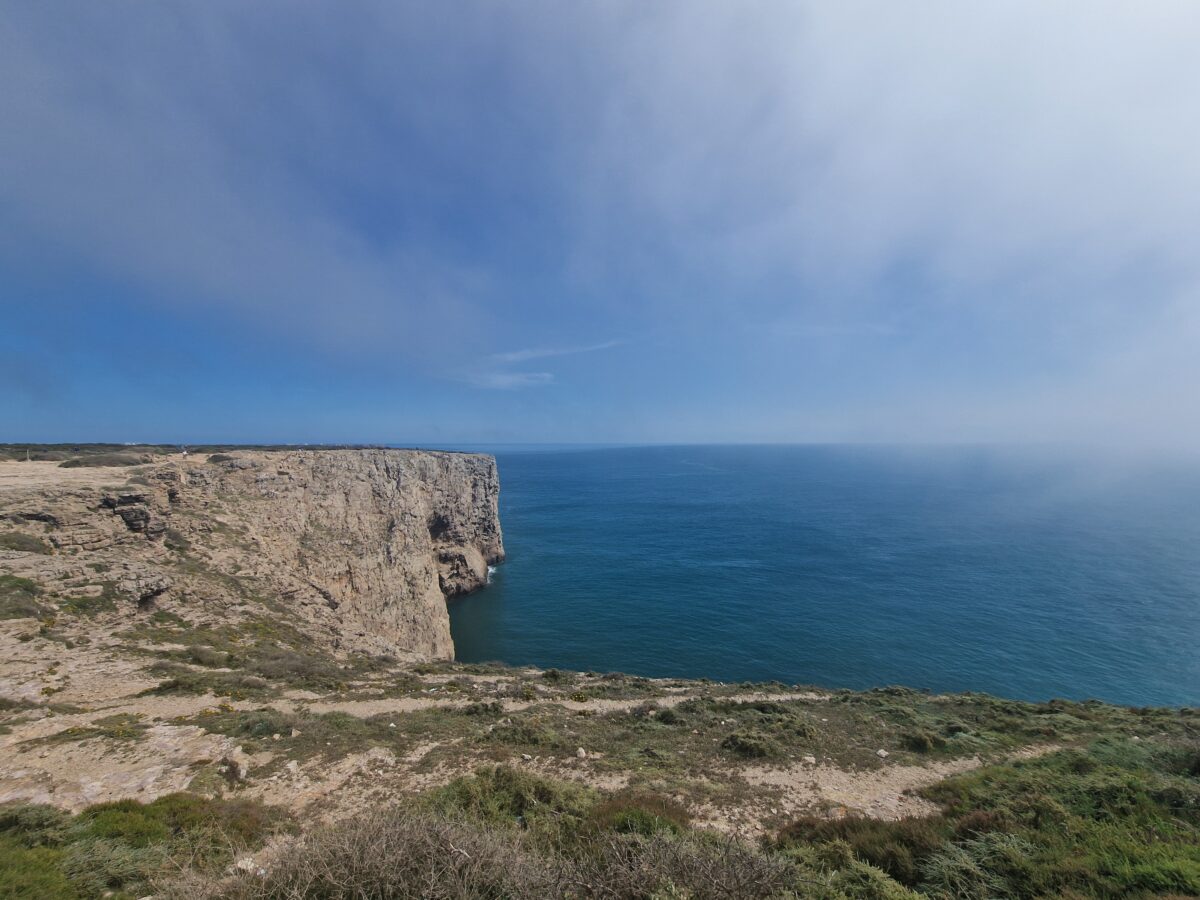
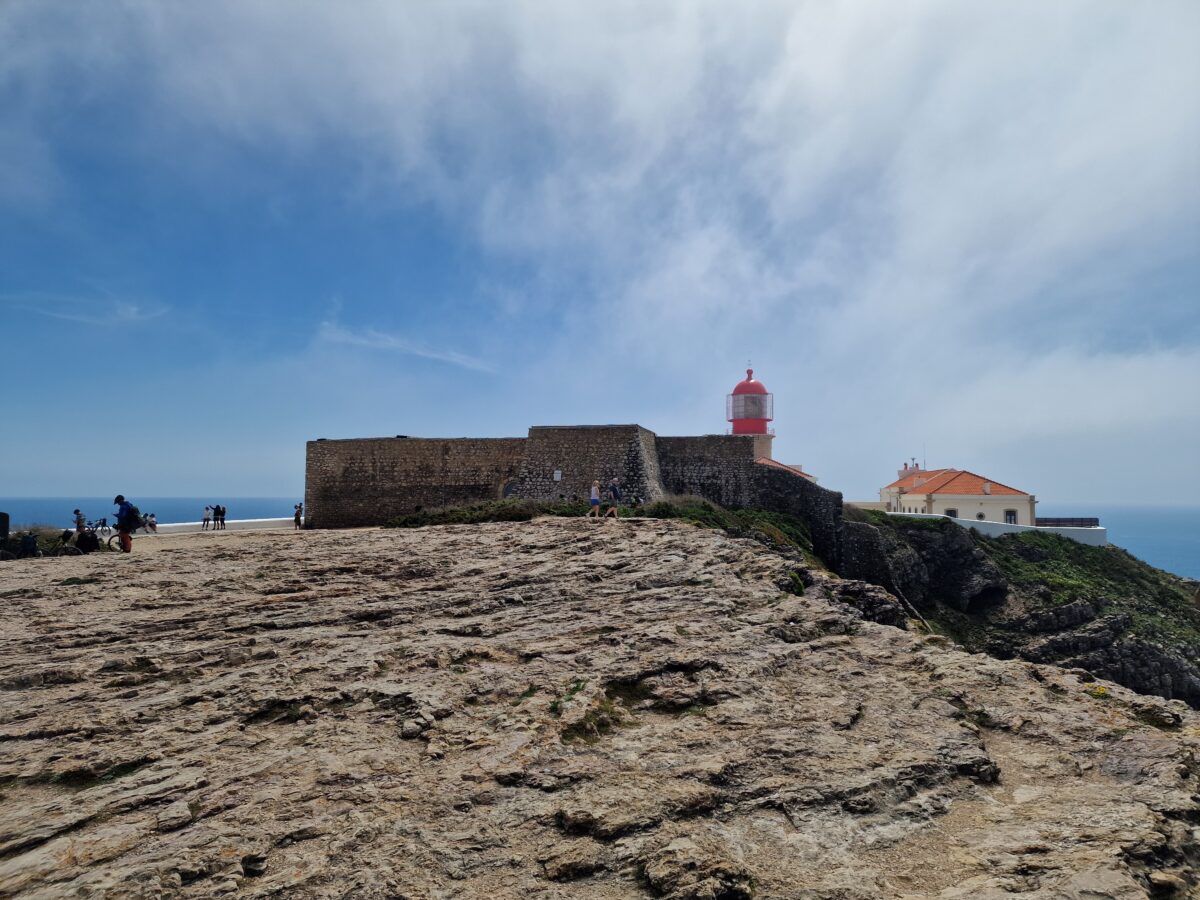
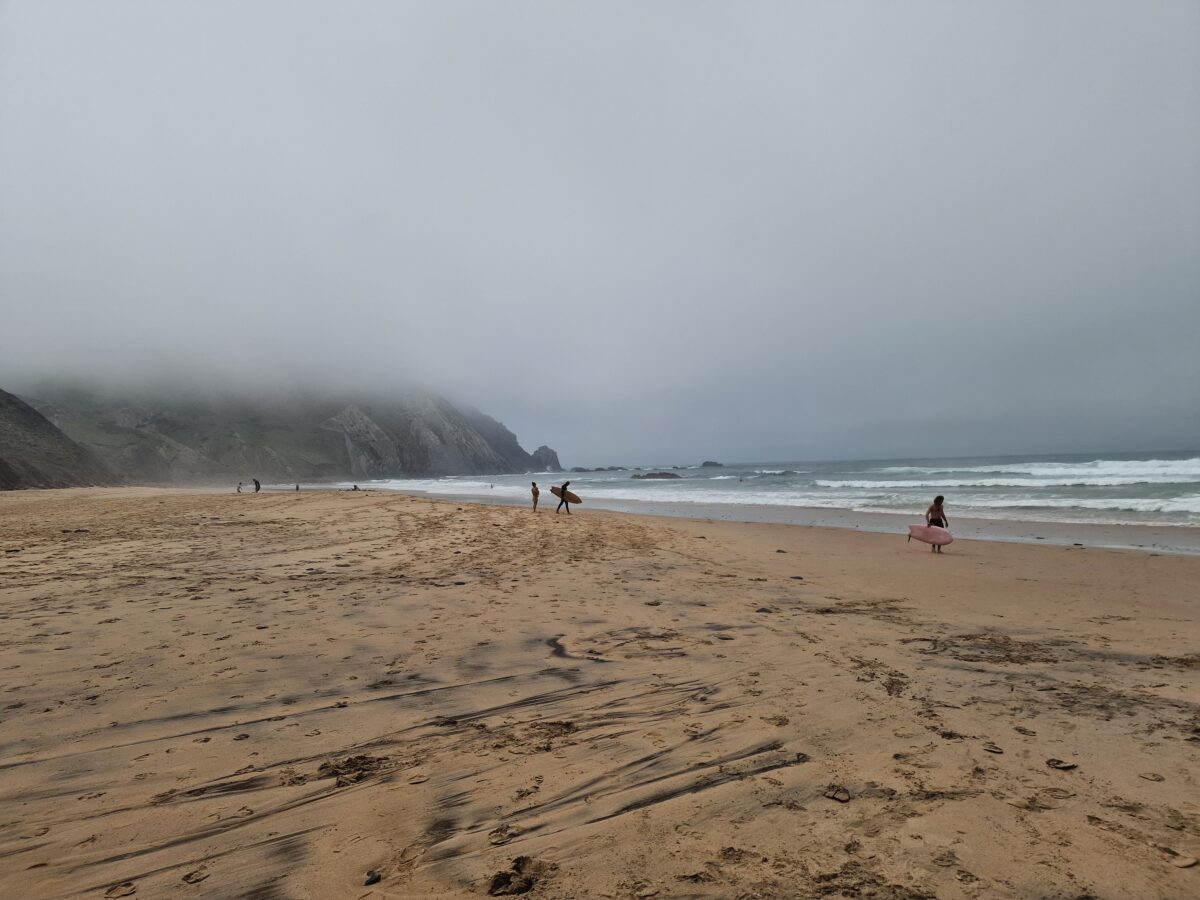
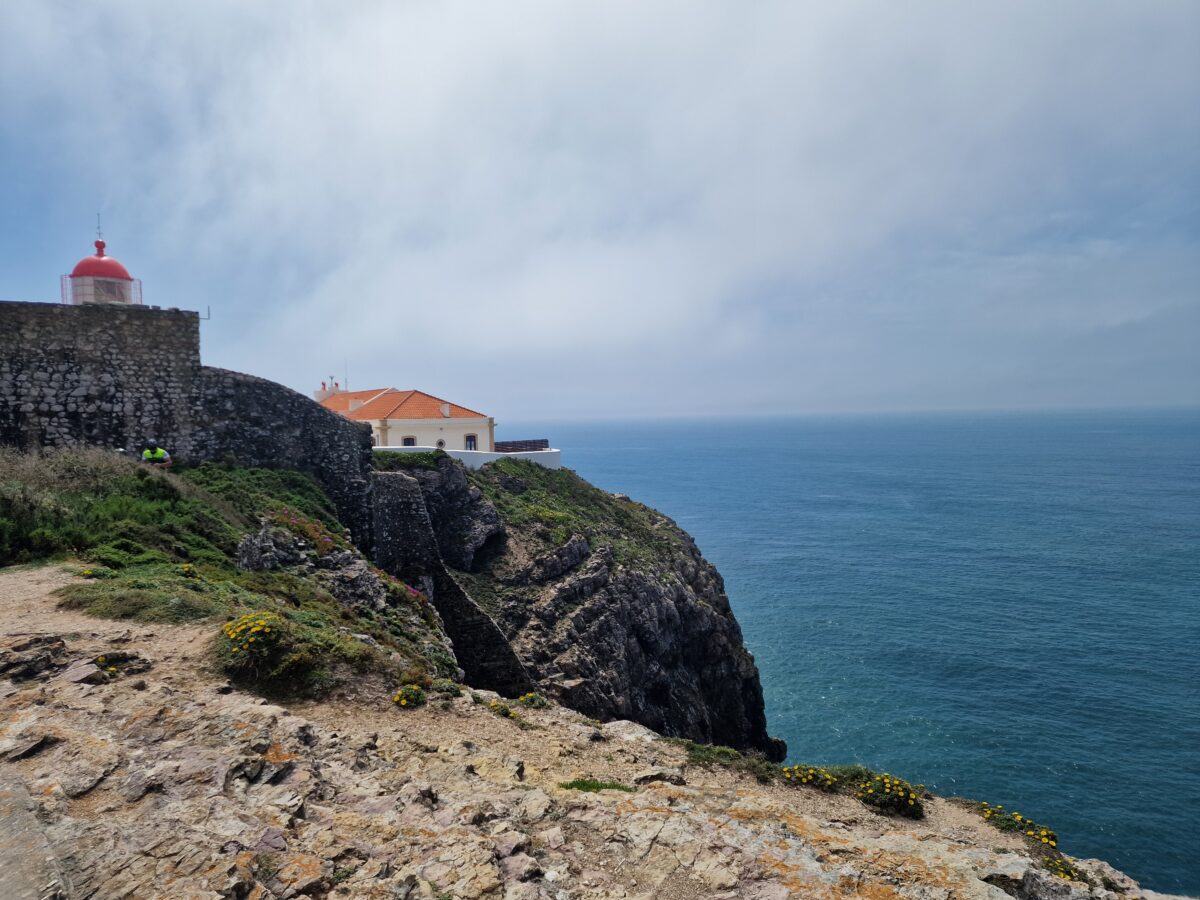
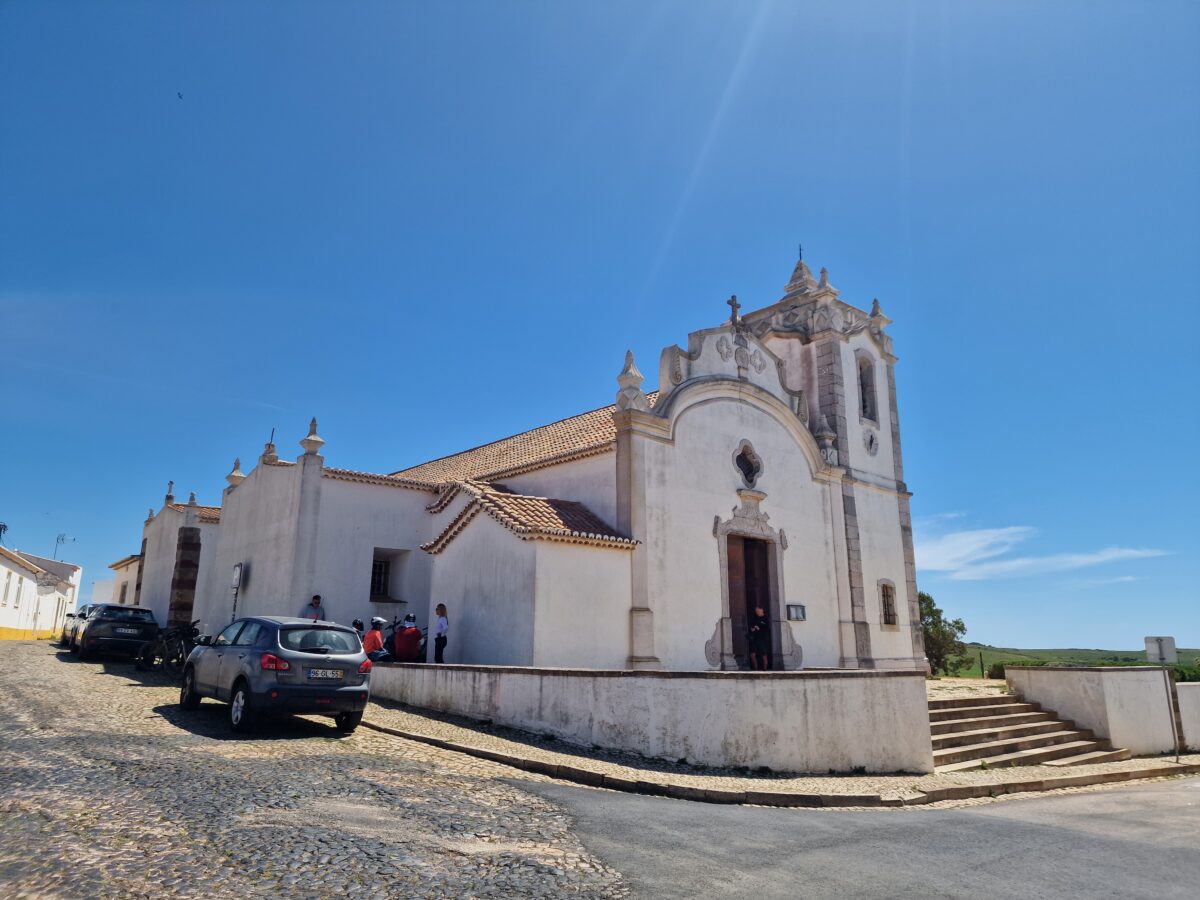

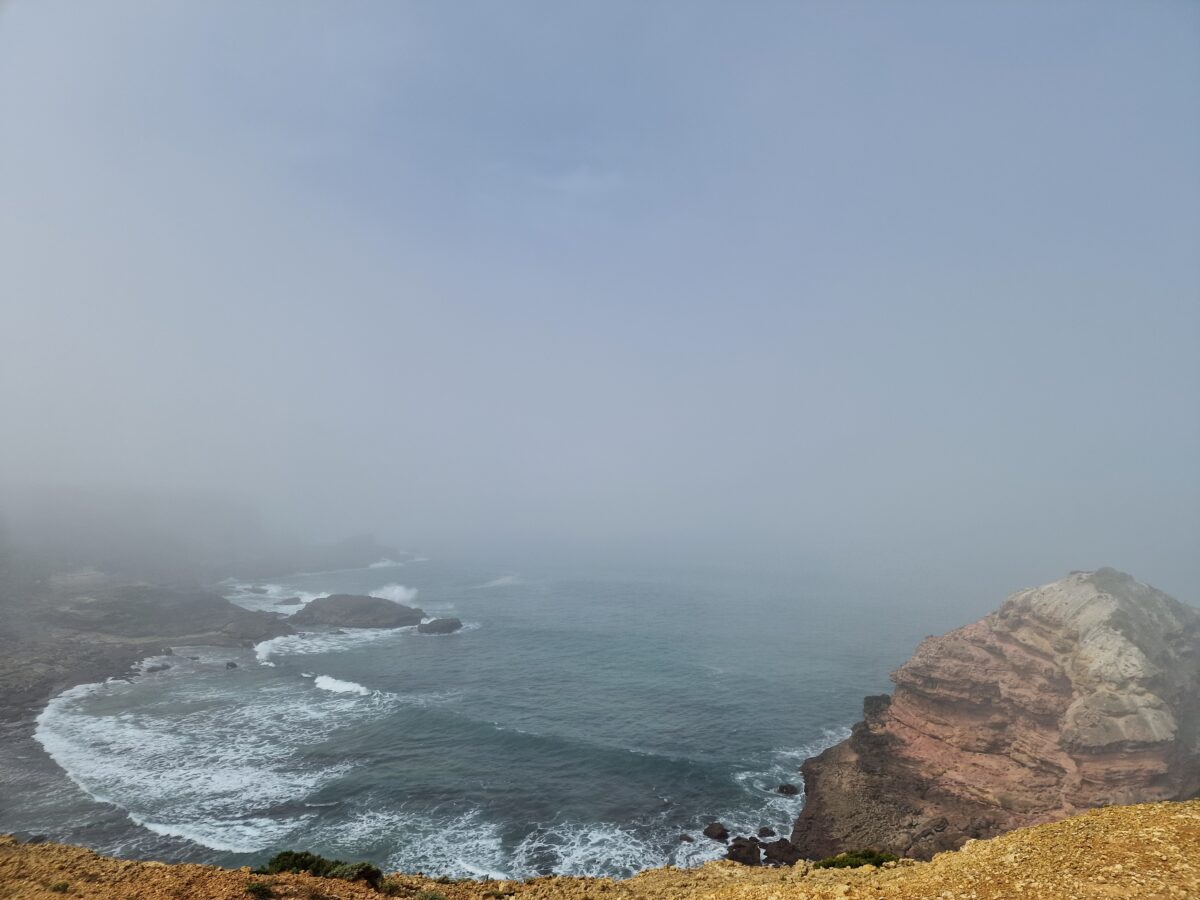
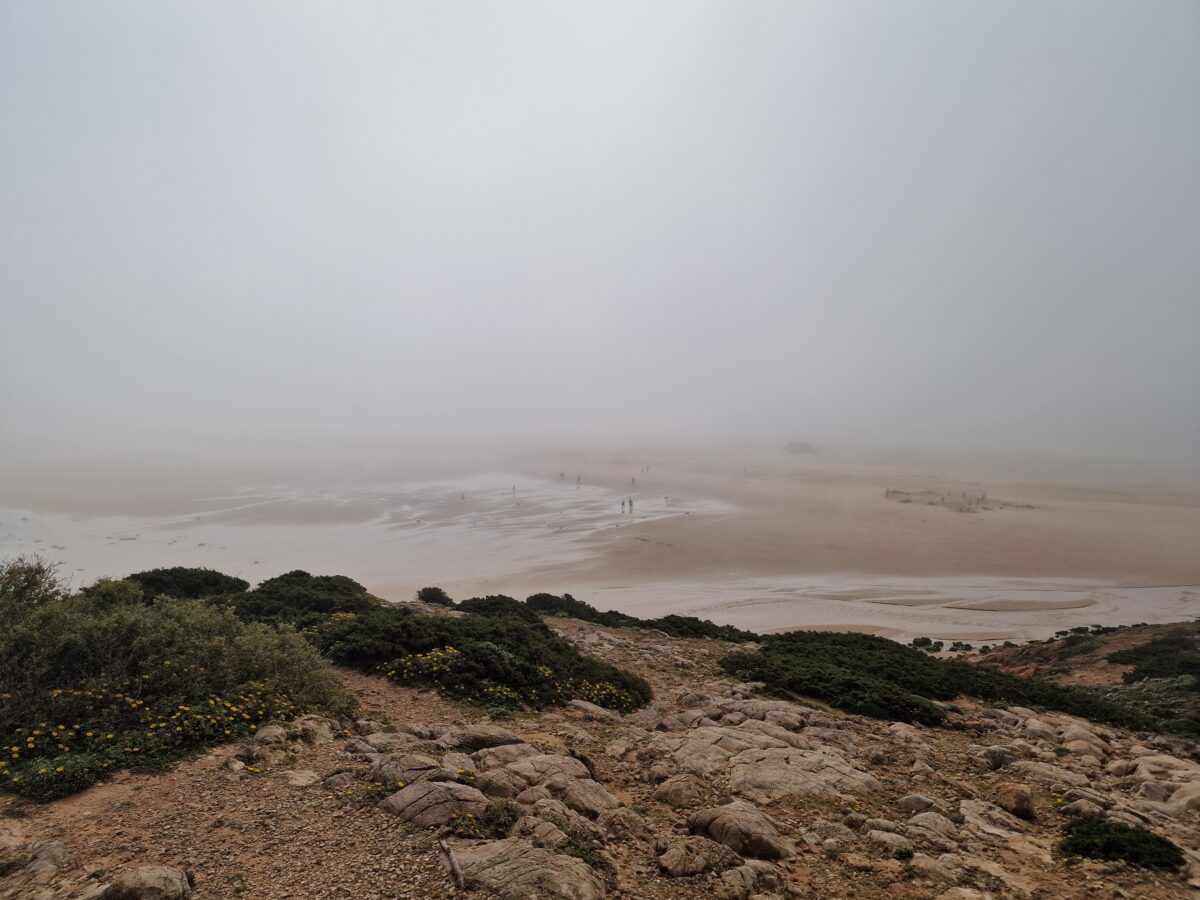
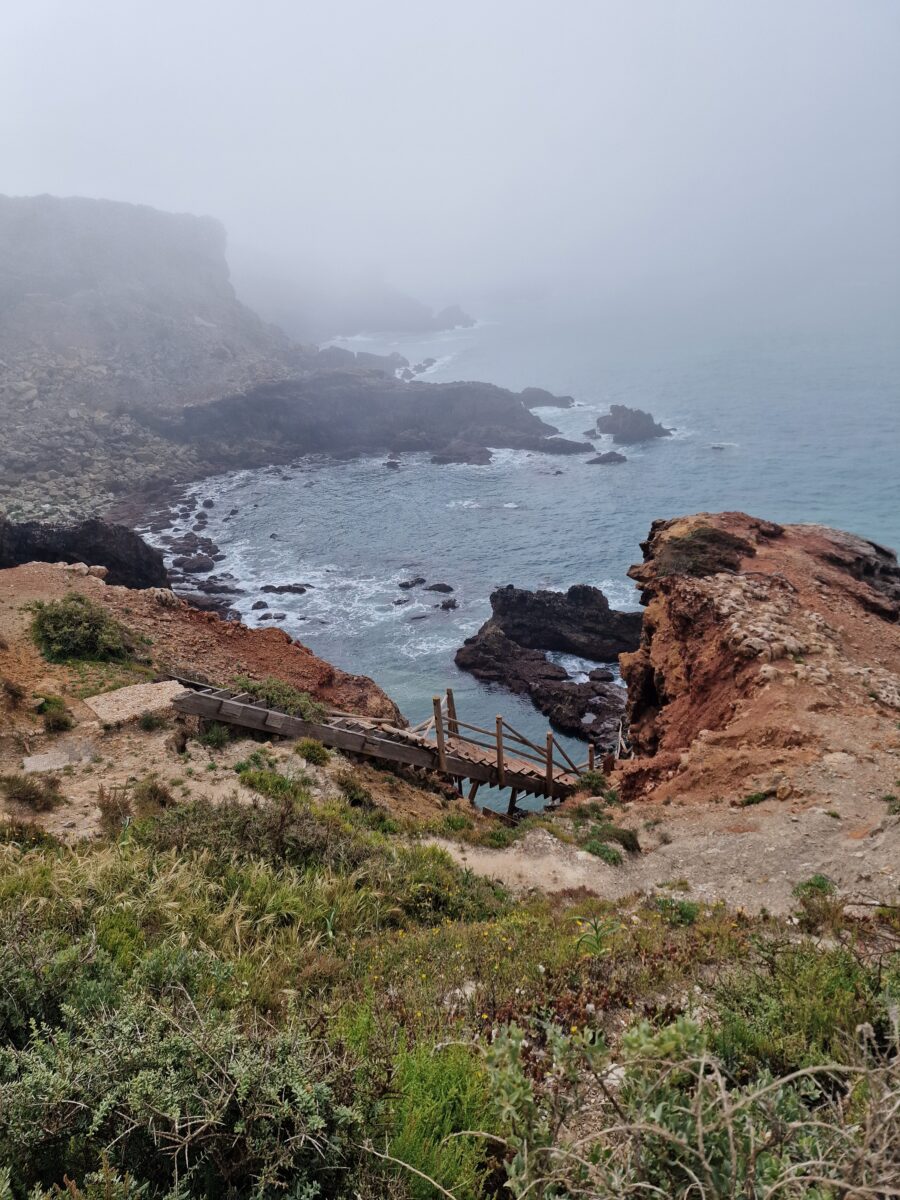
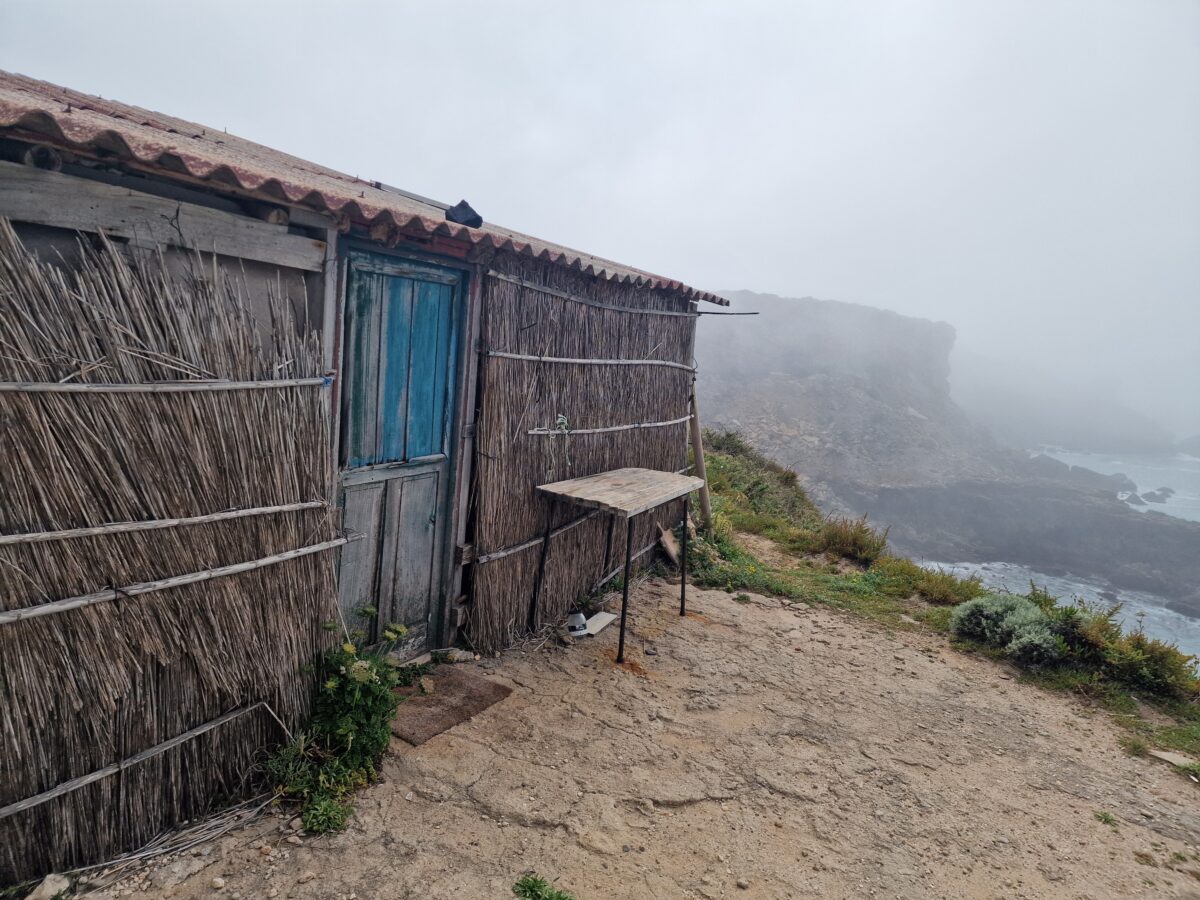
The final cycling day was the longest, and the most varied.
Bordeira has one of the longest stretches of wild beach on the Algarve – wide, flat, exposed, with big Atlantic rollers and almost no infrastructure. The dune fields behind the beach are themselves worth stopping for. Then the route climbed back through Carrapateira, a small village where we stopped for coffee on the main square. The kind of stop that takes fifteen minutes and somehow resets the whole day.
The road inland continued through Vilarinha and up into the hills of the Algarve. Vila do Bispo for lunch – a proper town with a proper square and a church and the sense of being one of the last places with anything resembling infrastructure before the coast runs out entirely. Then Ponte d’Aspa, where the cliffs rise over 100 metres above the Atlantic and paragliders launch from the edge into the sea wind. Then the road west toward the end of things.
Cape St. Vincent – Cabo de São Vicente – is where continental Europe stops. The lighthouse sits at the top of the cliffs, and from there it’s open ocean in three directions, the Atlantic going on until it becomes the Caribbean.
I cycled all five days. The last one included the deep sand sections near Bordeira – the same kind of terrain that had frightened me on day two – and I moved through them easily. The same body, the same bike, the same Atlantic coast, but a different relationship with all of it.
At the end, standing at the lighthouse, I didn’t feel relieved. I felt like I could have started again from the beginning.
What the ocean does
I’ve noticed for a long time that water changes something in my nervous system. Ocean specifically, but also rivers, rain, moving water in any form.
Cycling alongside the Atlantic for five consecutive days does something more cumulative. The waves set a rhythm that has nothing to do with your schedule or your task list. The horizon is a fixed point your eyes return to again and again. The wind is constant and physical. By day three the particular kind of mental noise that accumulates from weeks of screen-heavy work – the low-grade background hum of unfinished things – had gone quiet.
This is what I come back for, on trips like this. The technical achievement matters less than I expect beforehand. What actually changes is cognitive. I was sleeping better, thinking more clearly, and feeling less driven by urgency than I had in months.
Lagos and Lisbon
When the group headed back to Lisbon after Sagres, I didn’t go with them. I’d had enough of the group dynamic by that point, and I wanted one more day in the south before re-entering city life. The question was where – Sagres itself is beautiful but small and remote – and the answer turned out to be Lagos.
A bus from Sagres, accommodation that was practically across the street from the bus station. Two minutes and I was done with logistics for the day.
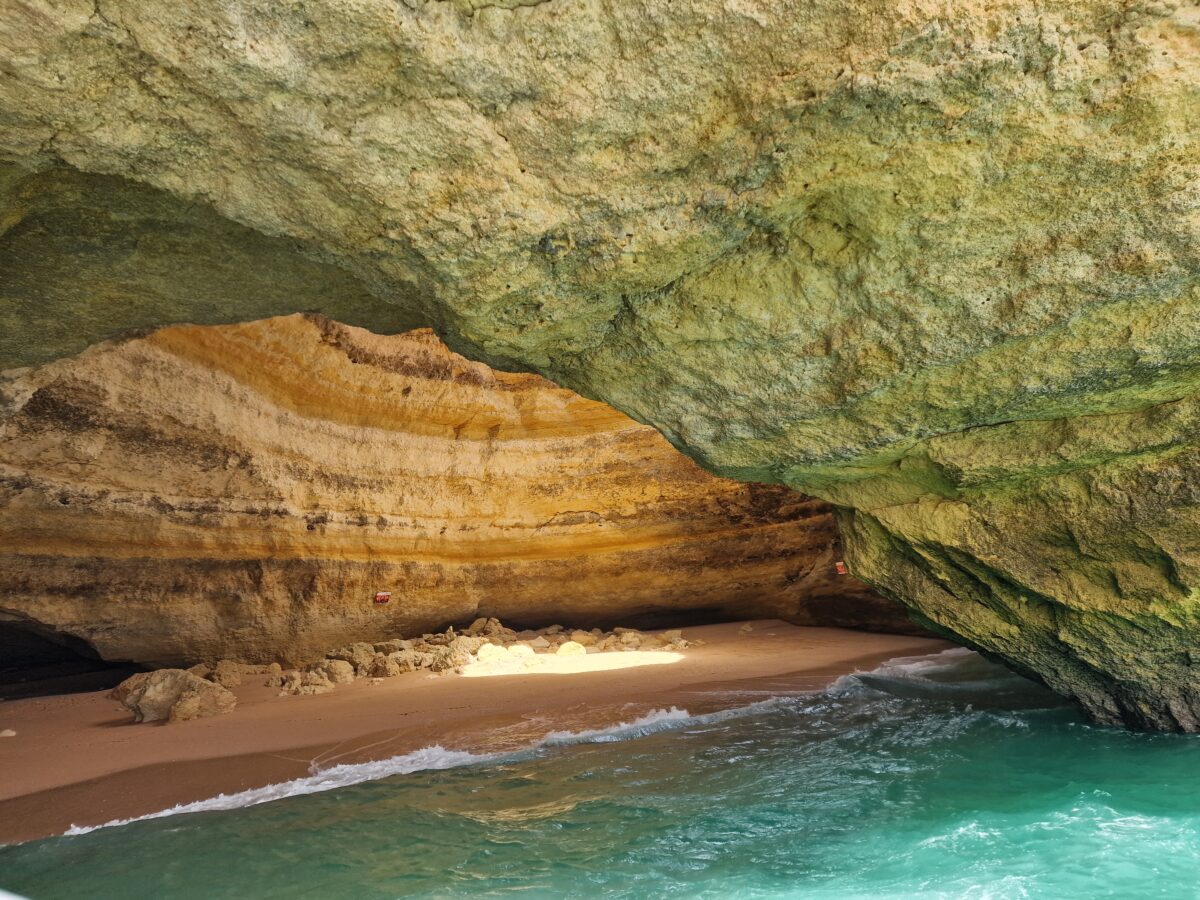
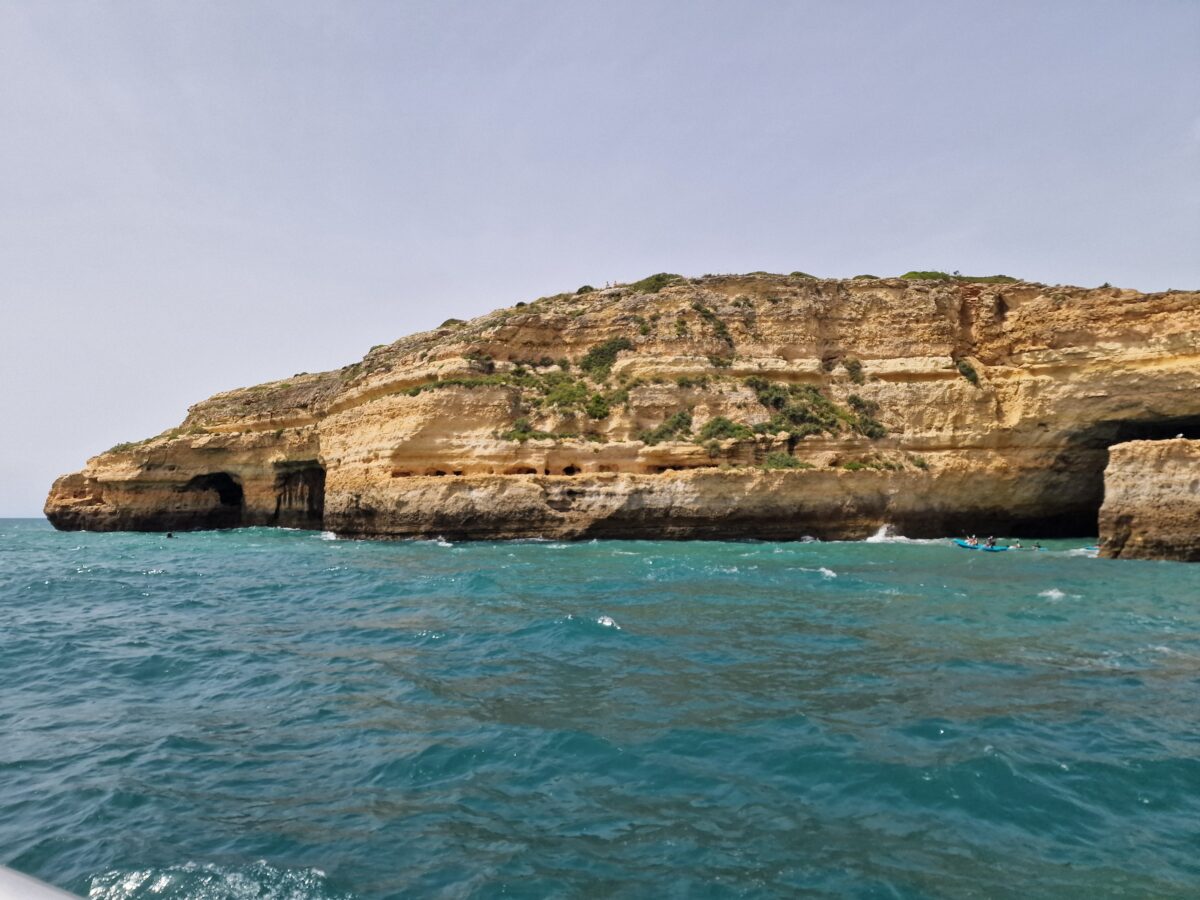
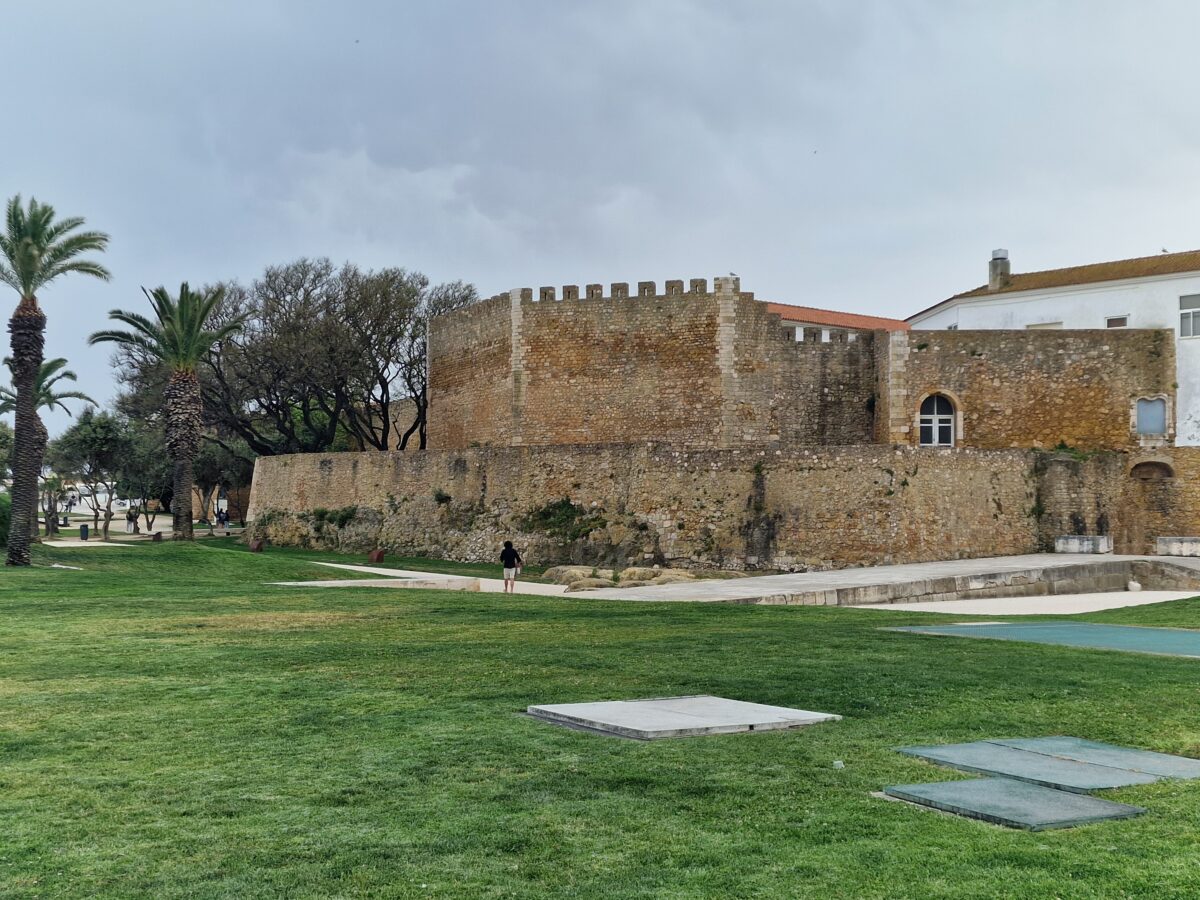
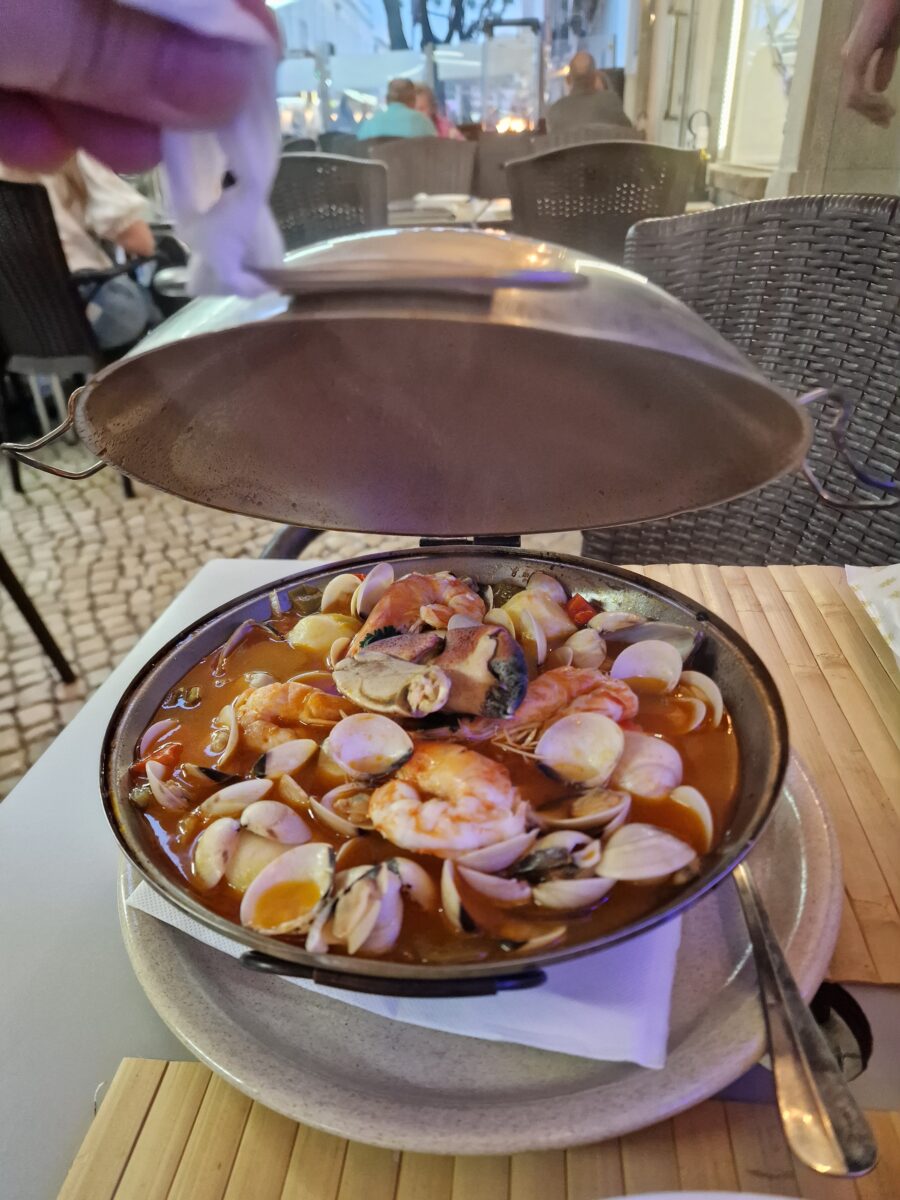
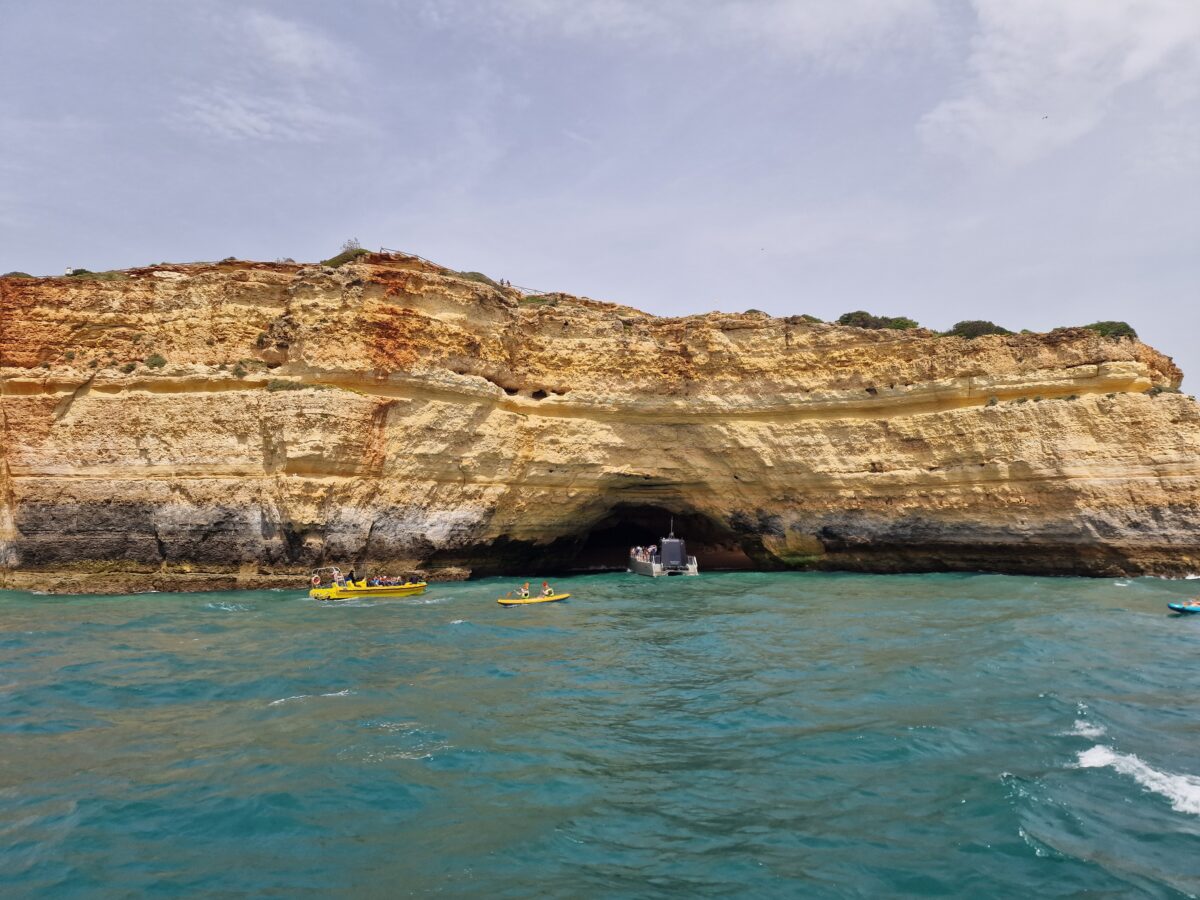
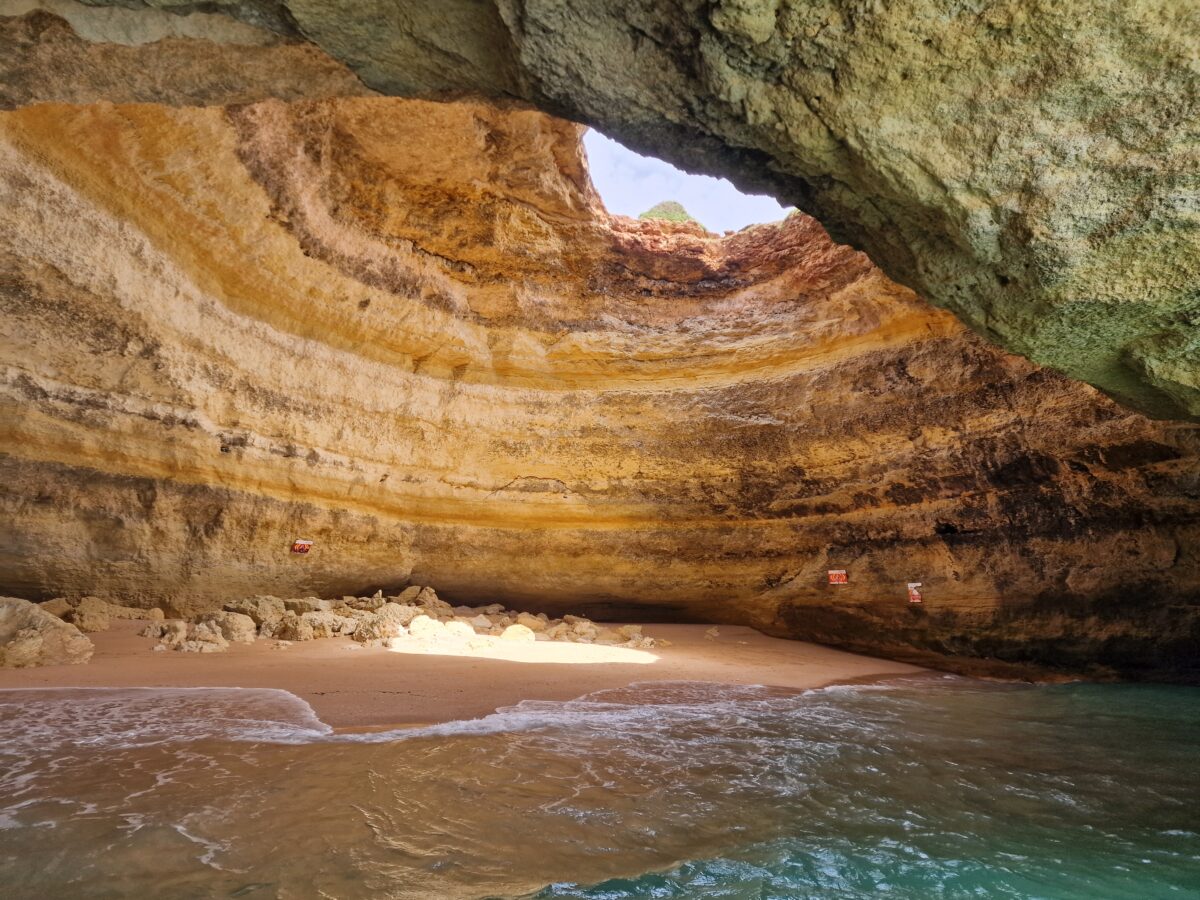
Lagos was exactly what I needed and nothing more. I walked the old town slowly, stopped at a café called Gamba, and eventually sat down to a mixed cataplana – the traditional Portuguese copper-pot stew, the mixed version with seafood, served with bread, ordered mostly because I had no idea what was in it and that felt right. I looked at boat trips on GetYourGuide and went for a boat trip.
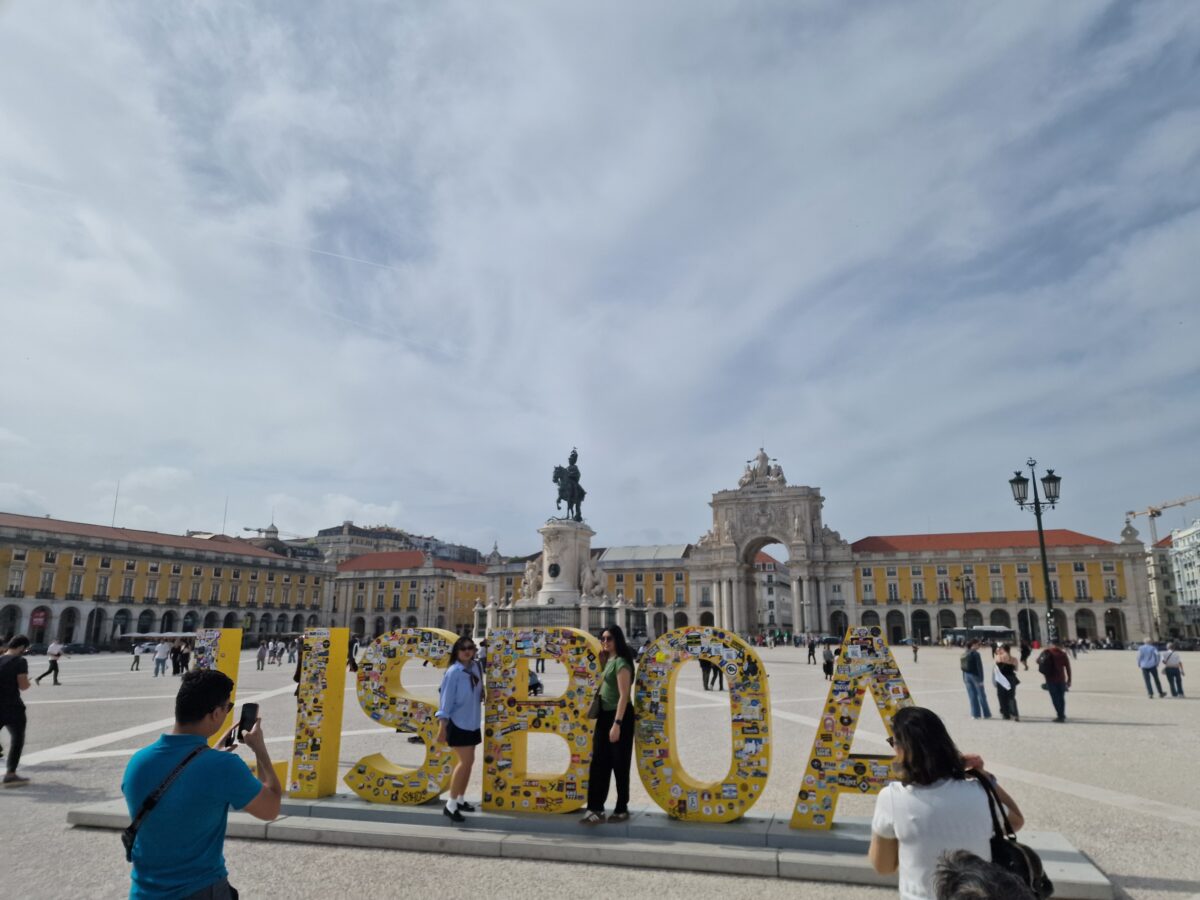
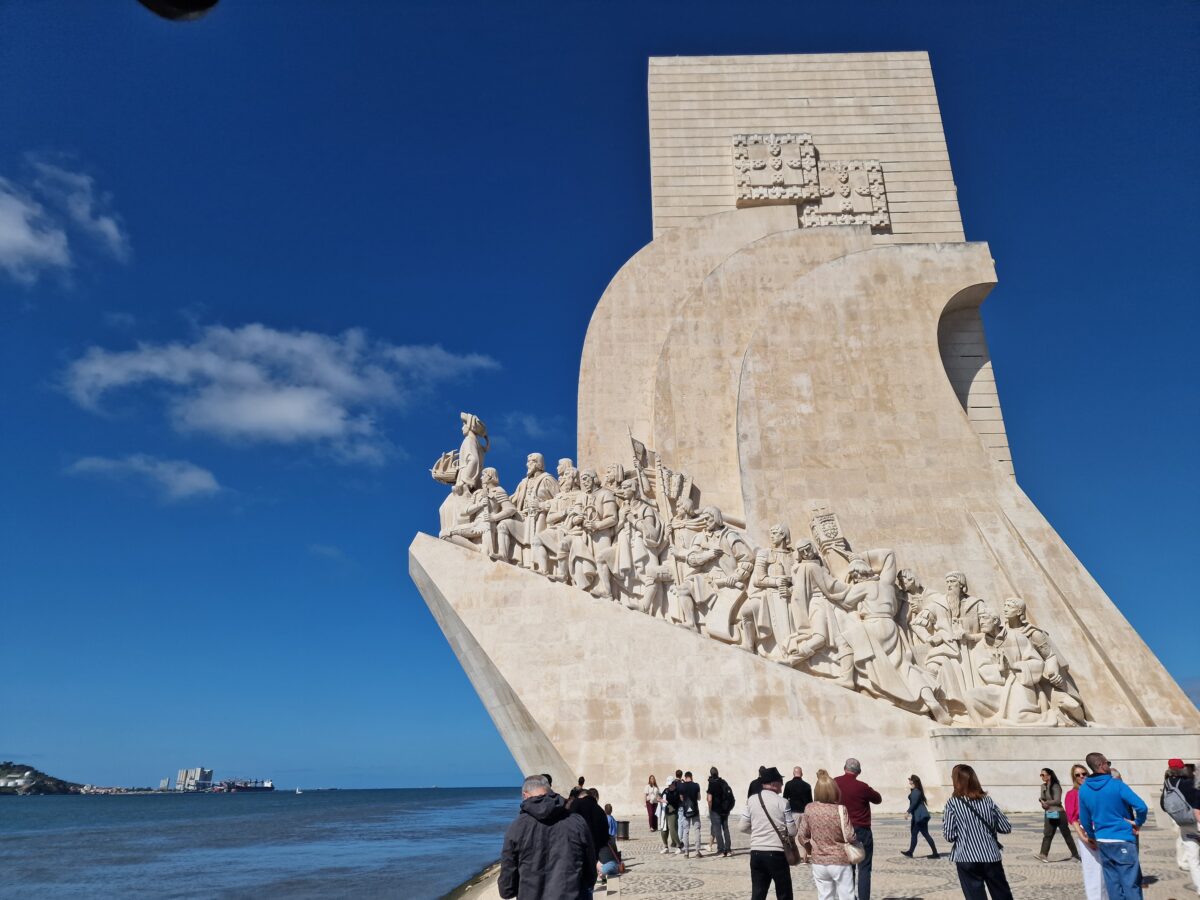
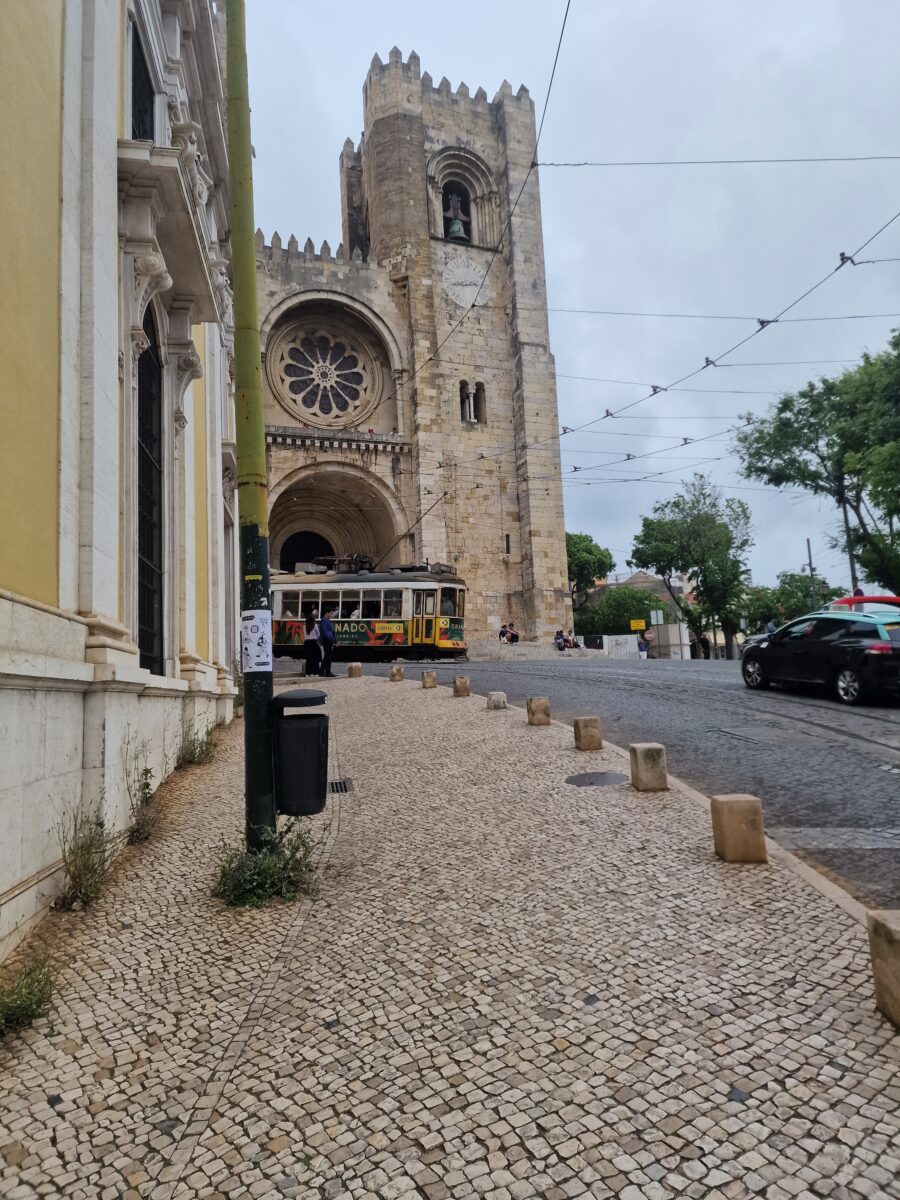
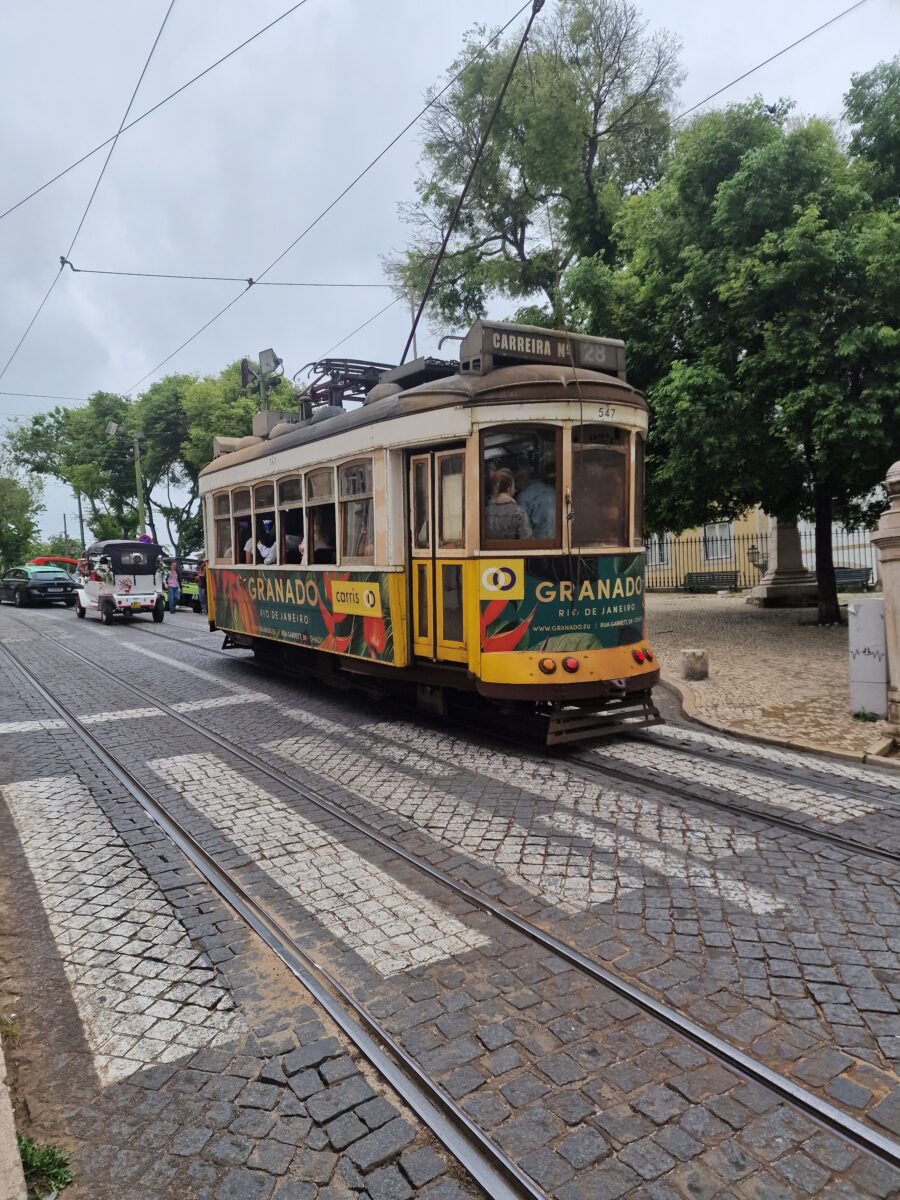
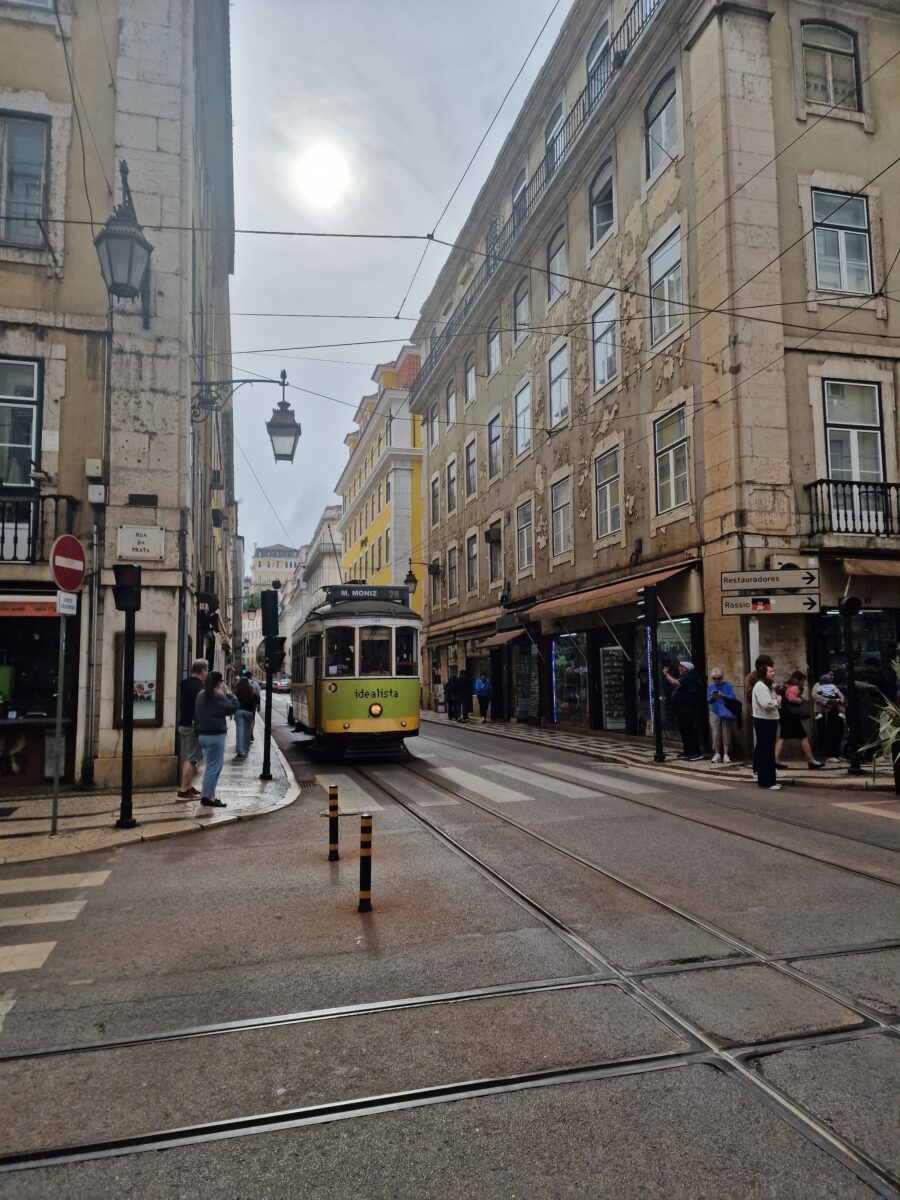
Lisbon came after, and by comparison it was too much – the noise and density and sheer number of things competing for attention felt jarring after a week of cliffs and small villages and open Atlantic. That contrast is worth factoring in if you’re planning this trip. Lagos was a good transition. Lisbon was one step too far, one day too soon.
Practical notes
The e-bike helps, but the trip is still physical. Daily distances and terrain mean real effort even with the motor. Some prior experience on loose or technical ground is useful before you arrive.
Sand is the main challenge. Several sections run directly through coastal dunes. Deep sand on a bicycle is technical: carry speed, keep a firm grip on the handlebar, and accept some instability without tightening up. It takes a day to learn and it’s worth knowing it’s coming.
Carry more food than you think. Distances between villages can be longer than expected. A snack every 90 minutes makes a real difference by the end of a 60-kilometre day.
The wind and sun together are more intense than either alone. Lip and skin protection are more important here than in a normal cycling context. The Atlantic coast wind is drying in a way that’s easy to underestimate until day two.
Plan dinner early. Portuguese restaurants in smaller towns often don’t open until 7 pm or later. On days when you arrive tired and hungry, knowing where you’re eating before you sit down is a small, meaningful comfort.
Who this trip is for
Anyone who wants to spend five days moving through a landscape rather than looking at it. It suits people who are comfortable with physical effort and don’t need every aspect of the day to go smoothly. The route is beautiful and demanding, and those two things are connected.
It’s also a useful trip for anyone who works intensively, travels mainly for tourism, and wants something that produces a genuine mental reset. Five days of consistent movement, minimal screens, and open Atlantic landscape does something to the nervous system that a city break doesn’t.


